🪴Balcony Garden Paradise is reader-supported. When you buy through links on our site,
we may earn a small affiliate commission at no extra cost to you. As an Amazon Associate,
we earn from qualifying purchases. Happy Gardening from the team! 🌿
Sustainable gardening on your balcony can transform your urban space into a green oasis. You can create a thriving garden while helping the environment.
By using eco-friendly methods, you can grow plants, save water, and reduce waste on your balcony.

Balcony gardens offer many benefits. They clean the air, cool your home, and provide fresh herbs and veggies.
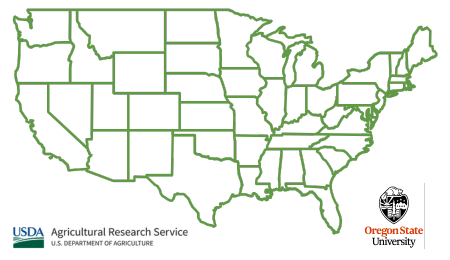
The 2023 USDA Plant Hardiness Zone Map was created by Oregon State University (PRISM Climate Group) and released by the USDA.
You can start small with a few pots or go big with vertical gardens and hanging baskets.
Sustainable practices are crucial to the success of balcony gardening. You’ll learn to use less water, make your own compost, and pick the right plants, which will benefit your garden and the planet.
Key Takeaways
- Sustainable balcony gardens improve urban living and help the environment
- Eco-friendly techniques save water and reduce waste in small spaces
- Choosing the right plants and methods ensures a thriving, low-maintenance garden
Understanding the Basics of Sustainable Gardening
Sustainable gardening on your balcony helps the planet and creates a beautiful green space. It focuses on using resources wisely and protecting the environment.
Principles of Sustainability in Balcony Gardening
Choose plants that fit your climate and space. This reduces water use and helps plants thrive.
Pick native species when you can. They need less care, and they also support local wildlife.
Use organic soil and compost. These keep your plants healthy without harsh chemicals. To reduce waste, make your own compost from kitchen scraps.
Here are a few different organic soil products to get you started.
Water smart by collecting rainwater or using a drip system. This saves water and gives plants steady moisture. Group plants with similar water needs together.
Avoid pesticides. Use natural pest control methods like companion planting or picking off bugs by hand. This keeps your garden and local ecosystem healthy.
Environmental Benefits of Green Spaces
Your balcony garden helps clean the air. Plants absorb carbon dioxide and release oxygen. They also trap dust and other pollutants, making the air fresher.
Green spaces cool the area around them. This helps fight the urban heat island effect. Your garden can lower air temperatures and cut energy use for cooling.
Balcony gardens support biodiversity. They give homes to birds, bees, and butterflies. These creatures help pollinate plants and control pests naturally.
Your garden can grow food, cutting down on trips to the store. This reduces your carbon footprint. Plus, you get fresh, tasty produce right at home.
Designing Your Sustainable Balcony Garden
Creating a green oasis on your balcony takes careful planning and smart choices. Let’s explore how to design a sustainable garden that thrives in your unique space.
Assessing Your Balcony’s Microclimate
Your balcony has its own mini-ecosystem. Check how much sun it gets throughout the day. Is it sunny, shady, or a mix?
Notice wind patterns and temperature changes.
Look at nearby buildings or trees that might block light. Feel the heat reflected off the walls or pavement. These factors affect plant choices and watering needs.
Test your soil’s pH and nutrients if you plan to use existing planters. This helps you pick the right plants and fertilizers. Remember, microclimates can vary even in small spaces.
Choosing Sustainable Materials and Containers
Pick eco-friendly items for your balcony garden. Use recycled plastic or bamboo pots instead of new plastic ones. Try upcycled containers like old wooden crates or tin cans for a unique look.
Choose self-watering planters to save water and time. They keep the soil moist without overwatering. Look for containers with good drainage to prevent root rot.
Consider vertical gardening to maximize space. Use hanging baskets or wall-mounted planters. Trellises made from sustainable wood or bamboo support climbing plants.
For furniture, pick pieces made from reclaimed wood or recycled materials. Avoid treated wood that can harm plants and the environment.
Selecting Appropriate Plants for Sustainability
Choosing the right plants is key to a green balcony garden. You’ll want to pick species that thrive in your local climate and use resources wisely. This approach helps create a sustainable space that’s easy to maintain.
Native Plants and Their Advantages
Native plants are ideal for sustainable balcony gardens. They’re already adapted to your area’s climate and soil. This means they need less water and care to grow well.
Native plants also support local wildlife. They provide food and shelter for birds, bees, and butterflies. This helps keep the local ecosystem healthy.
You can find native plants at local nurseries or garden centers. Ask for plants that suit your balcony’s light and space. Some may even grow well in pots or hanging baskets.
Native plants often resist pests and diseases better than non-native species. This cuts down on the need for harmful chemicals. It makes your garden safer for you and the environment.
Drought-Resistant Varieties for Water Conservation
Drought-resistant plants are great for saving water on your balcony. These tough plants can handle dry spells with little extra care.
Succulents are popular drought-resistant choices. They store water in their leaves and stems. This helps them survive with less frequent watering.
Herbs like rosemary and thyme also do well with less water. They add flavor to your cooking and smell nice, too.
Lavender is another water-wise plant that looks and smells great. It attracts bees and butterflies to your balcony.
When planting, group plants with similar water needs together. This makes it easier to water efficiently. Use mulch in your pots to help keep moisture in the soil longer.
Soil Management and Organic Practices
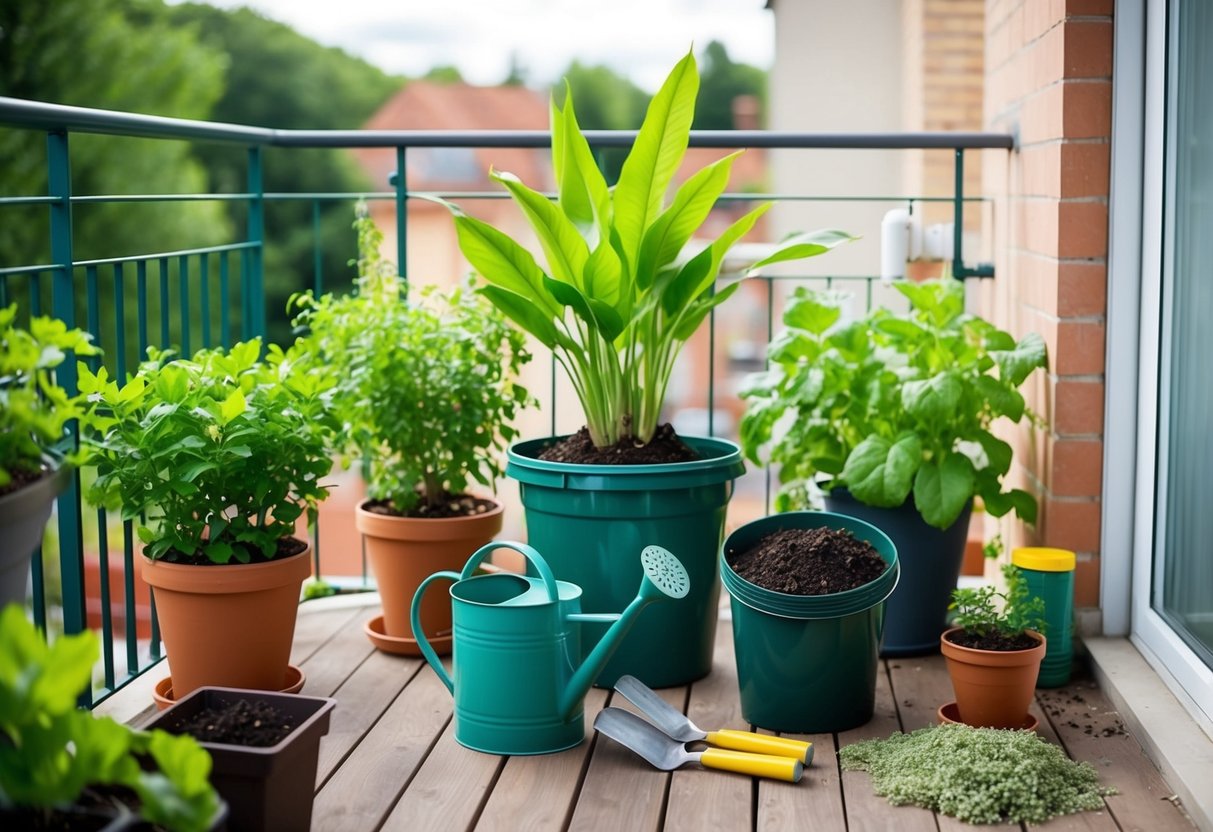
Good soil and organic methods are key to a thriving balcony garden. You can grow healthy plants without harsh chemicals by focusing on soil health and natural fertilizers.
Creating and Maintaining Healthy Soil
Start with a high-quality potting mix for your containers. Look for mixes with peat moss, perlite, and compost. These ingredients help with drainage and nutrients. Add organic matter like compost yearly to keep the soil rich.
Test your soil pH and adjust if needed. Most plants like slightly acidic soil (pH 6.0-6.8). Use lime to raise pH or sulfur to lower it. Mulch your pots with bark chips or straw. This keeps moisture in and stops weeds.
Don’t compact the soil. Fluff it up gently with a small fork now and then. This lets air and water flow to plant roots. Replace about 1/3 of the soil in pots each year to refresh nutrients.
Composting and Organic Fertilizers
Make your own compost from kitchen scraps and yard waste. It’s free and great for plants. Use a small bin or tumbler on your balcony. Mix “green” items like veggie peels with “brown” items like dry leaves. Turn it weekly.
Try worm composting too. Red worms turn food scraps into rich compost fast. Keep a worm bin in a shady spot on your balcony. Feed worms your fruit and veggie waste.
Use organic fertilizers like fish emulsion or seaweed extract. They feed plants slowly and won’t burn them. Make compost tea by steeping compost in water. Use it to water your plants for a boost. Sprinkle crushed eggshells around plants for calcium.
Water Conservation Techniques
Saving water is key for sustainable balcony gardens. Smart irrigation and collecting rainwater can make a big difference. These methods help you use less water while keeping plants healthy.
Irrigation Methods for Balcony Gardens
Drip irrigation works well for balcony gardens. You set up small tubes with holes near each plant. Water drips out slowly, right to the roots. This cuts waste and helps plants thrive.
Self-watering pots are another good choice. They have a water tank at the bottom. Plants take up water as needed through a wick. You fill the tank less often than with regular pots.
Mulching helps too. Put a layer of bark chips or pebbles on top of the soil. This slows down water loss from the surface. Your plants stay moist longer between waterings.
Rainwater Harvesting and Recycling
Catching rain is easy on a balcony. Put out buckets or bins when it rains. You can also attach a small gutter to your balcony edge. This guides water into a barrel.
Use this free water for your plants. It’s better than tap water. It has no chemicals and is at the right temperature.
You can also reuse water from your home. Save cooking water after it cools. Use it to water your plants instead of pouring it down the drain.
Don’t toss half-full water glasses. Pour them into a watering can for your balcony garden. Every drop counts in water conservation.
Gardening Techniques for Enhanced Sustainability
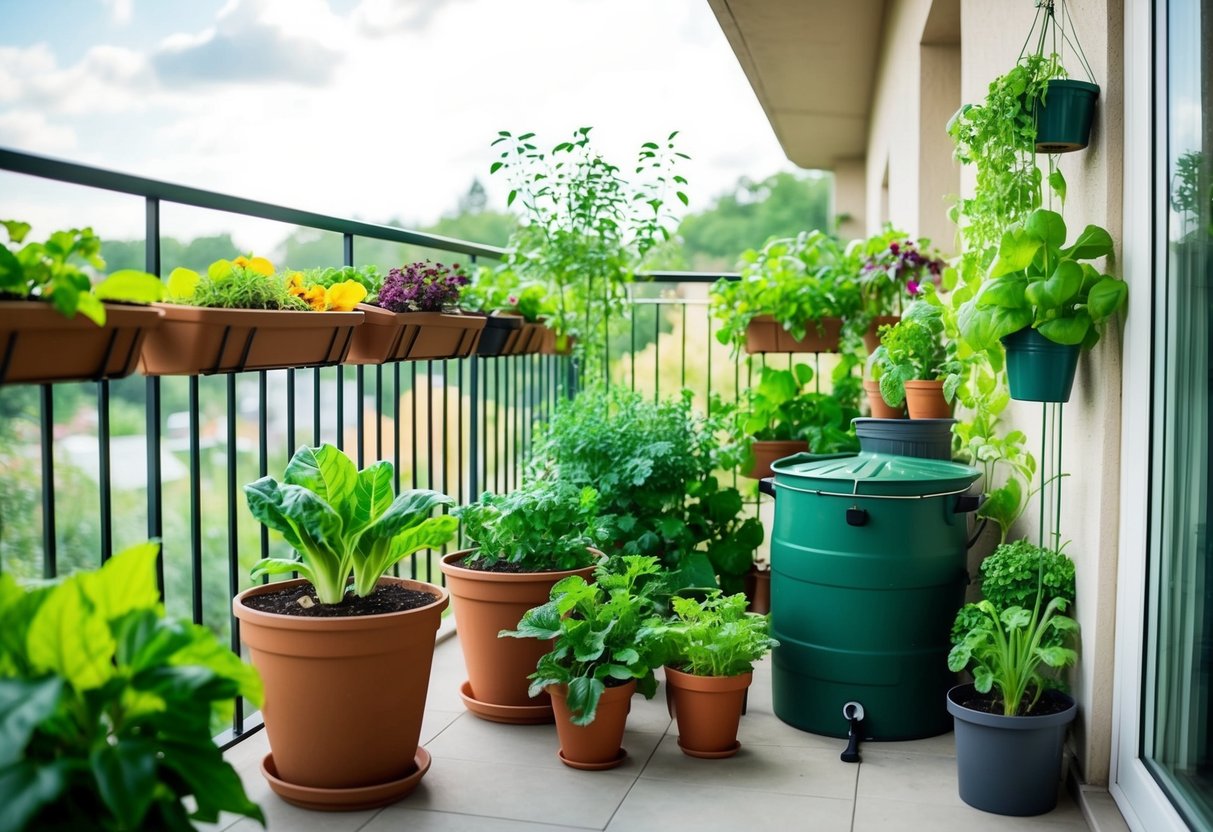
Sustainable gardening practices can boost your balcony’s eco-friendliness. These methods help protect the environment while creating a thriving green space.
Integrated Pest Management
Integrated Pest Management (IPM) is a smart way to control pests without harming the environment. You can use these techniques to keep your balcony garden healthy:
- Choose pest-resistant plants
- Inspect plants often for signs of trouble
- Remove pests by hand when possible
- Use physical barriers like nets or row covers
- Try natural predators like ladybugs to eat harmful insects
If you must use pesticides, pick organic options and use them sparingly. This approach keeps your plants safe while protecting helpful insects and wildlife.
Pollinator-Friendly Gardening
Making your balcony garden friendly to pollinators helps local ecosystems. You can attract bees, butterflies, and other helpful insects with these steps:
- Plant native flowers that bloom at different times
- Provide a shallow water source for insects to drink
- Avoid using chemicals that can harm pollinators
- Include plants with different flower shapes and colors
Some great pollinator-friendly plants for balconies are:
| Plant Name | Flower Color | Bloom Time |
|---|---|---|
| Lavender | Purple | Summer |
| Marigolds | Orange/Yellow | Spring-Fall |
| Basil | White | Summer |
| Cosmos | Pink/White | Summer-Fall |
By adding these plants, you create a mini habitat that supports local wildlife and helps your garden thrive.
Maintaining Your Green Balcony
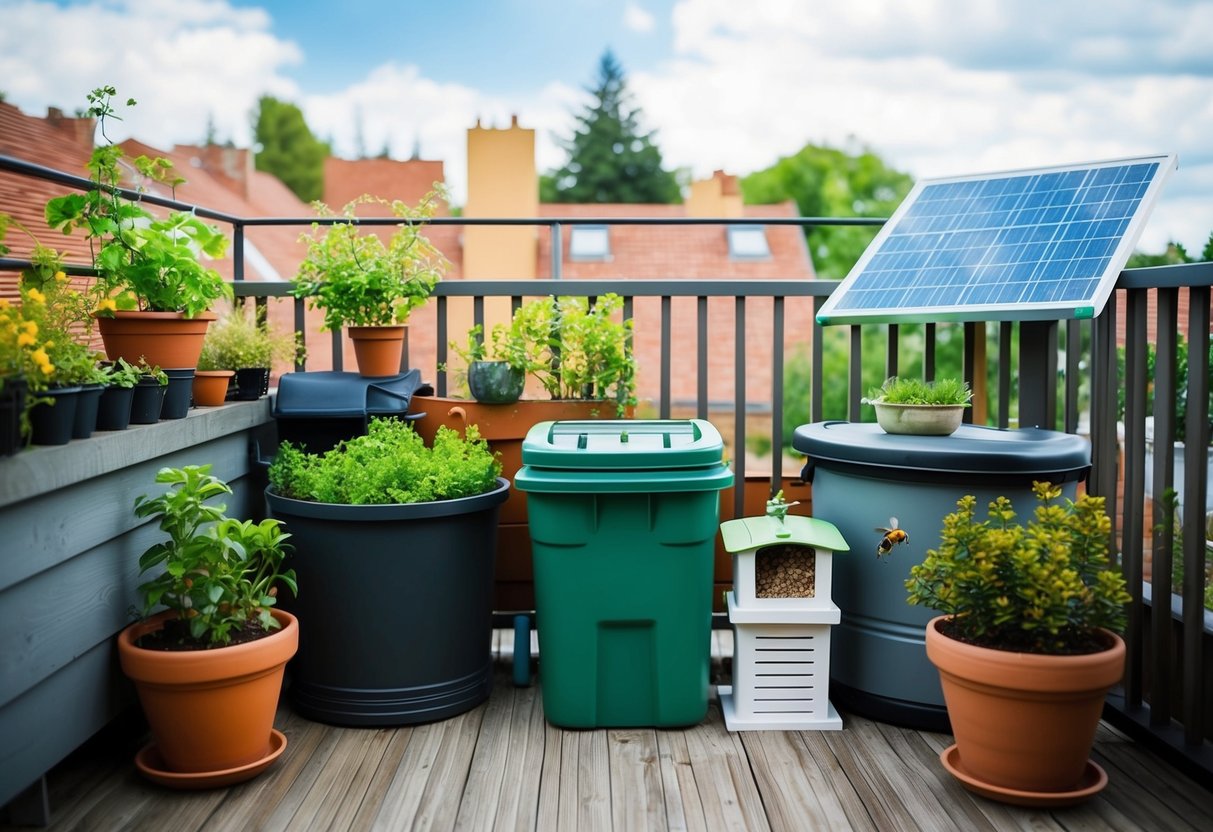
A thriving balcony garden needs regular care and adjustments.
Simple tasks and smart planning keep your plants healthy year-round.
Routine Care for Plant Health and Longevity
Water your plants regularly, but don’t overdo it.
Check soil moisture with your finger – if it’s dry an inch deep, it’s time to water.
Use a watering can with a long spout to reach all plants easily.
Prune your plants to keep them in shape. Remove dead or yellowing leaves to boost growth.
Pinch off flower heads after they fade to encourage more blooms.
Feed your plants with organic fertilizer every few weeks during the growing season. Follow the package instructions for amounts. Too much can harm plants.
Check for pests weekly. Look under leaves for bugs or signs of disease.
Remove pests by hand or use organic pest control sprays if needed.
Seasonal Adjustments and Crop Rotation
Change your plant lineup with the seasons. In spring, add colorful annuals and start summer veggies.
For fall, swap in cool-weather crops like kale or pansies.
Move plants around to give them the best light. As seasons change, some spots may get more or less sun.
Rotate sun-loving plants to brighter areas.
Protect plants from harsh weather. Move delicate plants inside during cold snaps or heat waves.
Use shade cloth to shield plants from intense summer sun.
Try crop rotation in your containers. Don’t plant the same type in the same pot year after year.
This helps prevent soil depletion and pest buildup.
Add fresh soil or compost to pots yearly. This replaces nutrients and improves drainage.
Your plants will grow better in refreshed soil.
Community Involvement and Education
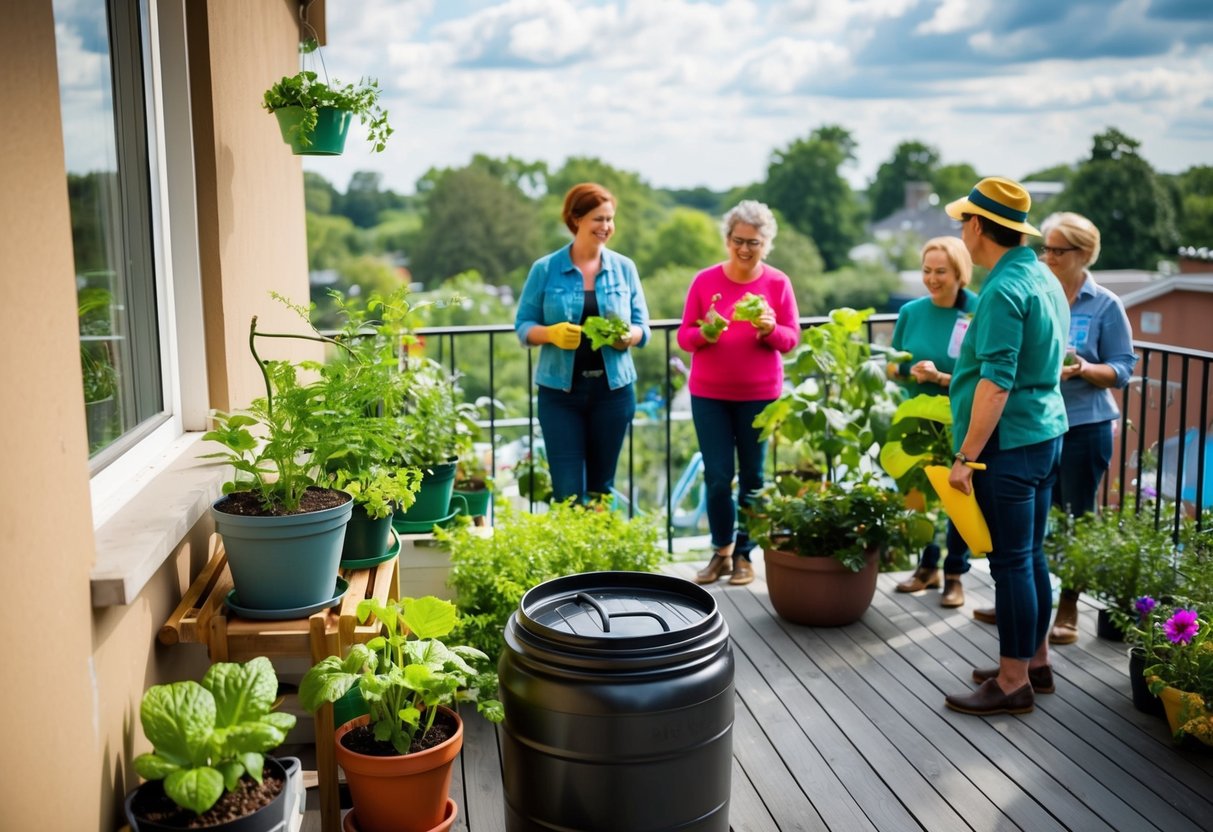
Sustainable balcony gardening can create connections and spread eco-friendly practices.
Sharing your knowledge and joining local initiatives helps build a greener community.
Sharing Knowledge and Resources with Neighbors
Start a balcony gardening club in your building. Invite neighbors to swap plants, seeds, and tools.
This saves money and reduces waste.
Host workshops to teach composting and pest control methods.
Create a shared compost bin for the building to turn food scraps into rich soil.
Set up a seed library where people can “borrow” seeds and return new ones after harvest.
This keeps heirloom varieties alive and promotes biodiversity.
Use social media to share tips and progress photos of your balcony garden.
This inspires others to start their own green spaces.
Engaging in Local Sustainability Initiatives
Join community garden projects to learn new skills and meet like-minded people.
Volunteer at urban farms to gain hands-on experience with larger-scale growing.
Attend farmers’ markets to connect with local growers and find unique plant varieties for your balcony.
Take part in city-wide planting days to green public spaces.
This improves air quality and beautifies neighborhoods.
Participate in workshops on rainwater harvesting and greywater systems.
These skills help you conserve water on your balcony and beyond.
Sign up for local environmental groups focused on urban greening.
You’ll stay informed about policies that affect green spaces in your area.
Your balcony garden can become part of a larger movement towards a sustainable city.
Advancing Your Sustainable Gardening Journey
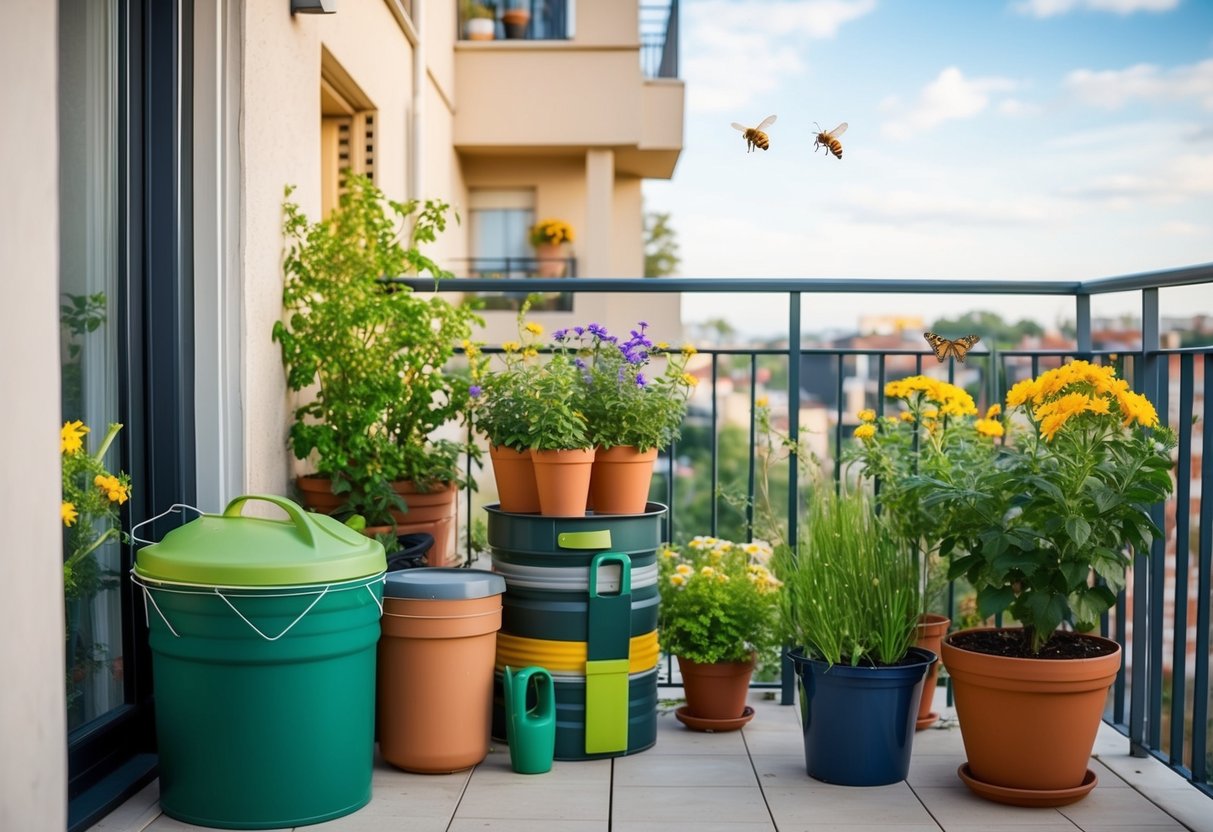
Sustainable gardening is an ongoing process of growth and discovery.
As you refine your skills, you’ll find new ways to make your balcony garden even greener and more eco-friendly.
Continued Learning and Experimentation
Try new sustainable techniques each season.
Start a compost bin for your kitchen scraps. This creates nutrient-rich soil for your plants.
Test different natural pest control methods like companion planting or homemade sprays.
Keep a garden journal to track what works best. Note which plants thrive in different spots on your balcony.
Record watering schedules and soil amendments you use.
Read gardening books and blogs focused on sustainability.
Look for tips specific to balcony or container gardens.
Watch online videos to learn new skills like seed saving or vertical gardening techniques.
Networking with Fellow Sustainable Gardeners
Join a local gardening club or online forum for balcony gardeners. Share your experiences and learn from others.
You might discover unique ideas for maximizing your small space.
Attend workshops or classes on sustainable gardening practices. Many nurseries and community centers offer these.
You’ll gain hands-on experience and meet like-minded gardeners.
Participate in seed swaps to try new plant varieties. This reduces waste and saves money. It’s also a great way to connect with other gardeners in your area.
Consider starting a neighborhood gardening group. You can share resources, trade surplus produce, and support each other’s sustainable efforts.