🪴Balcony Garden Paradise is reader-supported. When you buy through links on our site,
we may earn a small affiliate commission at no extra cost to you. As an Amazon Associate,
we earn from qualifying purchases. Happy Gardening from the team! 🌿
Balcony gardens offer a unique opportunity to bring nature into urban spaces. By applying biophilic design principles, you can create a small oasis that connects you to the natural world. Biophilic design in balcony gardens uses natural elements to improve your well-being and reduce stress.
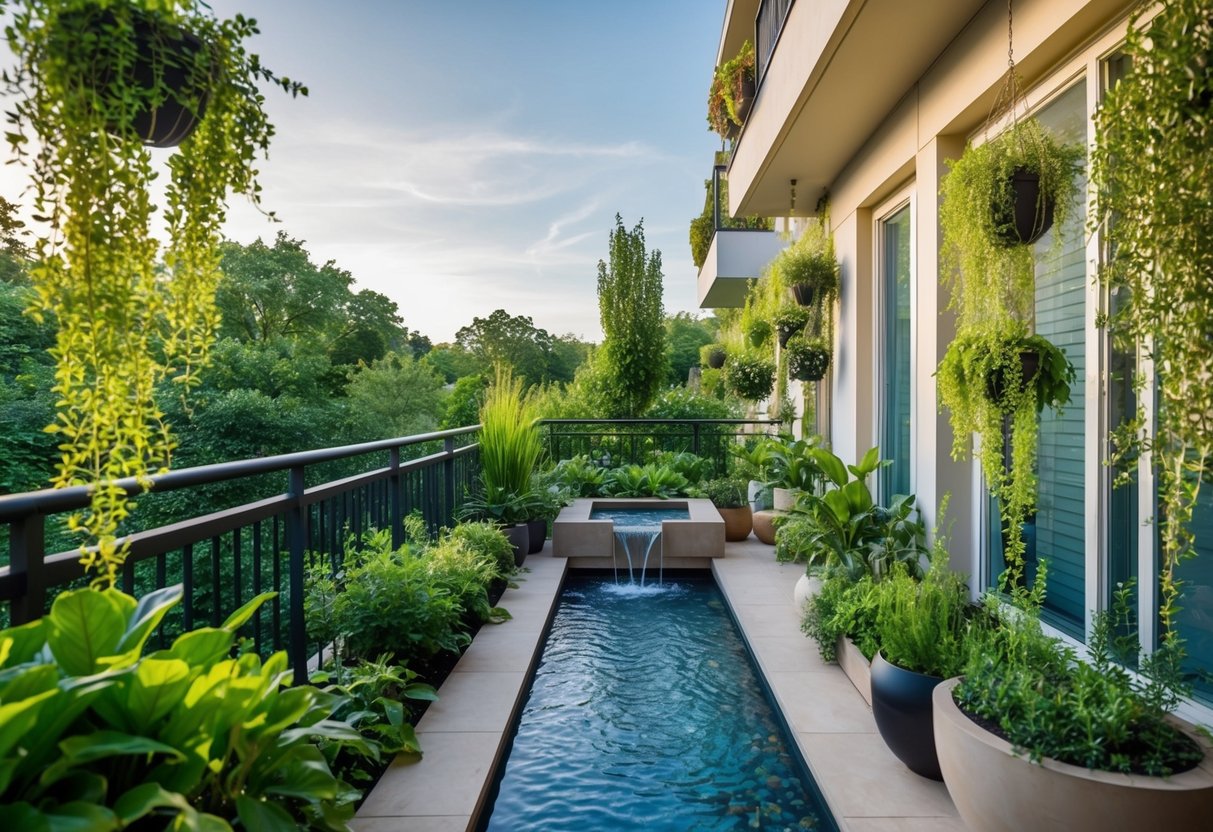
Plants, water features, and natural materials can transform your balcony into a calming retreat. These elements help you feel more connected to nature, even in the middle of a busy city. Your balcony garden can become a place to relax, recharge, and enjoy the outdoors.

Biophilic design goes beyond adding plants. It involves thoughtful choices in layout, materials, and sensory experiences. Wood, stone, or other natural textures can enhance the feeling of being in nature, and the sound of flowing water or wind chimes can add to the peaceful atmosphere.

The 2023 USDA Plant Hardiness Zone Map was created by Oregon State University (PRISM Climate Group) and released by the USDA.
Key Takeaways
- Biophilic design in balcony gardens brings nature into urban spaces
- Natural elements in your balcony garden can improve well-being and reduce stress
- Thoughtful design choices create a multi-sensory nature experience in a small space
Fundamentals of Biophilic Design
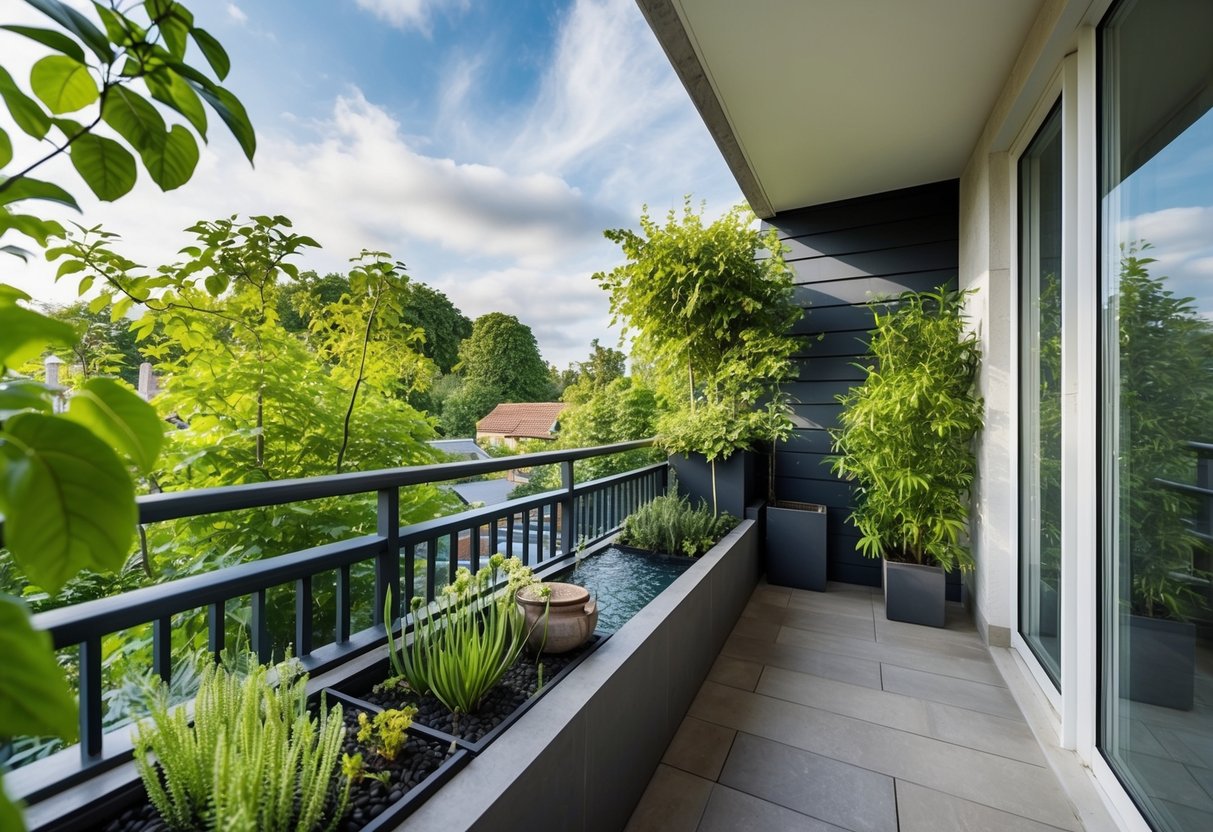
Biophilic design aims to bring nature into our living spaces. It uses elements from the outdoors to create calming and healthy environments.
Definition and Principles
Biophilic design connects people with nature in built settings. It uses natural materials, shapes, and patterns. The main ideas are:
- Direct nature: Real plants, water, and natural light
- Indirect nature: Images of nature, natural colors, and textures
- Space and place: Open layouts and views of the outdoors
These elements can lower stress and improve well-being. They also boost creativity and focus. Plants, natural wood, and flowing water features can be used in balcony gardens.
Historical Context
The idea of biophilic design is not new. Ancient cultures were often built with nature in mind. The Hanging Gardens of Babylon are an early example.
In the 1980s, scientist E.O. Wilson coined the term “biophilia”. It means humans have a natural love for living things. This idea grew into biophilic design.
Today, many modern buildings use these ideas. You can see them in offices, homes, and public spaces. Green walls and rooftop gardens are common features. These show how biophilic design has grown over time.
Balcony Gardens and Biophilia
Balcony gardens blend nature with urban living. They create green spaces that connect you to the natural world, even in city environments.
Benefits of Integrating Biophilic Elements
Adding plants to your balcony can improve air quality. They filter pollutants and release oxygen, making your outdoor space fresher.
Plants also reduce noise pollution. They absorb sound waves, creating a quieter, more peaceful area.
Biophilic design in balcony gardens can lower energy costs. Plants provide natural cooling, reducing the need for air conditioning.
Green spaces increase property value. A well-designed balcony garden can make your home more attractive to buyers.
Balcony gardens support local wildlife. They offer food and shelter for birds, butterflies, and beneficial insects.
Psychological Impact of Green Spaces
Spending time in green spaces can lower stress levels. Even a small balcony garden can help you feel calmer and more relaxed.
Natural settings improve focus and creativity. A plant-filled balcony can become your outdoor office or inspiration spot.
Green views speed up recovery from illness. Looking at plants from your window can help you feel better faster.
Gardening is a mood-boosting activity. Caring for plants gives you a sense of purpose and achievement.
Balcony gardens create a connection to nature. This link can improve your overall well-being and life satisfaction.
Design Considerations
Biophilic balcony gardens connect you with nature and improve well-being. Key factors shape their design and impact.
Spatial Planning
Plan your balcony layout carefully. Use vertical space for plants and features. Add seating areas to enjoy the garden. Consider sun and shade patterns when placing items. Think about traffic flow and access to plants.
Wall-mounted planters save floor space. Hanging baskets add greenery without cluttering. Multi-level shelving units maximize growing areas. Folding furniture provides flexible seating options.
Plant Selection
Choose plants suited to your balcony’s conditions. Consider sunlight, wind exposure, and temperature ranges. Mix textures, colors, and heights for visual interest.
Native plants often thrive with less care. Drought-tolerant species need less water. Fragrant herbs engage your senses. Edible plants give you fresh produce. Evergreens provide year-round greenery.
Some good balcony plant options:
- Lavender
- Succulents
- Dwarf citrus trees
- Ornamental grasses
- Compact vegetable varieties
Material Use and Sustainability
Pick eco-friendly materials for your balcony garden. Reclaimed wood adds warmth and character. Recycled plastic planters are durable and lightweight. Natural stone pavers create a timeless look.
Use water-saving systems like drip irrigation. Collect rainwater in small barrels. Choose solar-powered lights for nighttime ambiance. Compost kitchen scraps for natural fertilizer.
Look for FSC-certified wood products. Avoid harmful chemicals in paints and sealants. Select long-lasting materials to reduce waste over time.
Implementing Biophilic Elements
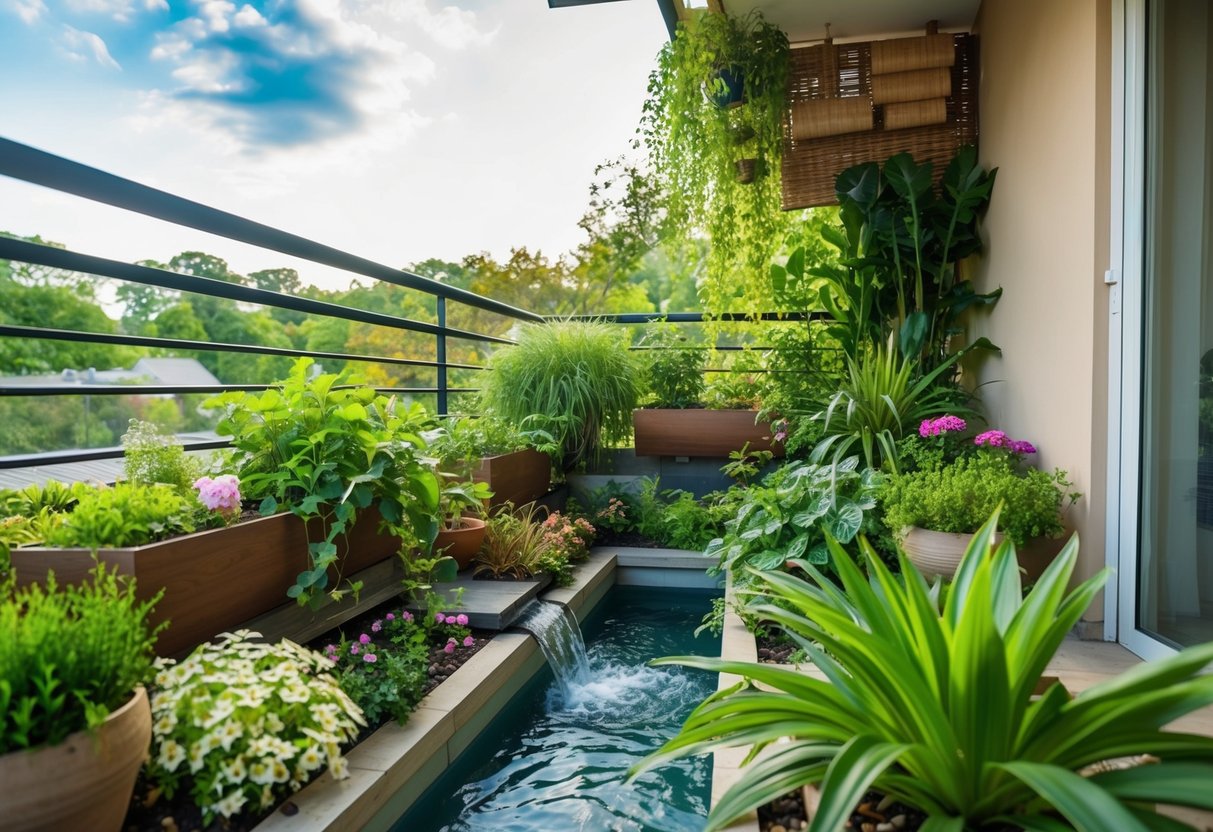
Biophilic design brings nature into your balcony garden. It uses natural elements to create a peaceful outdoor space. Let’s explore key ways to add biophilic features to your balcony.
Natural Light and Air Quality
Make the most of the sunlight on your balcony. Place plants where they get enough light to thrive. Use sheer curtains or adjustable blinds to control brightness and heat.
Improve airflow with fans or by opening windows. Add air-purifying plants like snake plants or peace lilies. These plants clean the air and boost oxygen levels.
Use natural materials for flooring and furniture. Wood, stone, or bamboo connect you to nature. They also help regulate temperature and humidity.
Water Features and Sound
Add a small fountain or water wall to your balcony. The sound of running water is calming. It masks city noise and creates a peaceful atmosphere.
Choose a solar-powered fountain to save energy. Make sure it’s the right size for your space. A tabletop fountain works well for small balconies.
If a fountain isn’t possible, try a rain chain or wind chimes. These create gentle sounds when it rains or when the wind blows.
Color and Texture Variations
Use plants with different colors and leaf shapes. Mix green foliage with colorful flowers. This adds visual interest and mimics natural diversity.
Include plants with varying textures. Pair smooth leaves with rough bark or fuzzy foliage. This creates a rich sensory experience.
Add natural textures to your balcony floor and walls. Use pebble mats, wooden panels, or living walls. These elements bring nature closer to you.
Choose furniture and decor in earth tones. Browns, greens, and blues reflect nature’s palette. They help create a calm, outdoor feeling.
Case Studies and Examples
Biophilic design in balcony gardens brings nature into urban spaces. Let’s look at some real-world projects and innovative techniques that show how this approach works in practice.
Urban Balcony Garden Projects
The 15 patterns of biophilic design can transform even small balconies. In New York City, a 50-square-foot balcony became a lush oasis. The designer used vertical planters to maximize space. They chose native plants to attract local wildlife.
Another project in Singapore turned a high-rise balcony into a mini rainforest. The design included a small water feature to mimic natural streams. This added both visual appeal and soothing sounds.
In Barcelona, a balcony garden focused on edible plants. The owner grew herbs, tomatoes, and lettuce. This project showed how biophilic design can also support urban farming.
Innovative Designs and Techniques
Designers are always finding new ways to bring nature to balconies. One popular technique is the use of living walls. These vertical gardens can cover an entire balcony wall with plants.
Some projects use smart technology to maintain balcony gardens. Automated watering systems ensure plants thrive with minimal effort. Light sensors can adjust artificial lighting to mimic natural day-night cycles.
Modular planting systems offer flexibility. You can easily change your garden layout as seasons or preferences change. Some designers also use recycled materials for planters and decorations. This adds an eco-friendly element to the biophilic design of balcony gardens.
Maintenance and Care
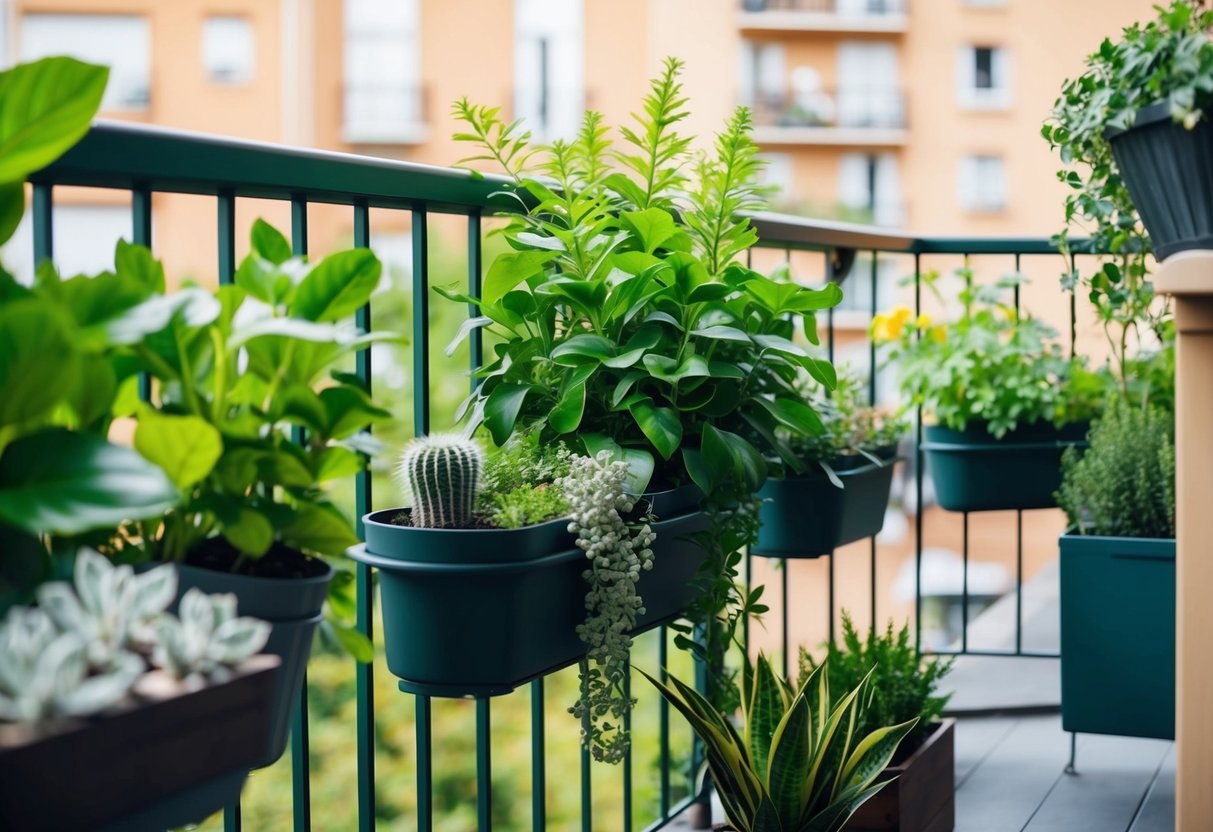
Keeping your biophilic balcony garden healthy requires regular attention and seasonal adjustments. Proper care will ensure your plants thrive year-round.
Regular Upkeep Practices
Water your balcony plants often, checking the soil moisture daily. Most plants need watering when the top inch of soil feels dry. Use a watering can or install a drip irrigation system for easy watering.
Prune your plants regularly to encourage growth and maintain their shape. Remove dead leaves and flowers to keep plants looking tidy. This also helps prevent pests and diseases.
Fertilize your plants every 4-6 weeks during the growing season. Use a balanced, water-soluble fertilizer for container plants. Follow the package instructions for proper dosage.
Clean your balcony garden tools after each use. This stops the spread of plant diseases. Store tools in a dry place to prevent rust.
Seasonal Adjustments and Plant Health
In spring, start seeds indoors or buy new plants to add to your garden. Gradually move plants outside as temperatures warm up. Refresh potting soil and repot plants that have outgrown their containers.
During summer, water plants more often to combat heat and dryness. Move sensitive plants to shadier spots if needed. Watch for pests like aphids or spider mites, and treat problems quickly.
In fall, bring tender plants indoors before the first frost. Reduce watering and fertilizing as plant growth slows down. Add mulch to outdoor containers to insulate plant roots.
For winter, protect plants from cold winds and frost. Use frost cloths or move plants to sheltered areas. Water less often, but don’t let soil dry out completely.
Challenges and Considerations
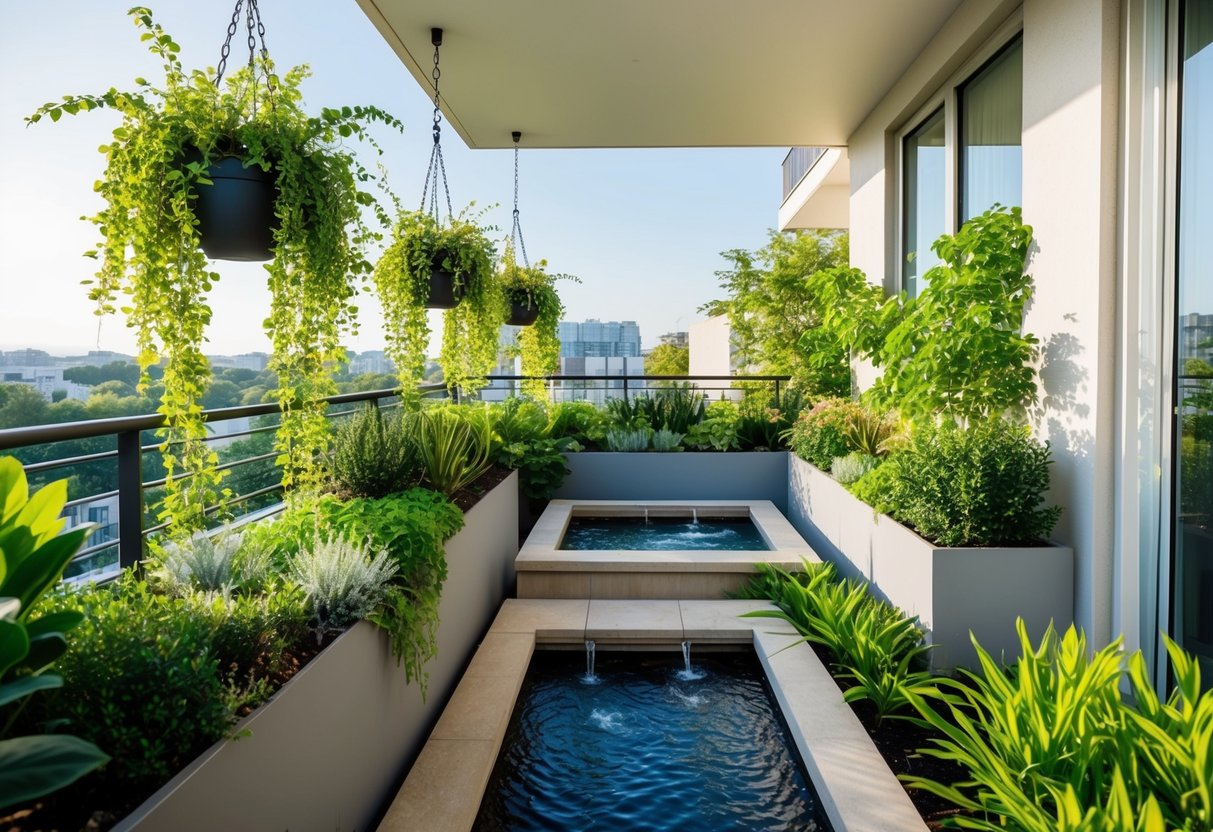
Creating a biophilic balcony garden comes with unique hurdles. You’ll need to tackle space constraints and adapt to weather conditions while crafting your green oasis.
Space Limitations and Privacy
Your balcony’s size affects plant choices and layout. Small spaces require careful planning. Consider vertical gardening with wall-mounted planters or hanging baskets to maximize area. Use compact furniture that doubles as storage. For privacy, try bamboo screens or tall potted plants like ornamental grasses.
Choose multi-purpose items. A bench with built-in planters saves space. Foldable chairs free up room when not in use. Think about sight lines from neighboring buildings. Position larger plants strategically to block views while maintaining your own.
Climate and Environmental Factors
Your balcony’s microclimate shapes plant selection. Wind exposure can dry out the soil quickly. Use windbreaks like trellises or fabric screens. In hot climates, provide shade with umbrellas or awnings to protect delicate plants.
Consider your balcony’s sun exposure. South-facing balconies get more sun, ideal for herbs and vegetables. North-facing ones suit shade-loving plants. East and West exposures offer balanced light.
Rain can be a blessing or challenge. Ensure proper drainage to avoid waterlogging. Use self-watering planters in dry spells. Choose hardy plants that match your local weather patterns for a thriving biophilic balcony garden.
Future Trends in Biophilic Design
Biophilic design in balcony gardens is evolving rapidly. New technologies and social trends are shaping how you can connect with nature in small outdoor spaces.
Technological Integration
Smart plant sensors will help you monitor soil moisture and sunlight levels. These devices will send alerts to your phone when your plants need care. Vertical gardening systems with built-in irrigation will make growing plants easier in tight spaces.
Augmented reality apps will let you visualize different garden layouts before planting. You’ll be able to see how plants will look as they grow. LED grow lights that mimic natural sunlight will extend growing seasons on shaded balconies.
3D-printed planters will offer custom sizes and shapes to fit any balcony. These planters will be made from recycled materials, reducing waste.
Community and Social Engagement
Balcony garden-sharing programs will let you swap plants with neighbors. This will create more diverse gardens and build community connections. Social media platforms focused on urban gardening will help you share tips and show off your balcony oasis.
Community balcony gardening projects will transform apartment buildings. Shared spaces will become green havens for all residents to enjoy. Workshops on balcony gardening will teach you new skills and bring people together.
Online marketplaces will make it easy to find rare plants for your balcony. You’ll be able to connect with local growers and support small businesses.