🪴Balcony Garden Paradise is reader-supported. When you buy through links on our site,
we may earn a small affiliate commission at no extra cost to you. As an Amazon Associate,
we earn from qualifying purchases. Happy Gardening from the team! 🌿
Balcony gardens are a great way to bring nature into your home, even if you live in a small space. You can transform your balcony into a green oasis with some creativity and planning. By adding plants, furniture, and decor, you can create a beautiful outdoor area for relaxation and enjoyment.
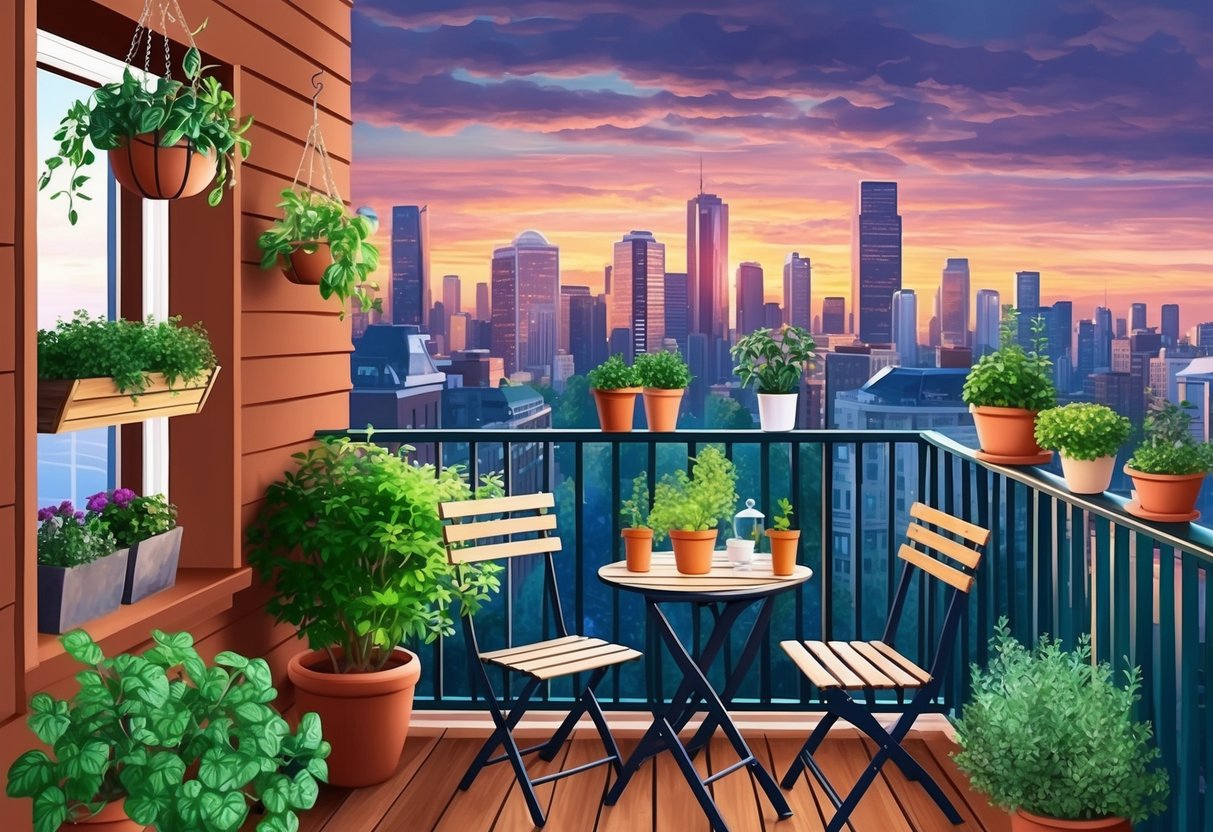
Balcony gardening has become more popular in recent years. People are looking for ways to grow their own food and flowers in limited spaces. There are many ideas and trends to choose from when designing your balcony garden.

You can start small with a few potted plants or go big with vertical gardens and hanging baskets. The key is to pick plants that suit your climate and the amount of sunlight your balcony gets. With the right setup, you can have a thriving garden right outside your door.

The 2023 USDA Plant Hardiness Zone Map was created by Oregon State University (PRISM Climate Group) and released by the USDA.
Key Takeaways
- Balcony gardens can transform small spaces into green retreats
- Choose plants that fit your climate and sunlight conditions
- Add furniture and decor to create a cozy outdoor living area
Understanding Balcony Gardening
Balcony gardens bring nature closer to urban living. They offer a chance to grow plants in small spaces and enjoy greenery right outside your door.
Benefits of Balcony Gardens
Balcony gardens improve your life in many ways. They make your home look nicer and feel more relaxing. You can grow fresh herbs and veggies for cooking. Plants clean the air and reduce stress.
Gardening on your balcony helps you connect with nature. It’s a fun hobby that gets you outside. You might even save money on groceries by growing some food.
Birds and butterflies may visit your balcony garden. This adds life to your space. Balcony plants can also give you more privacy from neighbors.
Assessing Your Balcony Space
Before you start your balcony garden, check a few key things. Look at how much sun your balcony gets each day. Some plants need lots of sun, while others like shade.
Think about wind and rain too. Strong winds can harm plants, so you might need to protect them. Check if your balcony floor can hold heavy pots.
Measure your balcony to plan your layout. Use vertical space with hanging baskets or wall planters. Consider fold-up tables or shelves to save room.
Pick the right size pots for your plants and space. Make sure they have drainage holes. Choose light pots if your balcony has weight limits.
Design Principles for Balcony Gardens
Creating an abundant balcony garden requires careful planning and attention to detail. A well-designed balcony garden can transform your outdoor space into a beautiful and functional oasis.
Choosing a Theme or Style
Pick a theme that matches your personal taste and complements your home’s style. Mediterranean themes feature terracotta pots and herbs. For a tropical feel, use bold foliage plants and bright flowers.
Japanese-inspired gardens focus on simplicity with stone elements and bamboo. A cottage garden style brings charm with climbing roses and pastel blooms.
Consider your climate when selecting plants. Choose drought-tolerant succulents for hot, dry areas. In cooler regions, opt for hardy perennials that can withstand temperature changes.
Your theme will guide plant choices, container styles, and decorative elements. This creates a cohesive look in your balcony garden.
Color Schemes and Textures
Use color to create mood and visual interest. Cool blues and purples make a space feel calm and larger. Warm reds and oranges add energy and coziness.
Create contrast with different leaf shapes and sizes. Mix fine-textured ferns with broad-leaved plants for depth.
Consider these color combinations:
- Monochromatic: Various shades of one color
- Complementary: Opposite colors on the color wheel
- Analogous: Colors next to each other on the color wheel
Add texture with different materials:
- Smooth ceramic pots
- Rough stone planters
- Woven baskets
- Metal containers
Use colorful flowers as accents. Group plants with similar needs together for easy care.
Balcony Garden Layouts
Plan your layout to maximize space and create flow. Use vertical space with hanging baskets, wall-mounted planters, or trellises for climbing plants.
Create zones for different activities:
- Seating area
- Herb garden
- Flower display
Place taller plants at the back and shorter ones in front. This creates depth and ensures all plants get enough light.
Use movable containers to adjust your layout as needed. This flexibility allows you to change your garden with the seasons.
Consider sight lines from inside your home. Place eye-catching plants where you can enjoy them from indoors too.
Leave enough space for maintenance and walking. A crowded balcony can be hard to enjoy and care for.
Plant Selection and Care
Choosing the right plants and caring for them properly are key to a thriving balcony garden. Your climate, space, and maintenance needs will guide your plant choices and care routine.
Picking Plants for Your Climate
Know your hardiness zone before selecting plants. This will help you choose species that can handle your local weather. For hot areas, try heat-loving plants like succulents or herbs. In cooler spots, go for hardy perennials or seasonal annuals.
Consider sun exposure on your balcony. South-facing spots get lots of sun, while north-facing ones are shadier. Match plants to these light conditions for best results.
Wind can be tough on balcony plants. Pick sturdy options that can handle breezes. Compact, bushy plants often do well. Tall or delicate plants may need extra support or protection.
Container and Vertical Gardening Ideas
Use containers of different sizes to create visual interest. Large pots work well for small trees or big plants. Smaller ones are great for herbs or flowers. Make sure all pots have drainage holes.
Try hanging baskets for a pop of color. They’re perfect for trailing plants like petunias or ivy. Hang them from the ceiling or railing to save floor space.
Vertical gardens are a smart way to use limited space. Wall-mounted planters or trellises let you grow upwards. This works well for vines, climbing plants, or even some veggies.
Maintenance Tips
Water your plants regularly, but don’t overdo it. Most balcony plants need more frequent watering than garden plants. Check soil moisture often, especially in hot weather.
Fertilize your plants to keep them healthy. Use a balanced, water-soluble fertilizer every few weeks during the growing season. Follow package instructions for best results.
Prune and deadhead your plants to encourage growth and blooming. Remove dead or yellowing leaves to keep plants looking neat. This also helps prevent pest problems.
Check for pests often. Look under leaves and in plant centers for signs of bugs. If you spot any, treat them quickly with appropriate methods to stop them from spreading.
Furniture and Accessories
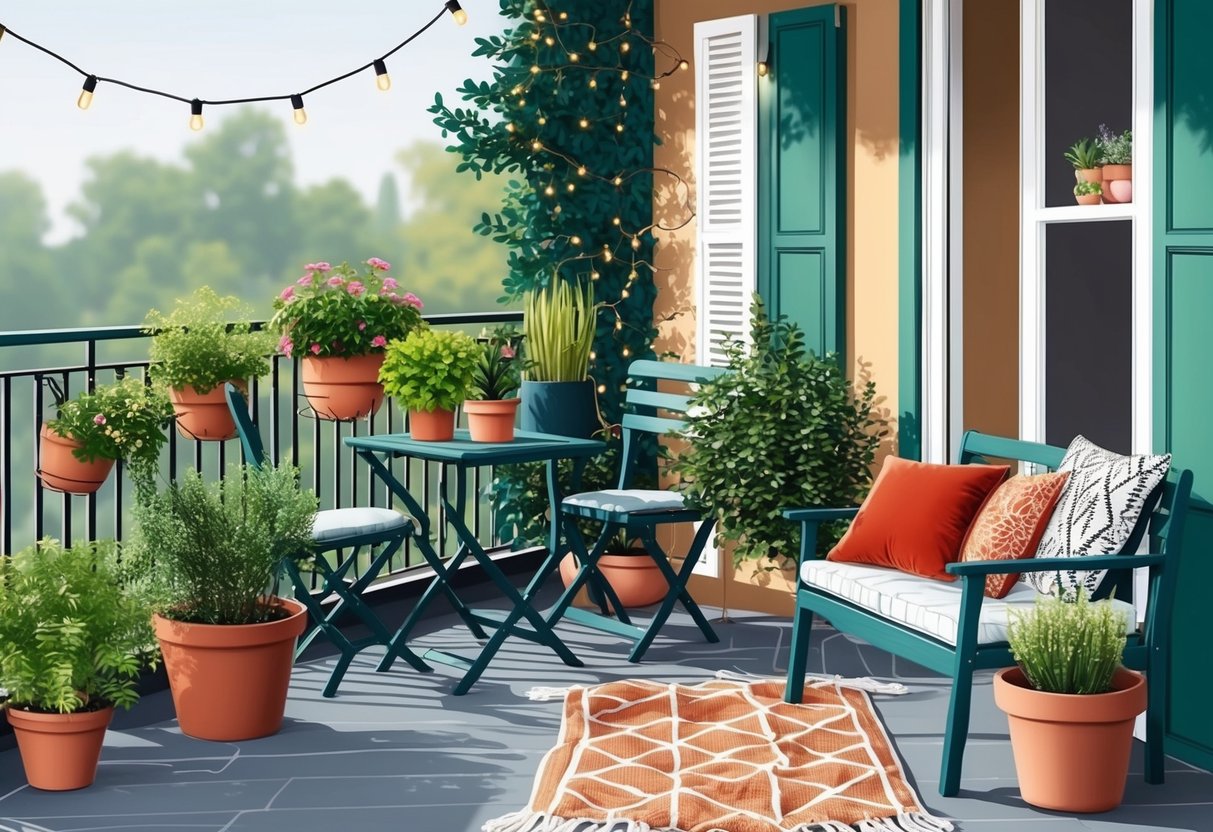
The right furniture and accessories can transform your balcony garden into a cozy outdoor oasis. Choosing pieces that fit your space and style is key to creating a beautiful and functional area.
Space-Saving Furniture
Folding chairs and tables are perfect for small balconies. You can easily store them when not in use. Look for compact bistro sets that tuck neatly into corners. Wall-mounted drop-leaf tables save floor space and provide a spot for meals or gardening tasks.
Bench seating with built-in storage gives you a place to sit and hide away gardening tools. Multi-functional pieces like storage ottomans or stools with removable tops are great for small spaces.
Consider vertical planters that attach to walls or railings. These free up floor space for furniture while adding greenery to your balcony garden.
Decorative Elements
Add personality to your balcony garden with carefully chosen décor. Outdoor rugs define seating areas and add color. Throw pillows make chairs more comfortable and bring in pops of pattern.
Hang wind chimes for soothing sounds. Place colorful ceramic pots on tables or shelves. Use decorative trellises for climbing plants and visual interest.
Weather-resistant art like metal sculptures or mosaic pieces can withstand the elements. Mirrors create the illusion of more space and reflect light around your balcony.
Lighting for Ambiance and Growth
String lights draped along railings or overhead create a magical atmosphere at night. Solar-powered lanterns are eco-friendly and easy to move around. LED candles provide flickering light without fire risk.
Clip-on grow lights help plants thrive in shady spots. These can attach to pots or shelves. Use timer-controlled lights to ensure plants get enough light each day.
Path lights along the edges guide the way after dark. Uplights placed in large planters highlight special plants or features. Choose warm white bulbs for a cozy glow that doesn’t attract bugs.
Trending Balcony Garden Features
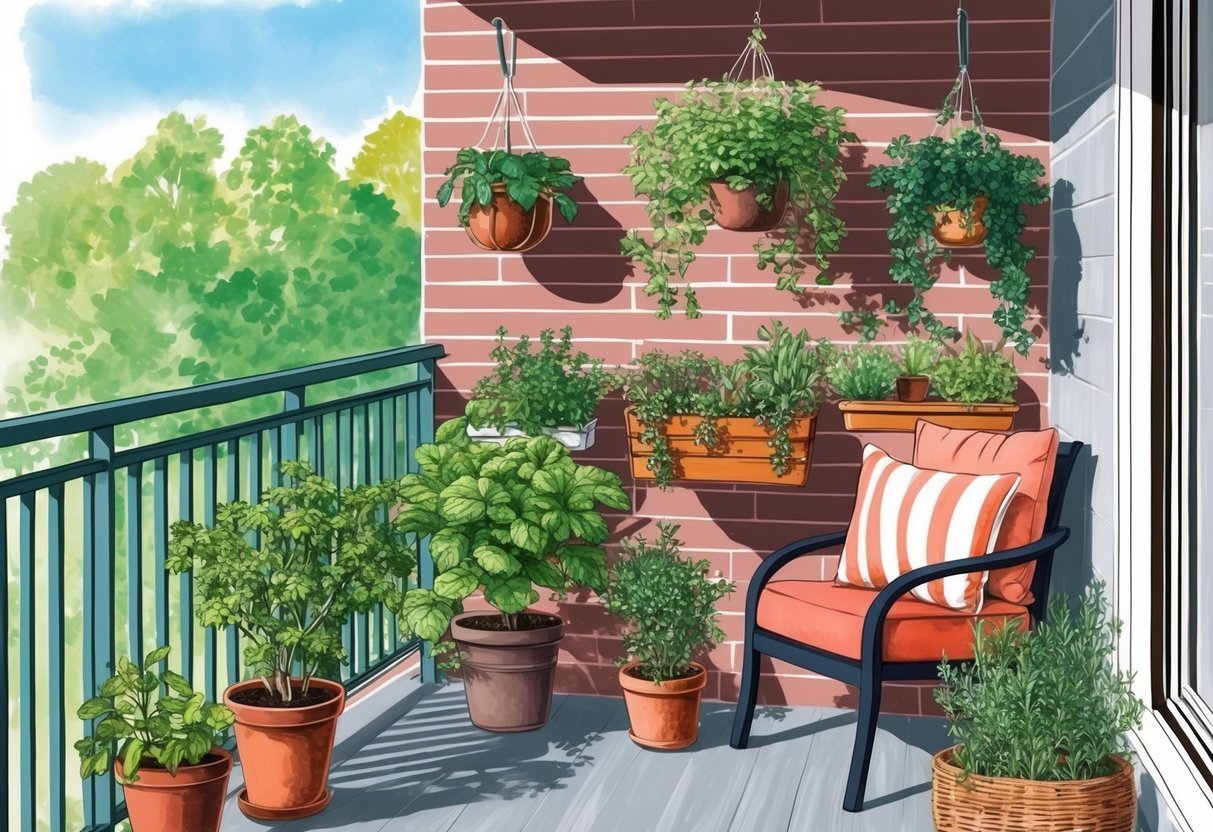
Balcony gardens are getting smarter, tastier, and greener. New tech, edible plants, and eco-friendly methods are changing how people garden in small spaces.
Smart Gardening Gadgets
High-tech tools make balcony gardening easier. Self-watering planters use sensors to give plants the right amount of water. You don’t have to worry about over or under-watering.
App-controlled lighting systems help plants grow better. You can set schedules for different plants’ needs. Some lights even change color to boost growth at different stages.
Weather stations for balconies track sun, rain, and temperature. They connect to your phone and tell you when to water or move plants. This takes the guesswork out of plant care.
Vertical gardening systems now come with built-in watering and fertilizing. You can grow more in less space without the hassle of manual care.
Edible Gardens and Herb Walls
Growing food on balconies is big. Compact vegetable varieties fit in small pots and still produce well. Think cherry tomatoes, dwarf peppers, and mini cucumbers.
Herb walls are both useful and pretty. You can hang them on railings or walls to save floor space. Popular herbs include basil, mint, and thyme.
Microgreens are trendy for small spaces. They grow fast and pack a lot of flavor. You can harvest them in just a few weeks.
Some balcony gardeners are trying unusual edibles. Dwarf fruit trees like lemons or figs can thrive in large pots. Edible flowers add color and flavor to salads.
Sustainable Gardening Practices
Eco-friendly methods are key in balcony gardens. Rainwater collection systems fit on small balconies. They help you save water and cut your bills.
Composting is possible even in tight spaces. Small bins or worm composters turn kitchen scraps into plant food. This reduces waste and feeds your garden.
People are choosing native plants more often. They need less water and care. They also support local insects and birds.
Solar-powered garden accessories are gaining popularity. Lights, fountains, and even small fans can run on solar power. This saves energy and adds ambiance to your outdoor space.
Practical Considerations

Creating a balcony garden involves more than just picking plants. You’ll need to think about some key factors to ensure your garden thrives and stays safe.
Water Management and Drainage
Good drainage is vital for balcony gardens. Use pots with drainage holes to prevent water from pooling. Place saucers under pots to catch excess water and protect your balcony floor.
Consider a drip irrigation system for easy watering. It can save time and ensure your plants get just the right amount of water. You can set it on a timer for worry-free care.
Make sure to check local rules about water runoff. Some areas have strict guidelines to prevent water from dripping onto lower balconies or the street.
Weight Restrictions and Safety
Balconies have weight limits you need to follow. Check with your building manager or a structural engineer to find out your balcony’s capacity.
Use lightweight containers like plastic or fiberglass instead of heavy ceramic pots. Fill pots with a mix of potting soil and perlite to reduce weight.
Secure all containers and furniture to prevent them from falling in strong winds. Use brackets or heavy-duty zip ties to attach pots to railings.
Privacy and Weather Protection
Add climbing plants on trellises for natural privacy screens. Bamboo or reed fencing can also create instant privacy and a cozy feel.
Install a retractable awning or shade sail to protect your plants from harsh sun and rain. This also makes your balcony more comfortable for you.
Use windbreaks like plexiglass panels or dense plantings to shield delicate plants. This helps reduce water loss and prevents damage to leaves and stems.
Consider foldable or stackable furniture to save space when not in use. This gives you more room for plants and makes it easier to rearrange your balcony garden.