🪴Balcony Garden Paradise is reader-supported. When you buy through links on our site,
we may earn a small affiliate commission at no extra cost to you. As an Amazon Associate,
we earn from qualifying purchases. Happy Gardening from the team! 🌿
Spring is here, and it’s time to refresh your balcony garden. As the days get longer and warmer, your plants need more care and attention.
Watering is key to keeping your balcony garden thriving.

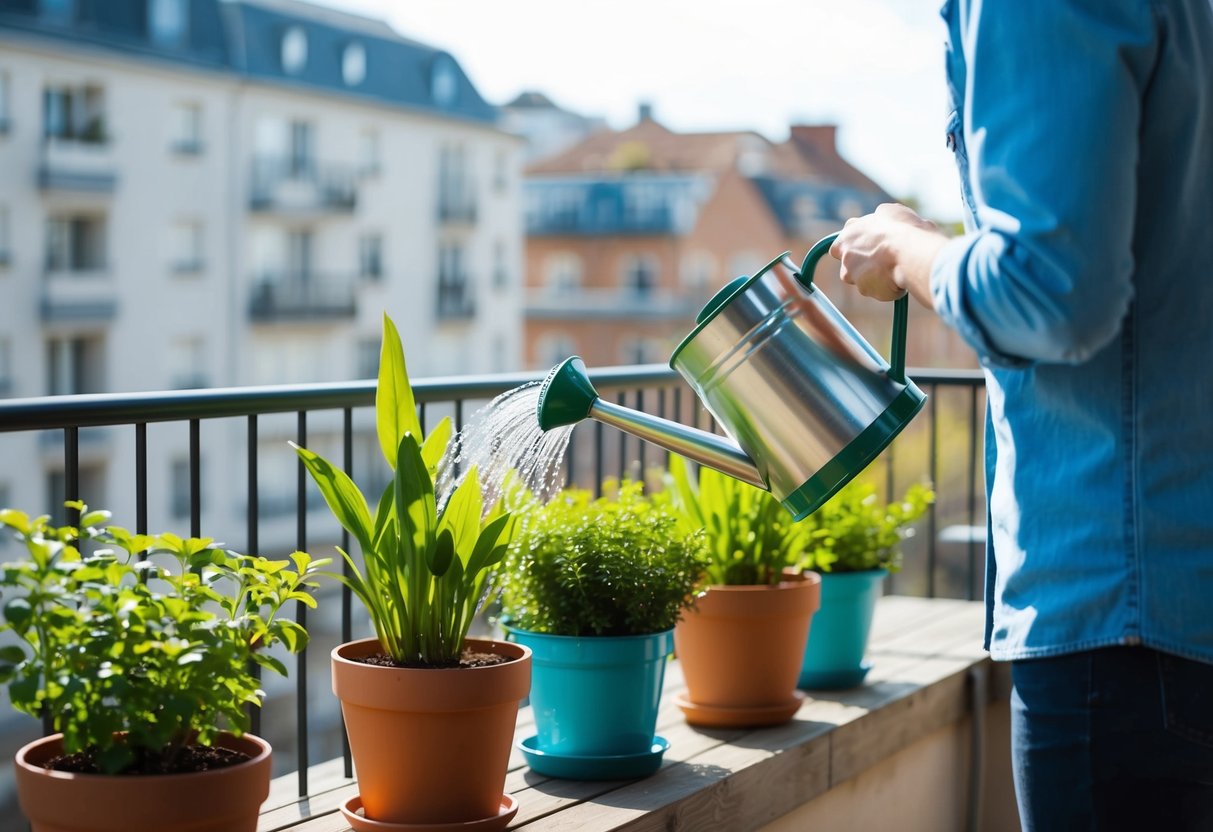
Proper watering techniques can make or break your balcony garden’s success. Too much water can drown your plants, while too little can leave them thirsty and weak.

The 2023 USDA Plant Hardiness Zone Map was created by Oregon State University (PRISM Climate Group) and released by the USDA.
Finding the right balance is crucial for healthy growth.
Learning how to water your balcony garden effectively can help you create a lush, green space. With the right tools and knowledge, you can keep your plants happy and flourishing all season long.
Key Takeaways
- Adjust watering frequency based on plant needs and weather conditions
- Use proper tools and techniques to ensure even moisture distribution
- Monitor soil moisture and plant health to prevent over or under-watering
Understanding the Basics of Balcony Gardening in Spring
Spring brings new life to balcony gardens. Your plants wake up from winter dormancy and start growing again.
It’s important to know how spring affects your balcony plants and how to care for them during this season.
The Significance of Spring for Plant Growth
Spring is a key time for balcony gardens. Longer days and warmer temperatures kickstart plant growth. Your plants use stored energy to produce new leaves, stems, and flowers.
Roots also become more active in spring. They absorb water and nutrients from the soil to fuel new growth. This is why proper watering is crucial now.
Spring is ideal for planting new additions to your balcony garden. The mild weather gives plants time to establish before summer heat arrives.
Assessing Your Balcony’s Microclimate
Your balcony has its own unique growing conditions. These affect how plants grow and how much water they need.
Check how much sunlight your balcony gets. Full sun, partial shade, or full shade will determine which plants thrive there. Notice if some spots get more sun than others.
Wind exposure is another factor. Windy balconies dry out soil faster, so plants may need more frequent watering.
Temperature can vary too. South-facing balconies are usually warmer than north-facing ones. This impacts plant choices and watering needs.
Consider using a moisture meter to track soil dampness in different spots. This helps you water more effectively as spring progresses.
Selecting the Right Plants for Your Balcony
Choosing suitable plants is key for a thriving balcony garden. Focus on varieties that match your space and climate for the best results.
Spring-Flowering Bulbs and Perennials
Tulips, daffodils, and crocuses are great spring-flowering bulbs for balconies. Plant them in fall for colorful blooms in early spring. These flowers do well in pots and add cheer to your outdoor space.
Perennials like lavender, pansies, and primroses are also good choices. They come back year after year, saving you time and money. Lavender gives off a nice scent and attracts bees. Pansies offer bright colors and can handle cooler temps.
Make sure to pick plants that fit your balcony’s sun exposure. Some need full sun, while others prefer shade. Check the plant tags or ask at your local garden center for advice.
Vegetables and Herbs Suitable for Spring Planting
Many veggies and herbs grow well on balconies in spring.
Leafy greens like lettuce, spinach, and kale are easy to grow in pots. They don’t need much space and can be harvested multiple times.
Herbs such as basil, mint, and cilantro are perfect for small spaces. They add flavor to your meals and smell great. Most herbs do well in sunny spots and need regular watering.
For larger veggies, try cherry tomatoes or bush beans. These plants are compact and suited for container growing. Use big pots (at least 5 gallons) for the best results.
Remember to match your plants to your balcony’s conditions. With the right choices, you’ll have a lush and productive balcony garden this spring.
Watering Techniques for Optimal Plant Health
Proper watering is key for healthy plants on your balcony. The right methods help roots grow strong and prevent common issues.
Determining Water Needs Based on Plant Types
Different plants need different amounts of water. Cacti and succulents like to dry out between waterings. Leafy plants and flowers often need more frequent drinks.
Check the soil with your finger. Water when the top inch feels dry for most plants.
Use saucers under pots to catch extra water. Empty these after watering to avoid root rot. Group plants with similar needs together. This makes watering easier.
Adjust your watering schedule as seasons change. Plants typically need more water in spring and summer. Cut back in fall and winter when growth slows down.
Effective Watering Practices to Encourage Deep Root Growth
Water deeply but less often. This encourages roots to grow down, making plants stronger. Aim for the base of the plant, not the leaves. Wet leaves can lead to fungal problems.
Use a watering can with a long spout or a hose with a gentle spray nozzle. This helps you target the soil directly. Water until you see it coming out of the drainage holes.
Early morning is the best time to water. Plants have all day to absorb the moisture before night. This reduces the risk of mildew and other issues.
Try self-watering pots or drip irrigation for consistent moisture. These work well for thirsty plants or when you’re away. Remember to check and refill water reservoirs regularly.
Innovative Watering Systems and Tools
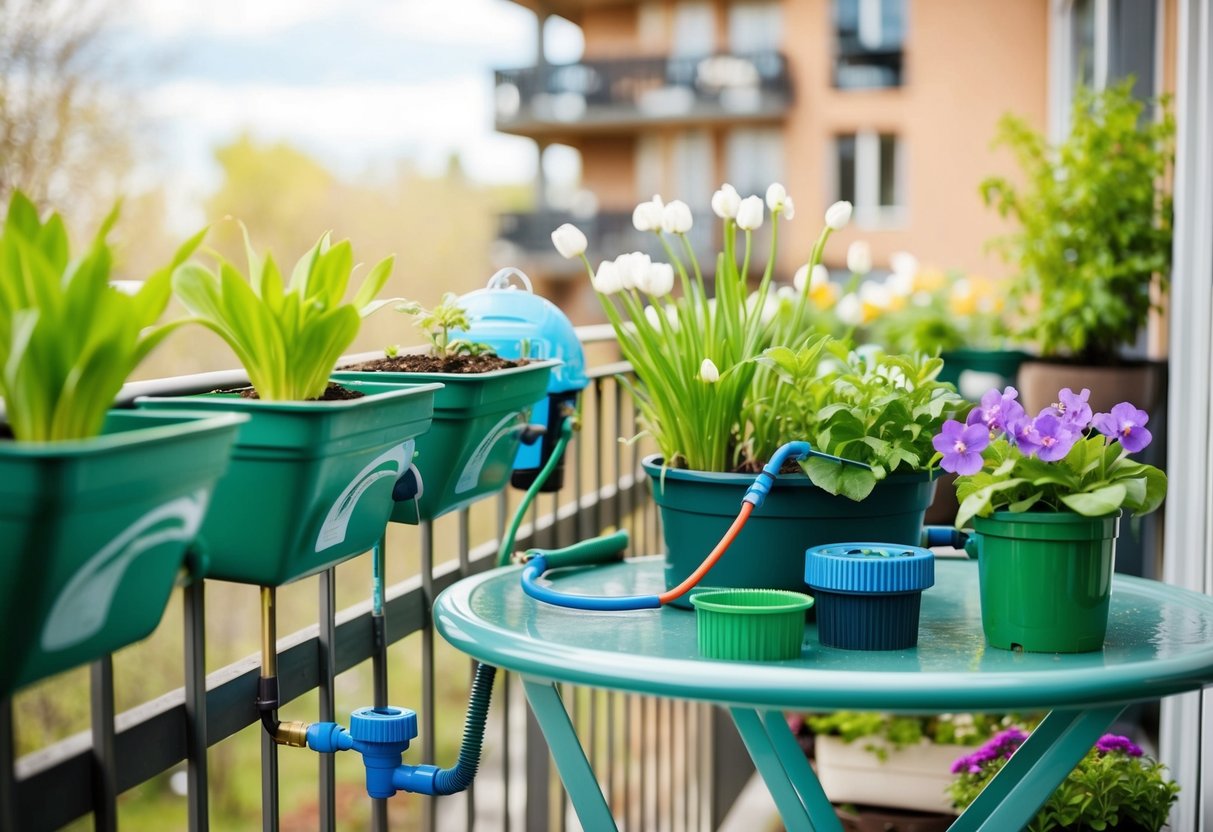
Smart watering solutions can make caring for your balcony garden easier and more efficient. These systems help you save time and water while keeping your plants healthy.
Drip Irrigation: A Sustainable Choice for Balconies
Drip irrigation is a great way to water your balcony plants. It uses a network of thin tubes with small holes to deliver water directly to plant roots. You can set up a timer to control when and how much water your plants get.
Benefits of drip irrigation:
- Saves water by reducing evaporation
- Waters plants slowly and deeply
- Can be automated for easy care
To set up a drip system:
- Connect tubing to a water source
- Run tubes along your planters
- Place emitters near each plant
- Adjust flow rate as needed
Drip systems work well for most balcony plants. They’re especially good for veggies and thirsty flowers.
Self-Watering Containers for Busy Gardeners
Self-watering pots are a handy tool for balcony gardens. These pots have a built-in water reservoir at the bottom. Plants draw water up through a wick as they need it.
How self-watering pots work:
- You fill the reservoir every 1-2 weeks
- Plants use water as needed
- Prevents over and under-watering
Pros of self-watering containers:
- Ideal for busy schedules
- Good for plants that like steady moisture
- Reduce watering frequency
To use self-watering pots:
- Choose the right size for your plant
- Fill the reservoir when it’s low
- Check soil moisture regularly
Self-watering pots are great for herbs, leafy greens, and flowers. They help keep your plants healthy with minimal effort.
Maintaining Proper Moisture Levels
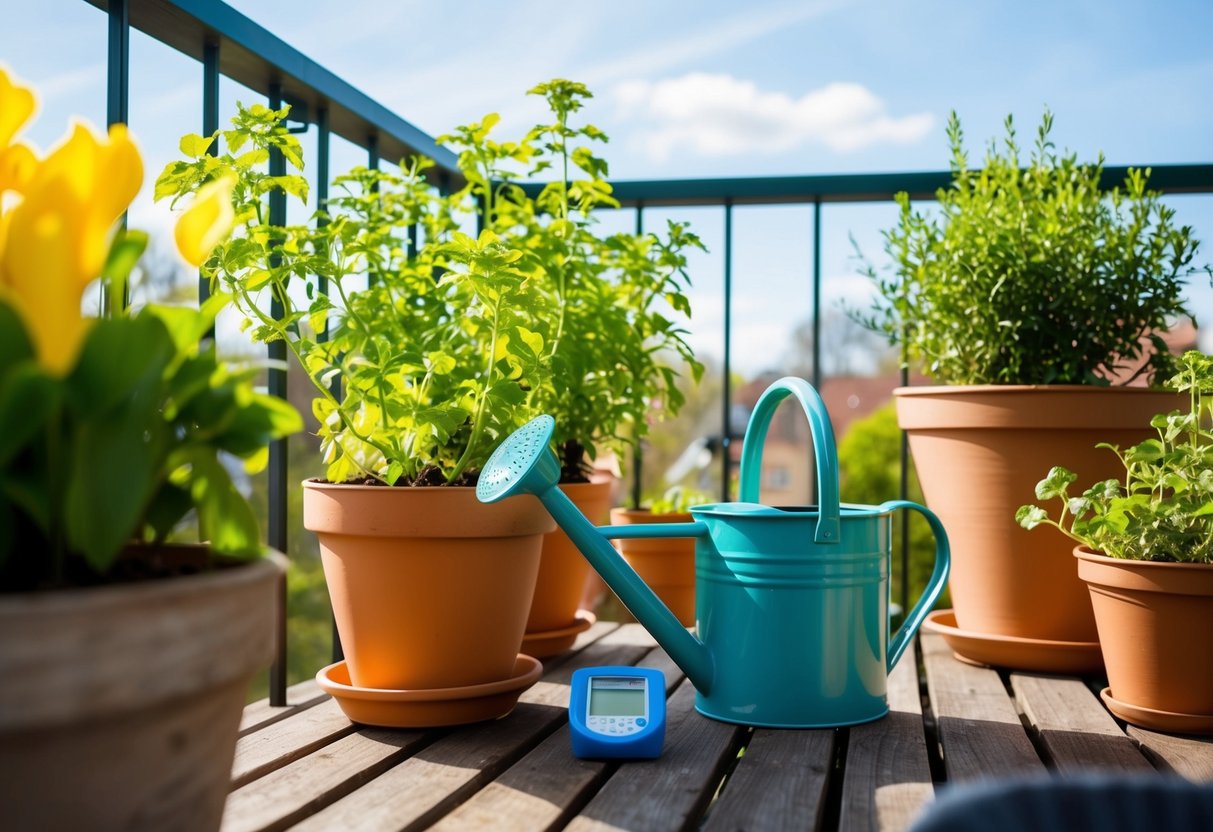
Keeping the right amount of water in your balcony garden is key. Plants need steady moisture without being waterlogged. Let’s look at smart ways to manage water for healthy plants.
Mulching to Retain Soil Moisture
Mulch is a gardener’s best friend for keeping soil moist. Put a 2-inch layer of organic mulch around your plants. This can be bark chips, straw, or even small pebbles.
Mulch slows down water evaporation from the soil. It also keeps roots cool on hot days. As organic mulches break down, they add nutrients to the soil.
Be careful not to pile mulch against plant stems. This can cause rot. Leave a small gap around the base of each plant. Refresh your mulch layer every spring to keep it working well.
Recognizing Over-Watering and Under-Watering Signs
Knowing when plants need water is crucial. Under-watered plants often have droopy leaves that perk up after watering. The soil may pull away from the pot sides.
Over-watered plants can look similar at first. Their leaves may be yellow or brown and feel soft. The soil stays wet for days and might smell musty.
Check your plants daily. Stick your finger about an inch into the soil. If it’s dry at that depth, it’s time to water. If it’s still damp, wait another day.
Different plants have different needs. Succulents like to dry out between waterings. Leafy plants often need more frequent water. Learn what each of your plants prefers for the best results.
Timely Tips for Spring Watering
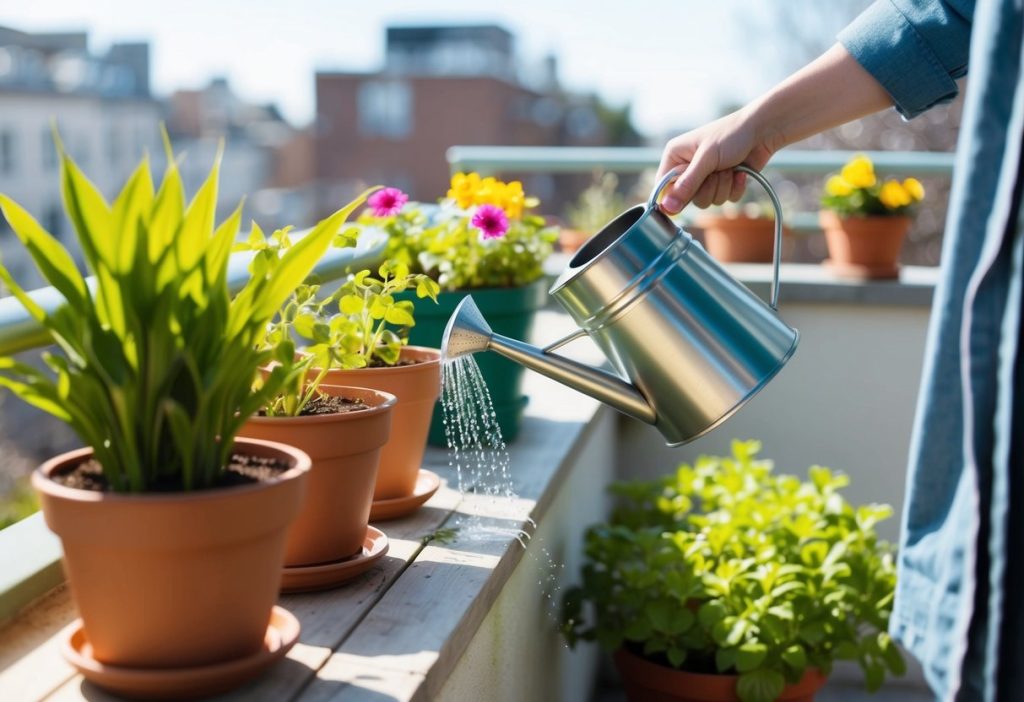
Spring brings new growth to your balcony garden. Proper watering is key for healthy plants. Here are some tips to keep your garden thriving.
Best Times of Day to Water Your Garden
Water your balcony garden early in the morning. This gives plants time to absorb moisture before the day heats up. Aim for between 6 AM and 9 AM.
Avoid watering in the evening. Wet leaves overnight can lead to fungal diseases.
If you miss the morning, late afternoon is okay. Water around 4 PM to 6 PM. This gives plants time to dry before nightfall.
Use your finger to check soil moisture. If it’s dry an inch deep, it’s time to water.
Frequency and Amount of Watering During Spring Months
Water your balcony garden 2-3 times per week in spring. Adjust based on rainfall and temperature.
Give plants a deep watering each time. This encourages strong root growth.
Use about 1 inch of water per square foot of soil. A rain gauge can help you measure.
Check pots daily. They dry out faster than in-ground gardens.
Succulents and cacti need less water. Water them every 10-14 days.
Leafy greens and herbs need more water. Check them every other day.
Troubleshooting Common Watering Issues
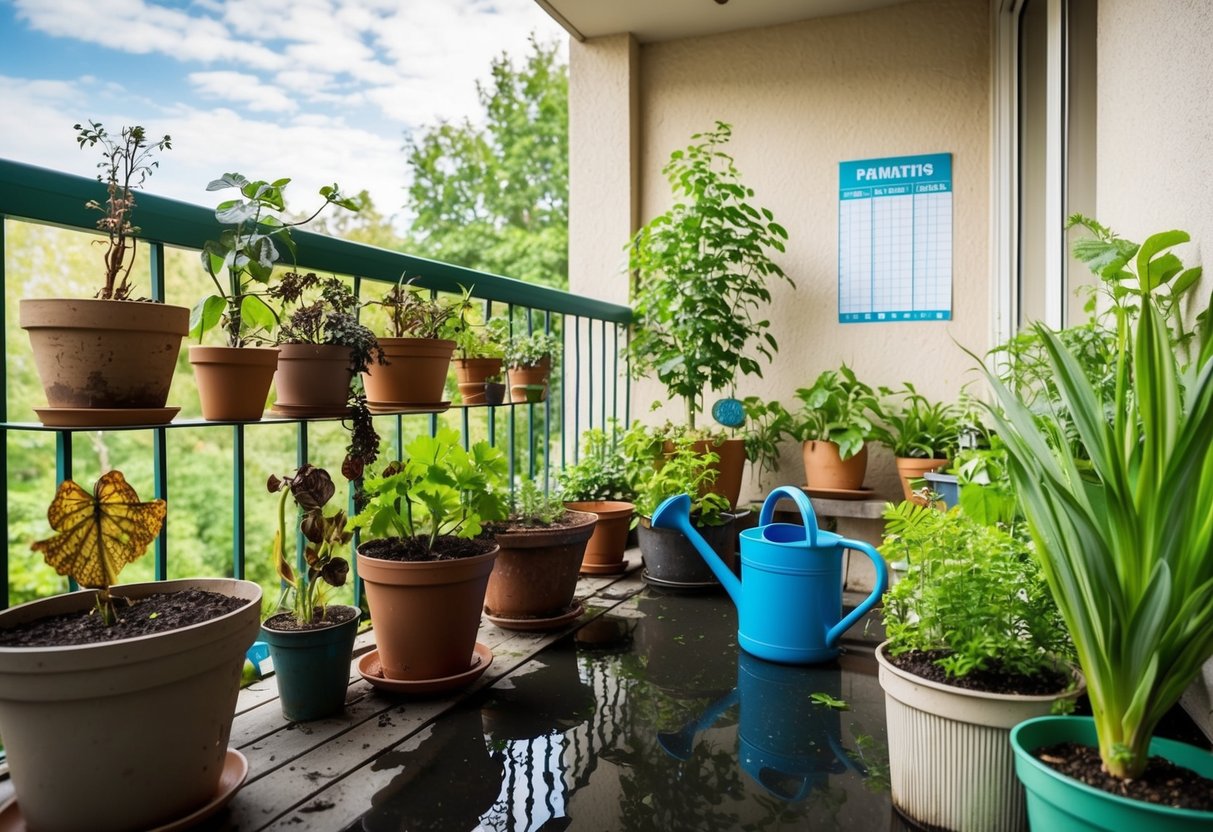
Spring weather can bring challenges for balcony gardeners. Let’s explore some solutions to keep your plants healthy when faced with too much or too little water.
Addressing Waterlogged Soils
Overwatering can lead to soggy soil and unhappy plants. Check your pots for proper drainage holes.
If water pools on top, mix in some perlite or sand to improve drainage.
Lift your pots slightly off the balcony floor using pot feet or small blocks. This allows excess water to escape and air to circulate.
Consider using moisture-wicking materials like burlap or coconut coir in your soil mix. These help balance moisture levels and prevent waterlogging.
If leaves turn yellow or wilt, ease up on watering. Let the top inch of soil dry out before watering again. Remove any standing water from saucers promptly.
Mitigating the Effects of Erratic Spring Weather
Spring can bring unpredictable rain and temperature swings. Keep an eye on the forecast and adjust your watering schedule accordingly.
Use mulch to help retain moisture during dry spells. A layer of straw, wood chips, or pebbles can slow evaporation from the soil surface.
For sudden cold snaps, move plants indoors or cover them with fleece or bubble wrap. This protects them from frost damage and excessive water loss.
During heat waves, water more frequently but in smaller amounts. Early morning or evening watering reduces evaporation.
Mist foliage to increase humidity and cool plants down.
Group plants with similar water needs together. This makes it easier to meet their requirements as weather conditions change.
Conclusion
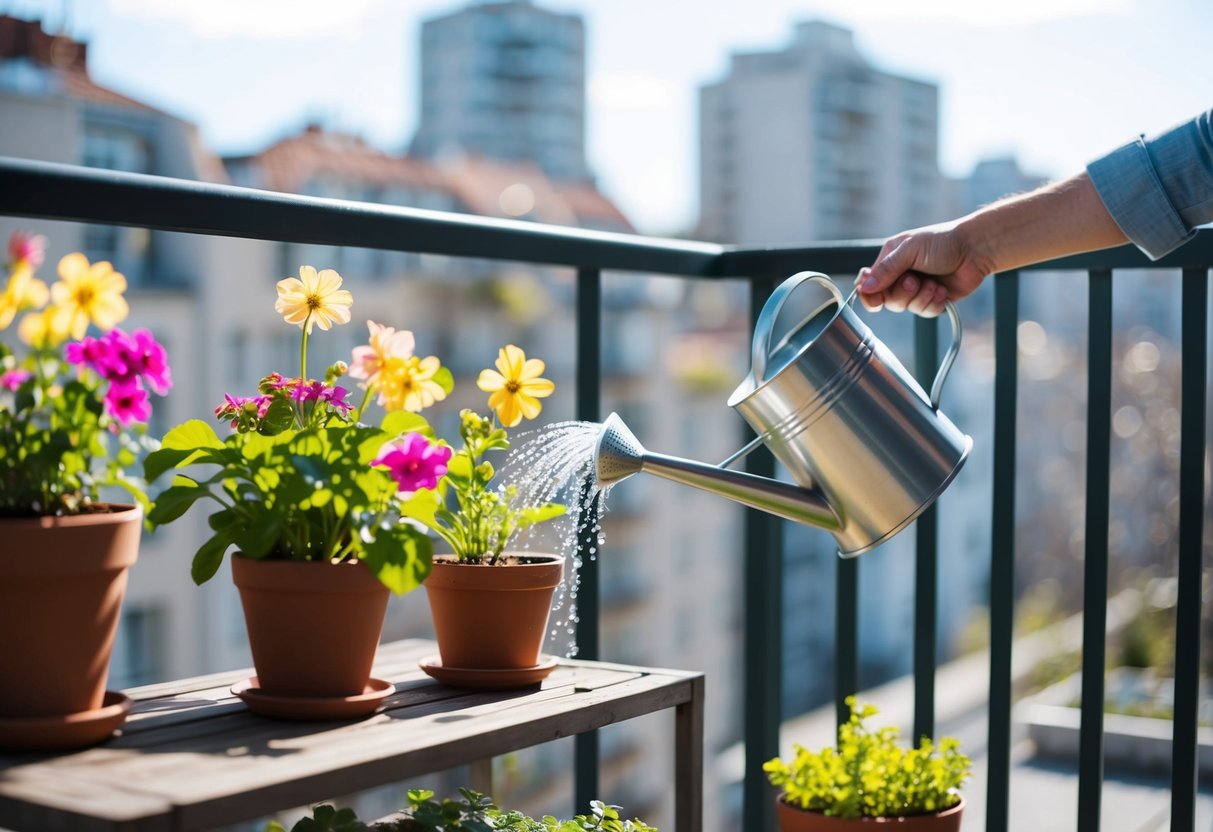
Spring brings new life to your balcony garden. With the right watering strategies, you can help your plants thrive.
Remember to check soil moisture regularly and adjust your watering routine as needed.
Different plants have different needs. Group similar plants together for easier care.
Use the right tools, like watering cans or self-watering systems, to make the job simpler.
Pay attention to weather changes. Hot, dry days may require more frequent watering. Rainy periods might mean you can water less often.
Proper drainage is key. Make sure your pots have holes and use well-draining soil. This prevents waterlogging and root rot.
With these tips, you’ll be well-equipped to keep your balcony garden healthy and vibrant throughout the spring season.