🪴Balcony Garden Paradise is reader-supported. When you buy through links on our site,
we may earn a small affiliate commission at no extra cost to you. As an Amazon Associate,
we earn from qualifying purchases. Happy Gardening from the team! 🌿
Spring is just around the corner, and it’s time to start thinking about your balcony garden. With a bit of planning and effort, you can create a beautiful outdoor space filled with colorful flowers and lush greenery.
Getting your balcony ready for the blooming season is easy and rewarding.

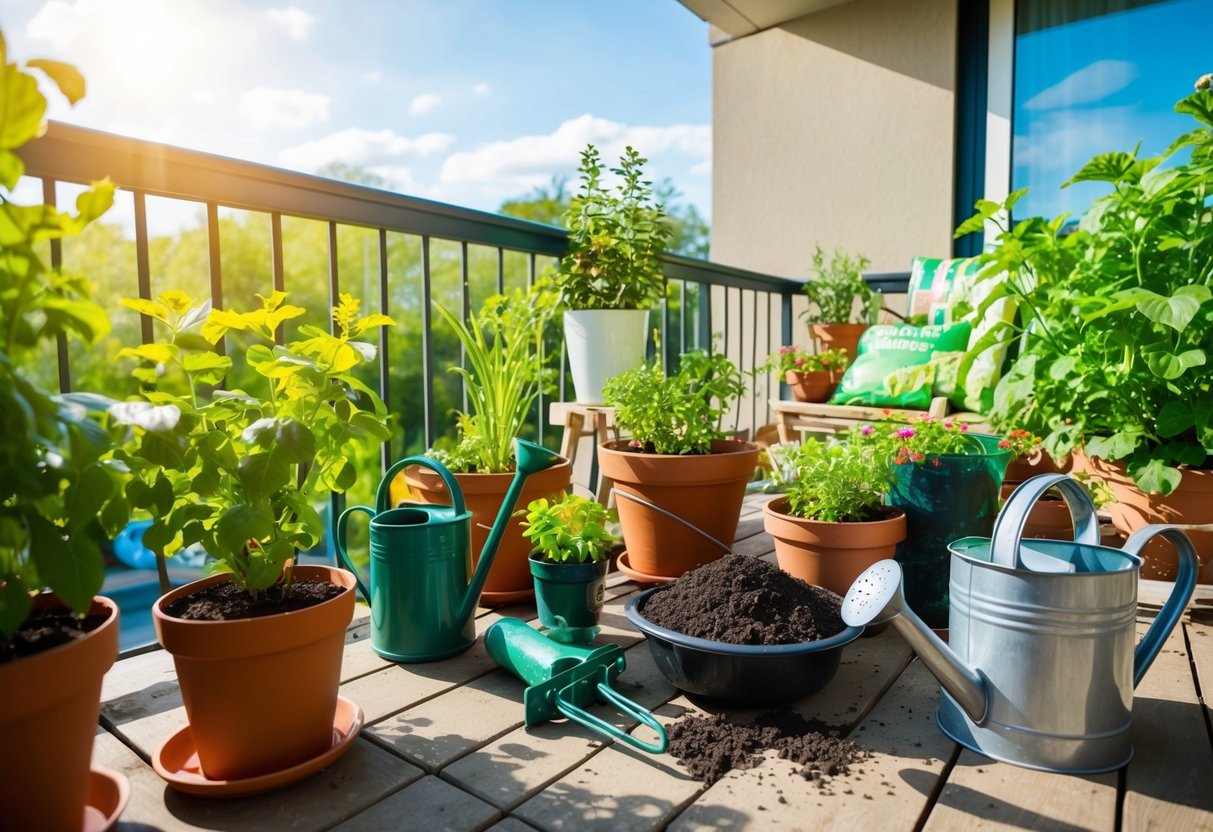
You don’t need a big yard to enjoy gardening. A balcony, no matter how small, can be transformed into a thriving green oasis.

The 2023 USDA Plant Hardiness Zone Map was created by Oregon State University (PRISM Climate Group) and released by the USDA.
Start by checking your space and deciding what plants will work best. Think about sunlight, wind, and temperature in your area.
Now is the perfect time to gather your tools and supplies. Pick up some pots, soil, and seeds or seedlings. Clean your balcony and set up any shelves or hanging baskets you want to use. Soon, you’ll be ready to plant and watch your garden grow.
Key Takeaways
- Plan your balcony garden based on available space and sunlight
- Gather necessary supplies like pots, soil, and plants before spring arrives
- Clean and prepare your balcony for a fresh start to the growing season
Assessing Your Balcony Space
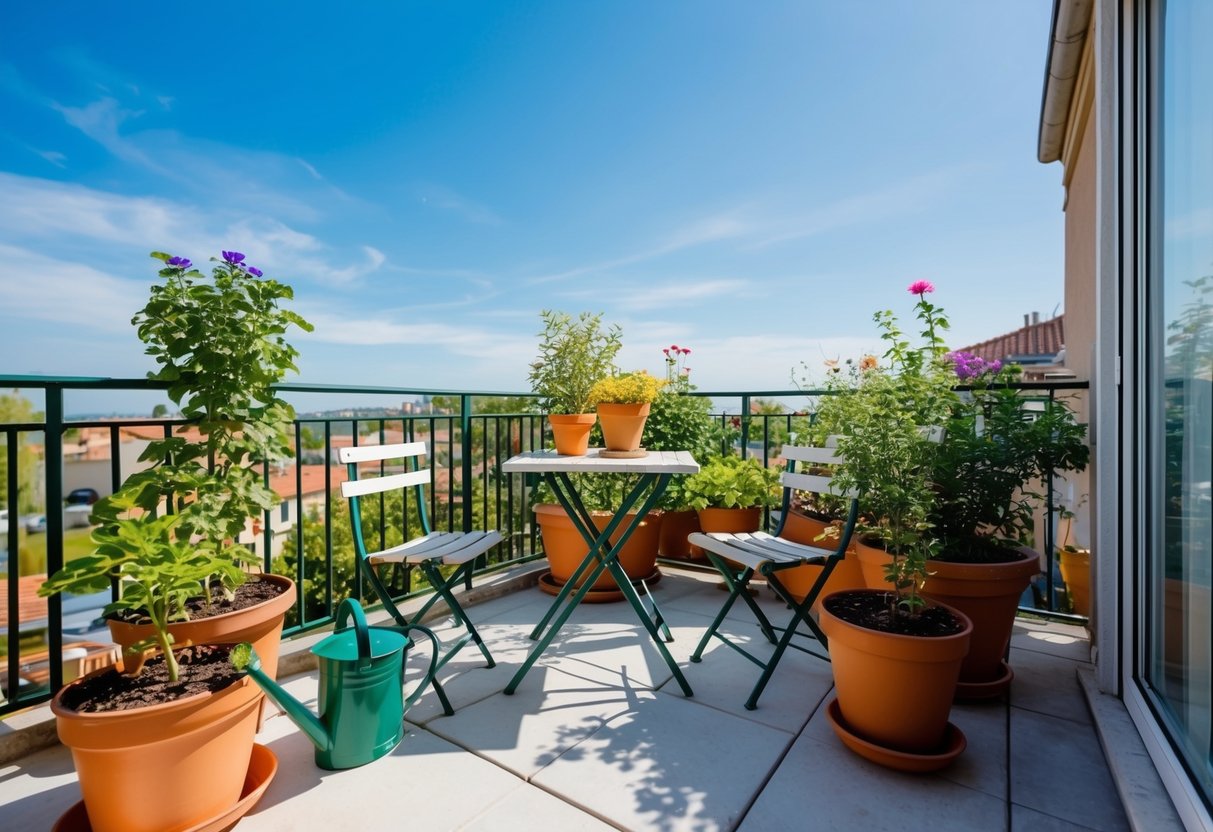
Before you start planting, it’s crucial to understand your balcony’s unique characteristics. This will help you choose the right plants and create a thriving garden.
Evaluating Lighting Conditions
Check how much sunlight your balcony gets throughout the day. Use a sunlight meter or observe the space at different times.
Most balconies fall into these categories:
- Full sun: 6+ hours of direct sunlight
- Partial sun: 4-6 hours of direct sunlight
- Partial shade: 2-4 hours of direct sunlight
- Full shade: Less than 2 hours of direct sunlight
Note any areas that get more or less light. This will guide your plant choices and placement.
Considering Balcony Dimensions
Measure your balcony’s length, width, and height. This helps you plan your garden layout and choose the right size of containers.
Don’t forget to account for:
- Door swing space
- Seating areas
- Walking paths
Make a simple sketch of your balcony with measurements. This will be useful when shopping for plants and containers.
Identifying Microclimate Factors
Your balcony has its own unique microclimate. Pay attention to these factors:
- Wind exposure: Is it windy or sheltered?
- Temperature: Does it get hot in the summer or stay cool?
- Humidity: Is the air dry or moist?
- Rainfall: Does rain reach your balcony, or is it covered?
These factors affect plant growth and care needs. For example, windy balconies may need windbreaks for delicate plants. Hot, dry balconies might require drought-tolerant species.
Planning Your Balcony Garden
A well-planned balcony garden can transform your outdoor space into a lush oasis. Good planning ensures your plants thrive and your garden looks great.
Deciding on a Garden Theme
Choose a theme that fits your style and space. A herb garden is perfect for cooking fans. Flower lovers might prefer a colorful bloom-filled balcony. For a calm vibe, try a zen garden with rocks and small plants.
Pick plants that work together. Stick to 3-5 colors for a unified look. Think about plant heights, too. Put tall plants in the back, short ones in the front.
Consider your balcony’s use. Do you want privacy? Choose bushy plants or climbing vines. Need seating? Leave room for chairs and a small table.
Selecting Plants Suited to Your Environment
Your balcony’s conditions shape your plant choices. Check how much sun your space gets. Full sun means 6+ hours of direct light. Partial shade is 3-6 hours. Full shade is less than 3 hours.
Look at wind exposure, too. Windy spots need sturdy plants. Sheltered areas can support delicate flowers.
Think about your climate. Choose plants that can handle your local weather. Native plants often do well and need less care.
Don’t forget about pot size. Bigger pots hold more soil and water. This helps plants survive hot days.
Incorporating Aesthetic Elements
Add style to your balcony garden with smart design choices. Use colorful pots to brighten the space. Mix and match shapes for visual interest.
Try vertical gardening to save space. Hang planters on walls or railings. Use trellises for climbing plants.
Add garden art for personality. Try wind chimes, small statues, or colorful glass ornaments. Just don’t overcrowd your space.
Lighting can create a cozy mood. Solar-powered string lights are eco-friendly and pretty. LED candles offer a safe, flickering glow.
Creating a Planting Schedule
Plan your planting to enjoy blooms all season. Start with spring bulbs like tulips or daffodils. Add summer flowers next, such as petunias or marigolds.
Include some plants that bloom in the fall. Chrysanthemums and pansies are good choices. This keeps your garden colorful longer.
Stagger your planting times. Don’t put everything in at once. This spreads out the work and extends your blooming season.
Remember to allow time for growth. Some plants take weeks to flower. Plan ahead so your garden looks full when you want it to.
Gathering Supplies and Tools
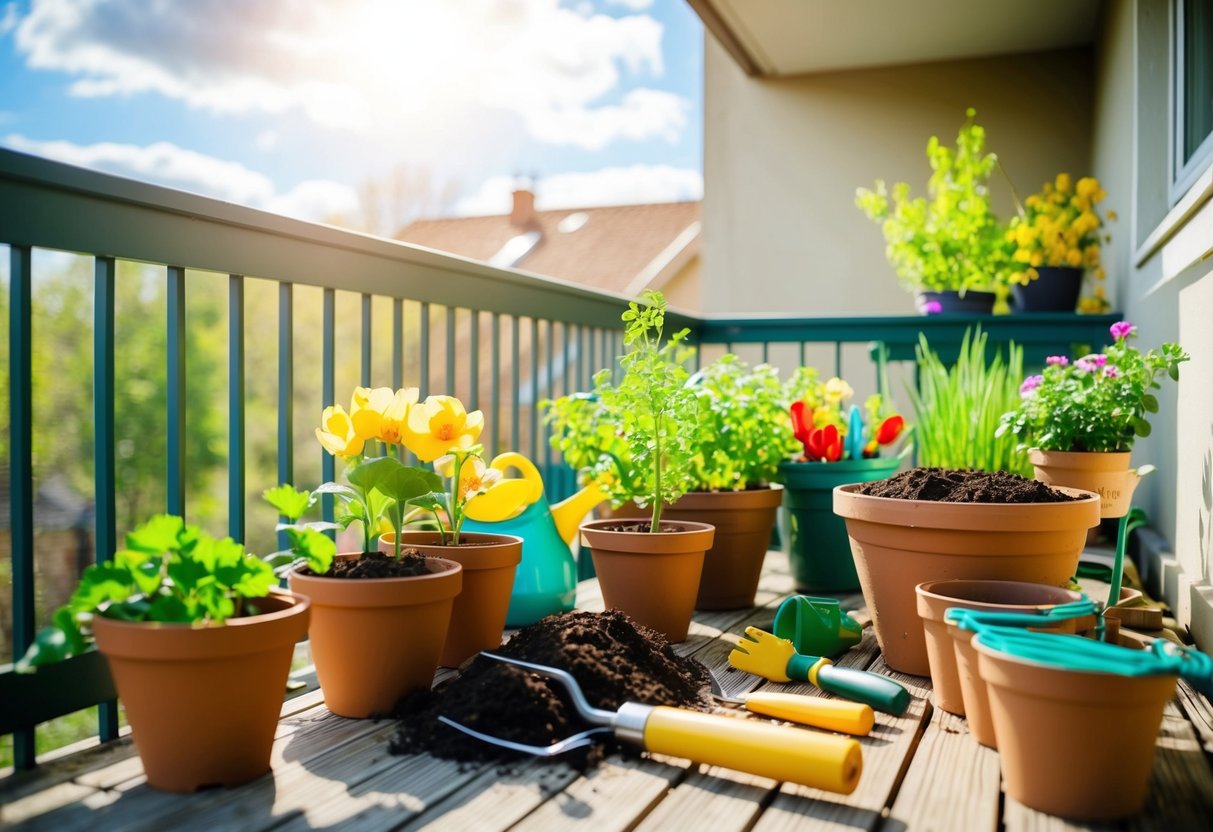
Getting ready for spring gardening on your balcony starts with having the right supplies and tools. You’ll need to gather a few key items to set yourself up for success.
Choosing the Right Soil Mix
Picking the right soil is crucial for your balcony garden. Look for a lightweight potting mix designed for containers. These mixes drain well and provide good aeration for roots.
Avoid using garden soil, as it’s too heavy and can compact in pots. Instead, choose a mix with peat moss, perlite, and vermiculite. These ingredients help retain moisture while allowing excess water to drain.
For vegetables and herbs, select a soil mix enriched with organic matter. This provides essential nutrients for healthy plant growth.
Consider adding some slow-release fertilizer to your soil mix. This will feed your plants gradually over the growing season.
Finding Suitable Containers and Planters
Your choice of containers can make or break your balcony garden. Pick pots that fit your space and match your plants’ needs.
Plastic containers are lightweight and affordable. They’re great for balconies with weight restrictions. Ceramic pots are heavier but retain moisture better.
Ensure all containers have drainage holes. This prevents water from pooling and causing root rot.
For small spaces, try vertical planters or hanging baskets. These maximize your growing area without cluttering your balcony floor.
Choose containers at least 6 inches deep for most plants. Larger vegetables and shrubs need deeper pots, around 12 inches or more.
Essential Gardening Tools
You don’t need a shed full of tools for balcony gardening. A few basic items will cover most tasks.
- Hand trowel: For digging and planting
- Pruning shears: To trim and shape plants
- Watering can or hose: For easy plant watering
- Gloves: To protect your hands while working
A small rake or cultivator helps loosen soil and remove weeds. Add a spray bottle for misting delicate plants or applying fertilizer.
Store your tools in a compact container to save space. Clean them after each use to prevent rust and extend their life.
Preparing the Balcony Area
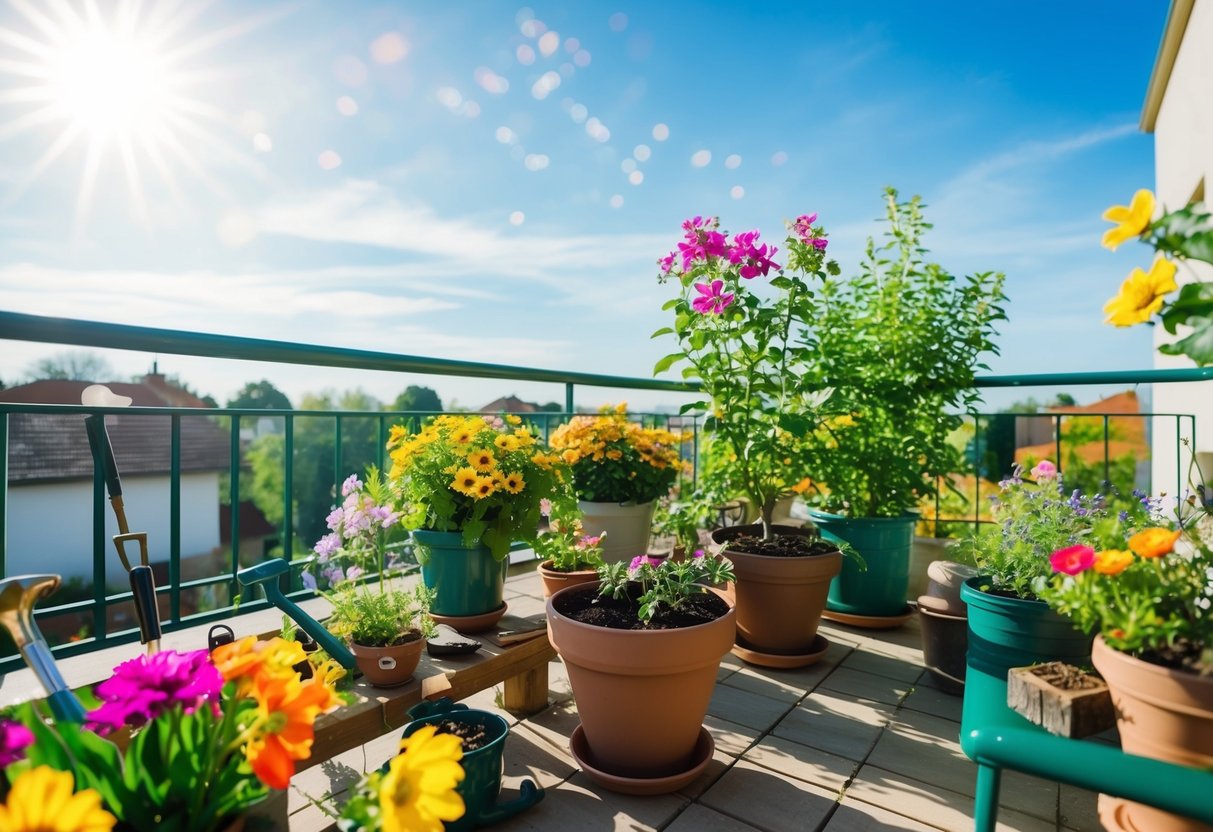
Getting your balcony ready for spring gardening involves cleaning, organizing, and setting up your planting space. These steps will create an ideal environment for your plants to thrive.
Cleaning and Organizing the Space
Start by clearing out your balcony. Remove any old plants, pots, or debris from last season. Sweep the floor to get rid of dirt and leaves. Wipe down railings and walls with a damp cloth to remove dust and grime.
Check for any damage to the balcony floor or walls. Fix any cracks or loose tiles to prevent water leaks. This will protect your plants and the building structure.
Organize your gardening tools. Store them in a waterproof container or a small shed if you have space. Keep frequently used items like pruning shears and watering cans within easy reach.
Consider adding some storage solutions. Wall-mounted shelves or a small storage bench can help keep your balcony tidy and create more room for plants.
Setting Up Planters and Pots
Choose the right containers for your plants. Pick pots with drainage holes to prevent waterlogging. Use lightweight materials like plastic or fiberglass for easier handling.
Arrange your planters to make the most of your space. Place larger pots at the back and smaller ones in front. This creates a layered look and allows all plants to get sunlight.
Think about using vertical space. Hang planters from railings or set up a trellis for climbing plants. This adds visual interest and increases your growing area.
Add a layer of gravel or small stones at the bottom of each pot. This improves drainage and helps prevent root rot. Fill pots with high-quality potting soil suited for container gardening.
Consider the weight limit of your balcony. Check with your building manager if you’re unsure. Spread heavy pots evenly to distribute the weight.
Planting and Potting
Spring is the perfect time to start planting and potting for your balcony garden. You’ll need to transplant seedlings and arrange your plants carefully to make the most of your space.
Transplanting Seedlings
Start by gently removing seedlings from their trays. Loosen the soil around each one with a small spoon. Hold the seedling by its leaves, not the stem, to avoid damage.
Prepare small pots with well-draining potting mix. Make a hole in the center with your finger. Place the seedling in the hole and fill in around it with soil. Pat down gently.
Water the newly transplanted seedlings right away. Keep them in a sheltered spot on your balcony for a few days to adjust. Gradually expose them to more sunlight.
Potting Plants and Arrangement
Choose pots that fit your balcony space and have drainage holes.
Fill them about 2/3 full with potting mix.
Remove plants from their nursery containers and place them in the new pots.
Fill in around the plants with more soil. Leave about an inch of space at the top for watering.
Arrange your pots to create an appealing display. Put taller plants in the back and shorter ones in the front.
Group plants with similar needs together. This makes watering and care easier.
Use hanging baskets or wall planters to save floor space.
Add some unique touches, like colorful pots or small decorations, to make your balcony garden stand out.
Caring for Your Balcony Garden
Taking care of your balcony garden is key to enjoying beautiful blooms and healthy plants.
The right care techniques will help your garden thrive in its unique space.
Watering Techniques
Proper watering is crucial for balcony gardens.
Use a watering can with a long spout to reach all your plants easily.
Water early in the morning or late in the evening to reduce evaporation.
For container plants, check soil moisture daily. Stick your finger about an inch into the soil. If it feels dry, it’s time to water.
Consider using self-watering planters or drip irrigation systems. These can help maintain consistent moisture levels, especially if you’re away often.
Don’t forget to water hanging baskets more frequently. They dry out faster than other containers.
Understanding Fertilization Needs
Balcony plants need regular feeding to stay healthy.
Use a balanced, water-soluble fertilizer every 2-4 weeks during the growing season.
For flowering plants, choose a fertilizer higher in phosphorus to promote blooming.
Slow-release fertilizers are also a good option for busy gardeners.
Be careful not to over-fertilize. This can harm your plants and lead to excessive growth.
Always follow the instructions on the fertilizer package.
Consider using organic fertilizers like compost tea for a more natural approach. These can improve soil health over time.
Pest Management Strategies
Keep an eye out for common balcony garden pests like aphids, spider mites, and whiteflies.
Inspect your plants regularly, checking under leaves and along stems.
Use neem oil or insecticidal soap for mild infestations.
These natural options are safer for balcony use than harsh chemicals.
For larger pests like slugs or snails, try placing copper tape around pots or using diatomaceous earth.
Encourage beneficial insects like ladybugs to your balcony. They can help control pest populations naturally.
Daily and Weekly Maintenance Routines
Make a habit of checking your balcony garden daily.
Look for signs of pests, disease, or water stress.
Deadhead flowers regularly to encourage continuous blooming. Pinch back leggy growth to keep plants compact and bushy.
Clean up fallen leaves and debris weekly to prevent disease and pest issues. This also keeps your balcony looking tidy.
Rotate your containers every few weeks to ensure even growth and sun exposure. This is especially important for plants that tend to lean toward the light.
Optimizing for Small Spaces
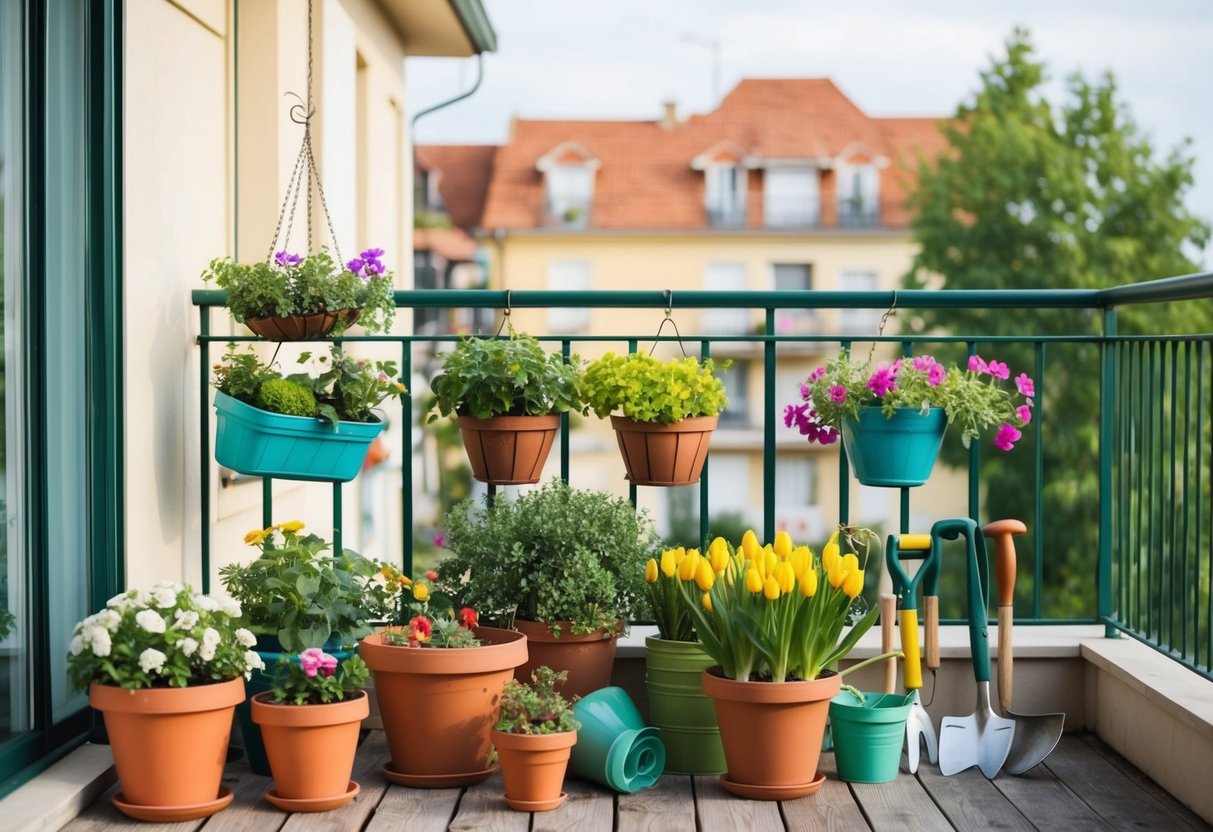
Balcony gardens can thrive even in tight quarters. With smart planning and creative solutions, you can maximize your growing area and enjoy a beautiful, productive space.
Vertical Gardening Techniques
Make the most of your balcony by growing up instead of out.
Install wall-mounted planters or shelving units to create layers of greenery.
Try hanging baskets for cascading plants like petunias or strawberries. Use trellises or wire grids for climbing vines such as peas or morning glories.
Pocket planters are great for herbs and small flowers.
Attach them to railings or walls for extra growing space. Stack crates or use tiered plant stands to add depth and interest to your garden.
Repurpose everyday items for vertical gardening. Old ladders make unique plant displays. Pallets can be transformed into living walls filled with succulents or annuals.
Space-Saving Plant Choices
Choose compact varieties bred for small spaces.
Dwarf fruit trees, like mini apple or citrus, grow well in large pots. Bush varieties of tomatoes and cucumbers take up less room than vining types.
Mix edibles with ornamentals to save space and create visual appeal.
Plant lettuce or herbs around the base of taller plants. Use trailing plants as a ground cover in larger containers.
Consider plants that serve multiple purposes. Nasturtiums are pretty and edible. Lavender looks great, smells nice, and attracts pollinators. Chives add flavor to dishes and produce attractive purple flowers.
Try “cut and come again” vegetables like leaf lettuce or Swiss chard. These let you harvest outer leaves while the plant keeps growing, maximizing your yield in a small area.
Adapting to Seasonal Changes
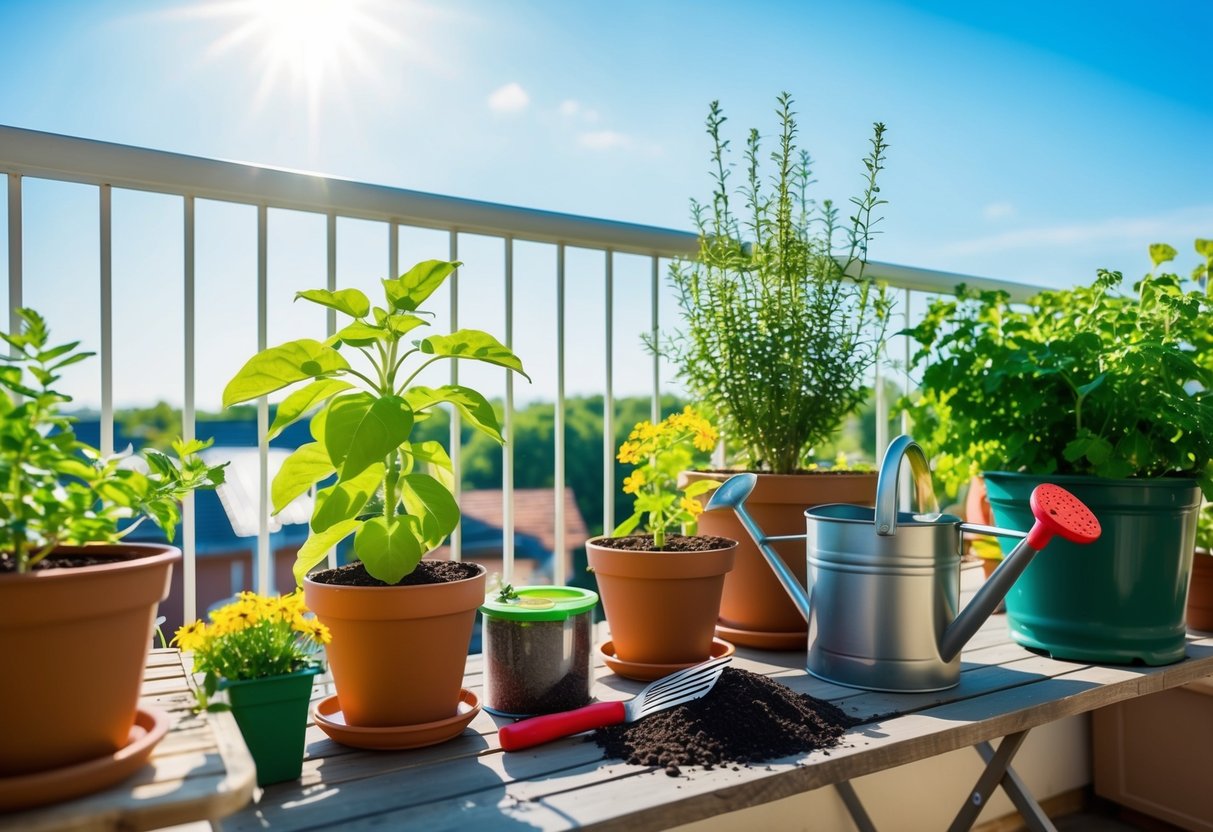
Plants in your balcony garden change with the seasons. You need to adjust your care routine to help them thrive year-round. Let’s look at how to prepare for spring and manage transitions between seasons.
Preparing for Spring Blooms
Start getting ready for spring in late winter.
Clean up your balcony and remove any dead plants or leaves. Check your pots and replace cracked ones. Buy fresh soil and compost to give your plants a boost.
As days get longer, move plants that need more sun. Prune back overgrown branches to encourage new growth. Start seeds indoors for flowers and veggies you want to plant outside later.
Watch the weather and cover tender plants if there’s a cold snap.
Water more often as temperatures rise. Add a slow-release fertilizer to feed your plants through the growing season.
Transitioning Through Seasons
Each season brings new tasks for your balcony garden.
In summer, water deeply and often. Use mulch to keep soil moist. Move plants to shadier spots if they get too much sun.
For fall, cut back on watering and fertilizer. Bring tender plants inside before frost hits. Plant bulbs for spring flowers.
In winter, protect pots from freezing. Water less, but don’t let the soil dry out completely.
Use this time to plan next year’s garden and order seeds.
As seasons change, adjust watering, light, and care to match what your plants need. This helps them stay healthy all year long.
Enhancing Your Balcony Garden
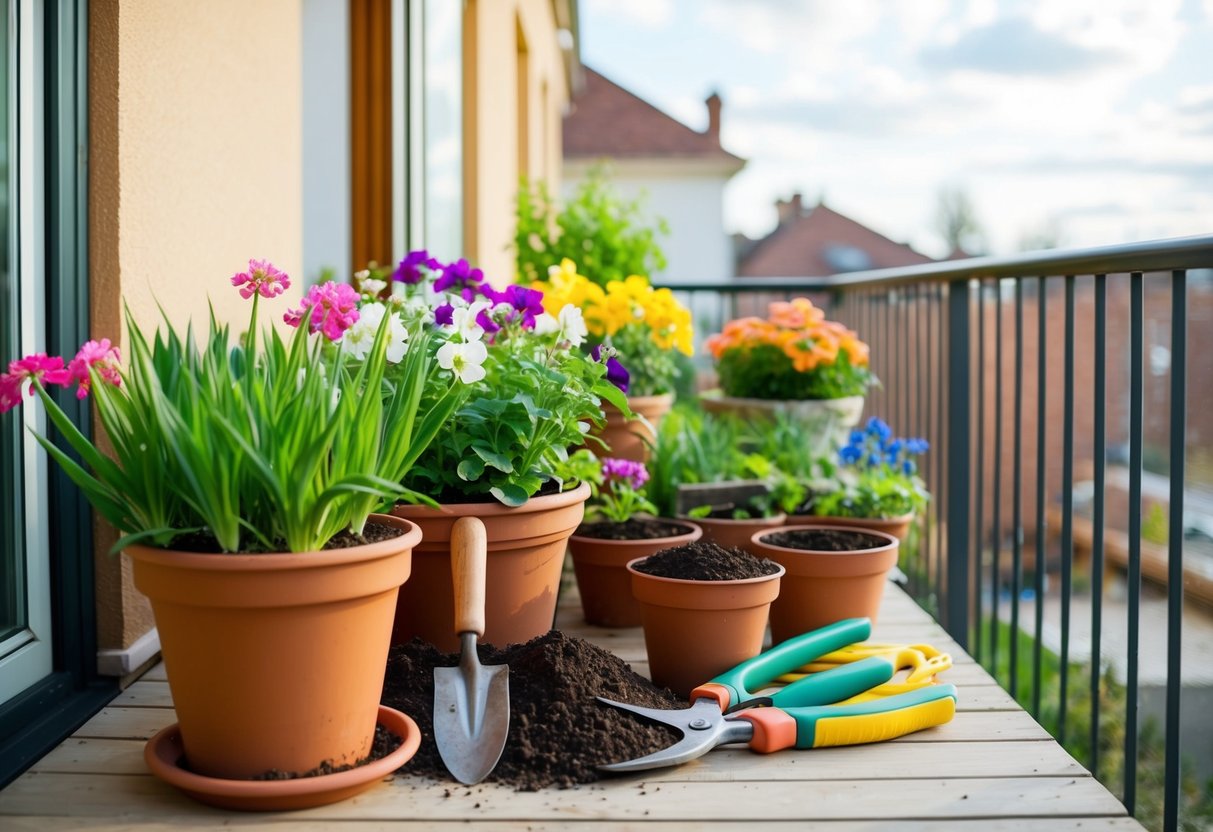
Your balcony garden can become a charming outdoor space with a few thoughtful additions. Let’s explore ways to make it both beautiful and functional.
Decorative Touches and Accessories
Add color and style to your balcony garden with decorative elements.
Hang wind chimes for a soothing atmosphere. Place colorful planters in different sizes to create visual interest. Use garden stakes or small sculptures to add personality.
Consider adding a small water feature, like a tabletop fountain. It can bring a calming sound and attract birds. Hang mirrors to make the space feel bigger and reflect light.
Don’t forget about wall space.
Install wall planters or hanging baskets to grow more plants. Use decorative trellises for climbing plants like jasmine or clematis.
Functional Additions like Seating and Lighting
Make your balcony garden comfy with smart seating choices. Fold-up chairs save space when not in use. A small bistro set works well for enjoying meals outside.
If space allows, add a cozy bench with storage underneath for gardening tools.
Good lighting extends your garden’s use into the evening. String lights create a magical atmosphere. Solar-powered lanterns are eco-friendly and easy to move around.
Consider LED strip lights under railings for subtle illumination.
Add a small side table to hold drinks or gardening supplies. A rolling cart can serve as extra counter space and storage. Install a retractable shade or umbrella for sunny days.