Balcony Garden Paradise is reader-supported. When you buy through links on our site,
we may earn a small affiliate commission. Happy Gardening from the team! 🌿
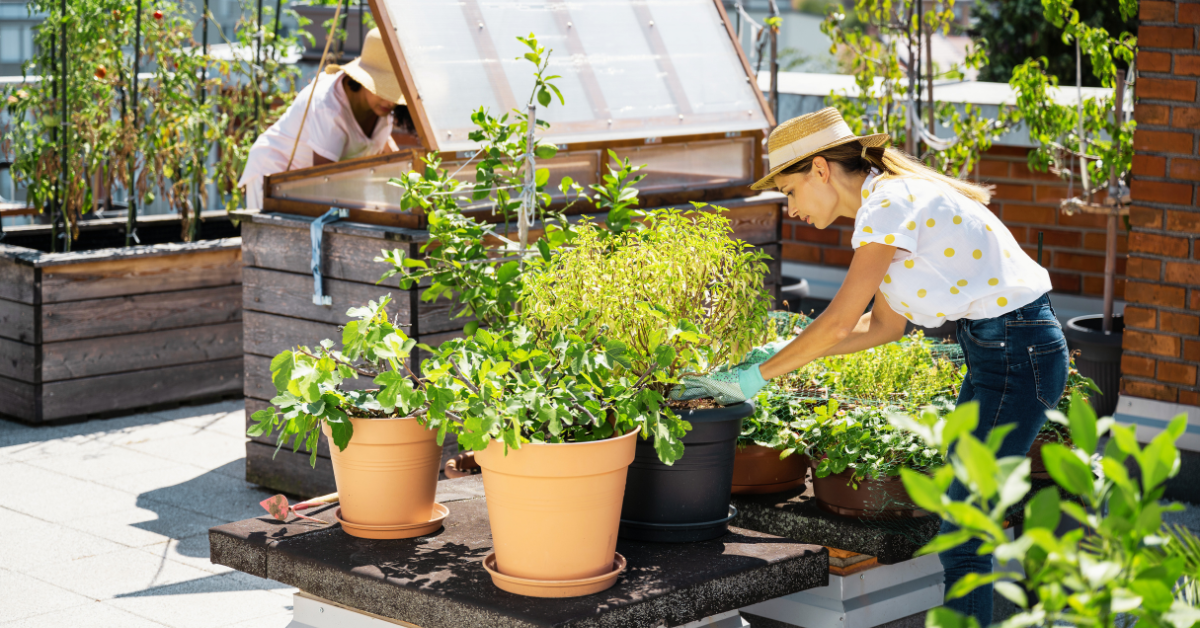
Transforming your balcony into a verdant oasis is a delightful way to extend your living space and embrace the beauty of nature, even in an urban environment. Whether you possess a spacious terrace or a cozy nook, there are copious creative ideas to infuse your personal touch into a balcony garden design. By tuning into the unique aspects of your space—such as its sunlight exposure, climate, and structural limits—you can concoct a lush retreat that mirrors your taste and lifestyle.
Executing the design of your balcony garden can be leveraged not just for aesthetic pleasure but also for functional benefits. Engaging with vibrant plants, warm-colored flowers, and eye-catching accessories, you bring life to a formerly barren locale. As you nurture your verdant companions and watch them thrive, you’ll discover a haven of tranquility amidst the hustle of city life. Remember, a thoughtful selection of flora and decor allows for a practical yet enchanting setup that evolves with the seasons and your horticultural skills.
Key Takeaways
- Personalizing your balcony space enhances the overall enjoyment and utility of your home.
- Strategic planning and design lead to a functional and exquisite balcony garden.
- Ongoing care and engagement with your garden offer gratification and a serene escape.
Planning Your Balcony Garden
Creating a beautiful and functional balcony garden design requires careful planning and consideration of your space’s specific conditions. By making informed choices about plants, design, and furnishings, you can transform your balcony into a lush and private retreat.

The 2023 USDA Plant Hardiness Zone Map was created by Oregon State University (PRISM Climate Group) and released by the USDA.
Assessing Sunlight and Exposure
To ensure your plants flourish, assess the sunlight and wind your balcony receives throughout the day. This will help you determine which plants are best suited for your space. For instance, a south-facing balcony may enjoy full sun, making it ideal for sun-loving blooms like marigolds or petunias.
Choosing The Right Plants
Select balcony plants according to your local hardiness zone, as well as temperature and exposure. Herbs such as rosemary and basil thrive with ample sunlight, while shade-tolerant ferns and begonias suit less sun-kissed spots. Incorporating a mix of annuals and perennials offers variety and longevity.
Understanding Balcony Space
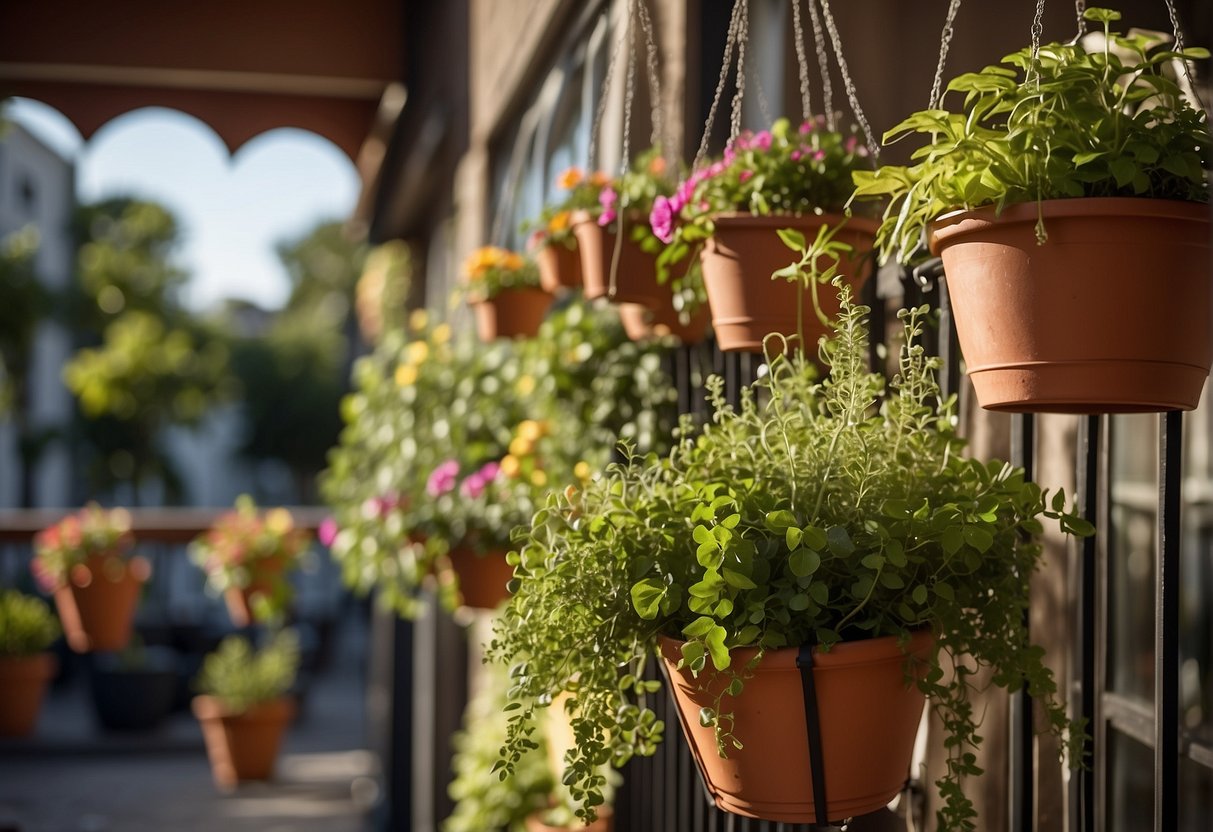
Make the most of your small outdoor space by incorporating vertical gardening techniques. Use railing planters and hanging baskets to maximize vertical space. Consider hardy succulents and climbing plants for areas with limited floor space.
Balcony Garden Design and Layout
Design your balcony garden with utility and beauty in mind. Place taller plants like citrus trees or fuchsia at the back, with smaller flowers and herbs at the forefront. Utilize container gardening for easy rearrangement.
Creating Privacy and Atmosphere
For privacy, plant bamboo or a row of tall plants. Add softness and warmth with curtains or a trellis. Lanterns and candles can create a cozy atmosphere when the sun sets.
Furnishing Your Balcony
Select balcony furniture that fits the scale of your space. A folding table and chairs or a hammock can provide comfortable seating. Accentuate with colorful throw pillows and an outdoor rug for a personal touch.
Seasonal Considerations
Seasonal changes influence plant and decoration choices. In winter, focus on cold-hardy plants like evergreens, and include weather-resistant lanterns for balcony lighting.
Balcony Garden Budgeting
Developing a budget will keep your balcony garden design project on track. Account for plants, soil, furnishings, and decor. Remember, attractive decoration ideas don’t have to be expensive; creativity goes a long way.
Executing The Design
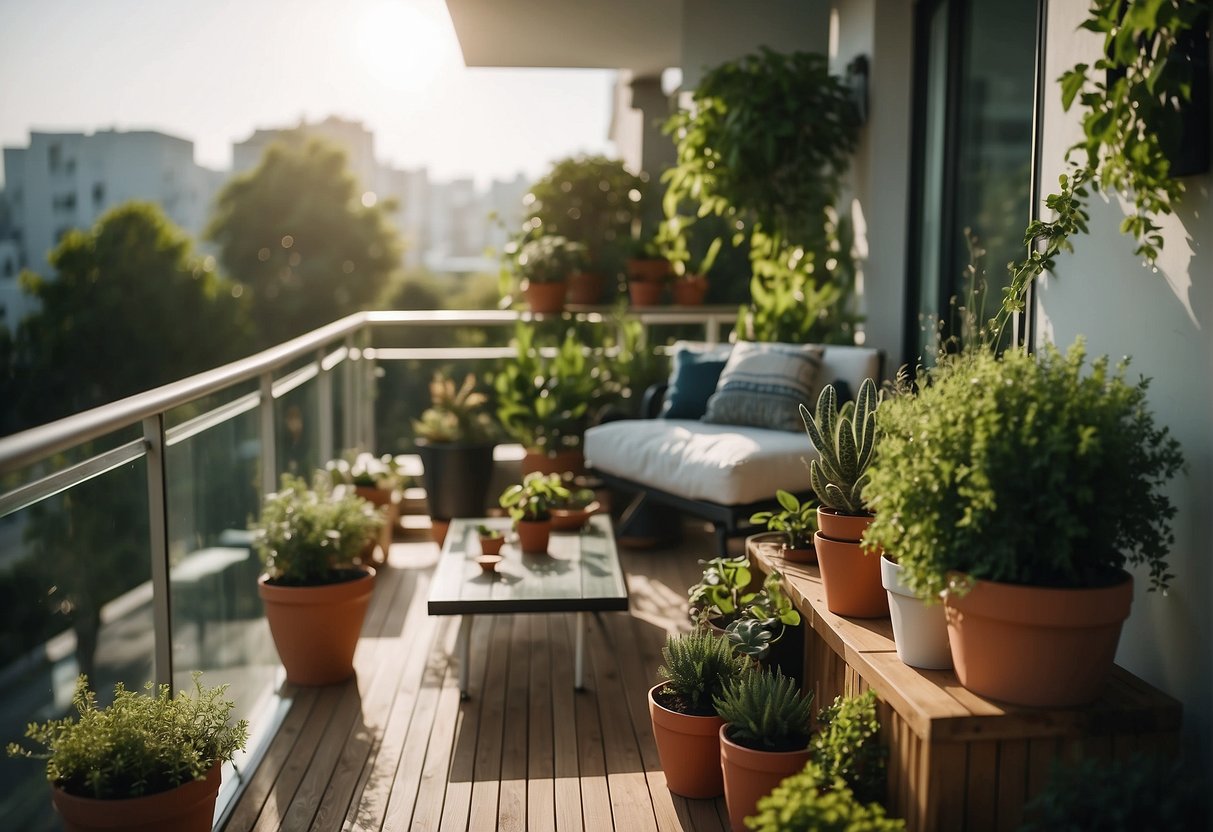
When decorating your balcony garden, selecting the right elements and arranging them effectively is crucial to creating a space that is both functional and visually appealing.
Selecting Containers and Planters
Choose containers and planters that complement your balcony’s aesthetic. Terracotta pots or modern geometric shapes can add character. Ensure they have drainage holes to prevent waterlogging.
Balcony Garden Planting
Select a soil mix suitable for container gardening. Consider the water drainage needs of your plants. Use hanging planters and window boxes to maximize your space with greenery.
Installing Furniture and Decorations
For a cozy ambiance, add compact furniture that suits the size of your balcony. An outdoor rug and some cushions can turn the area into an inviting outdoor room.
Setting Up Balcony Lighting
Strategically place lighting such as lanterns or LED strips to illuminate your balcony. Balcony lighting ideas might include solar-powered lights for an eco-friendly touch.
Adding Decorative Elements
Incorporate decorative elements that reflect your personal style. Hang a colorfully patterned hanging chair for a playful touch or arrange elegant statues to add sophistication.
Optimizing Vertical Space
Use vertical gardening techniques like living walls or wood pallets to grow herbs and flowers. Vertical space can also be enhanced with shelves for displaying small planters.
Arranging Plants Aesthetically
Arrange plants by varying height, color, and fragrance to create visual interest and balance. Pair hanging baskets on different levels for a dynamic display.
Balcony Garden Care and Maintenance
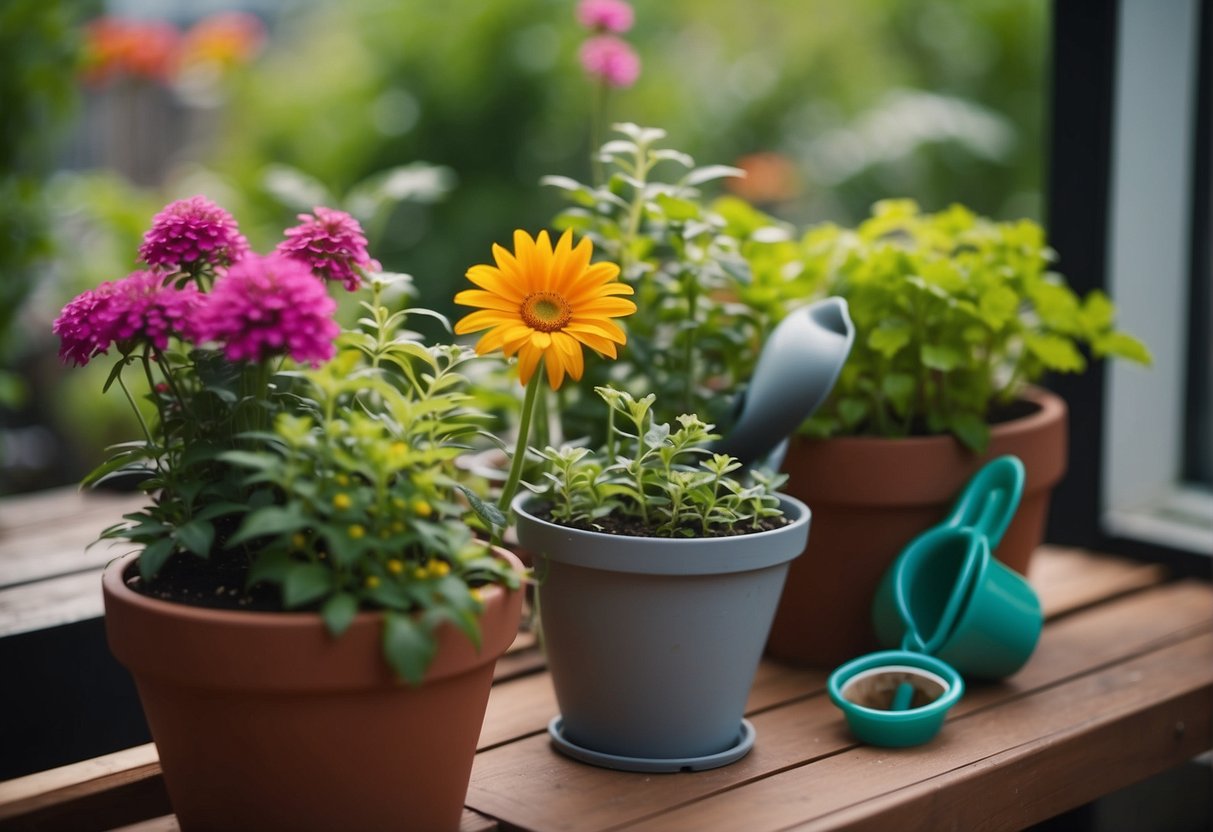
Creating a stunning balcony garden is an art that demands consistent care and maintenance. Here, you will master the essentials to keep your garden flourishing year-round.
Watering and Drainage
Optimal watering is the lifeblood of balcony gardening. Ensure your containers have adequate drainage holes to prevent waterlogging. A regular watering schedule depends on factors like plant species, temperature, and sunlight exposure. Overhead watering can be detrimental to some plants—drip or bottom-watering may be more suitable.
Soil and Nutrient Management
Your plants‘ health hinges on the quality of soil and nutrients they receive. Regularly check for nutrient deficiencies and replenish as needed. Lightweight, high-quality potting soil facilitates proper root growth and improves water drainage. Remember, container gardening often requires more frequent feeding than in-ground counterparts.
Pruning and Deadheading
Regular pruning and deadheading encourage plants to direct energy towards growth and flower production. This not only improves plant health but also contributes to the attractive decoration of your balcony garden.
Pest and Disease Control
Vigilance in pest and disease control maintains the integrity of your balcony oasis. Early detection and treatment are key—inspect your plants often and use suitable organic or chemical remedies where appropriate.
Adapting to Weather Conditions
Balcony plants are subject to the whims of weather, with wind and sunlight being primary concerns. Adaptable gardening tactics, such as installing windbreaks or shade cloths, can mitigate adverse conditions. The temperature will dictate water requirements and the need for protective measures like mulching or moving sensitive plants indoors.
Maintaining Balcony Furniture
Your balcony furniture is part of the garden’s charm. Preserve its appearance and longevity by choosing weather-resistant materials and performing regular cleanings. Cushions and fabrics should be stored away or covered during harsh weather.
Seasonal Garden Updates
Embrace seasonal changes by updating your garden’s layout and plant selection. This not only refreshes the space but also ensures that your balcony garden remains vibrant and fitting for the current season. Seek out plants that thrive in your climate’s specific conditions for the best results.
Enjoying Your Balcony Garden
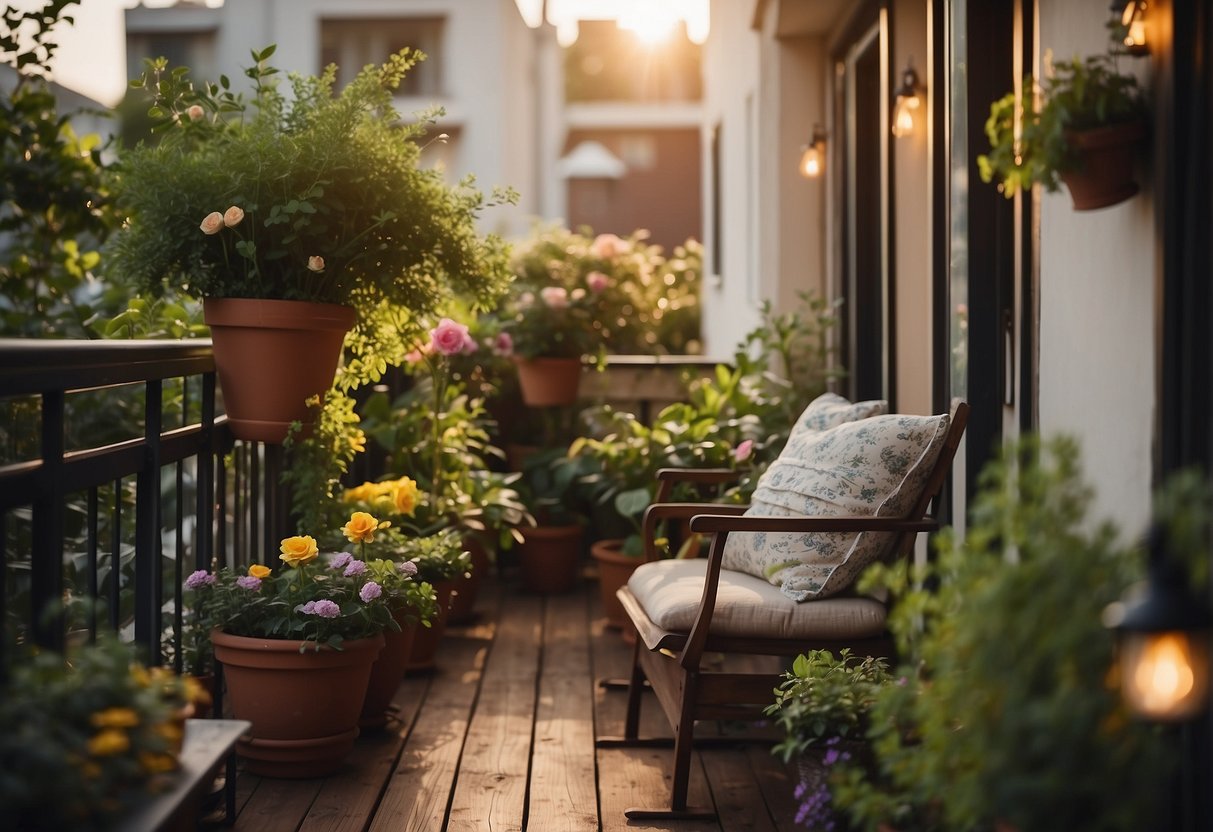
Creating a balcony garden design that offers solace and joy means considering both function and aesthetics. From selecting the right plants to creating a space for gathering, the key to enjoyment lies in the details.
Relaxing Amongst the Greenery
Transform your outdoor area into a peaceful retreat by arranging seating such as a comfortable chair or a hammock. Enhance this area with soft throw pillows and an outdoor rug to add texture and warmth. Your balcony garden can become your own private sanctuary where you can bask in the sunlight or unwind under the stars.
Entertaining in Your Outdoor Space
A balcony provides a unique opportunity for outdoor entertainment. Incorporate a table and chairs to host gatherings or enjoy meals outside. Utilizing container gardening enables you to decorate with vibrant flowers and plants, creating an attractive backdrop for any social occasion.
Balcony Gardening as a Hobby
Engaging in balcony gardening offers a rewarding pastime. From nurturing a flourishing vegetable garden to experimenting with potting different flower species, gardening can be incredibly satisfying. Your sunny balcony could also be the perfect spot for growing herbs that can be used in your recipes, marrying the love of gardening with the love of cooking.
Involving Family and Pets
Introducing gardening to family members can be a fun and educational experience. Incorporating safe plants and easy-to-grow vegetables encourages participation and interest in caring for outdoor spaces. For pet owners, ensure that your balcony garden is pet-friendly, allowing your furry companions to enjoy the space as well.
With these ideas in mind, you’re ready to cultivate a balcony garden that isn’t just visually appealing, but also fully embraces the joys of outdoor living.
Expanding Your Balcony Garden
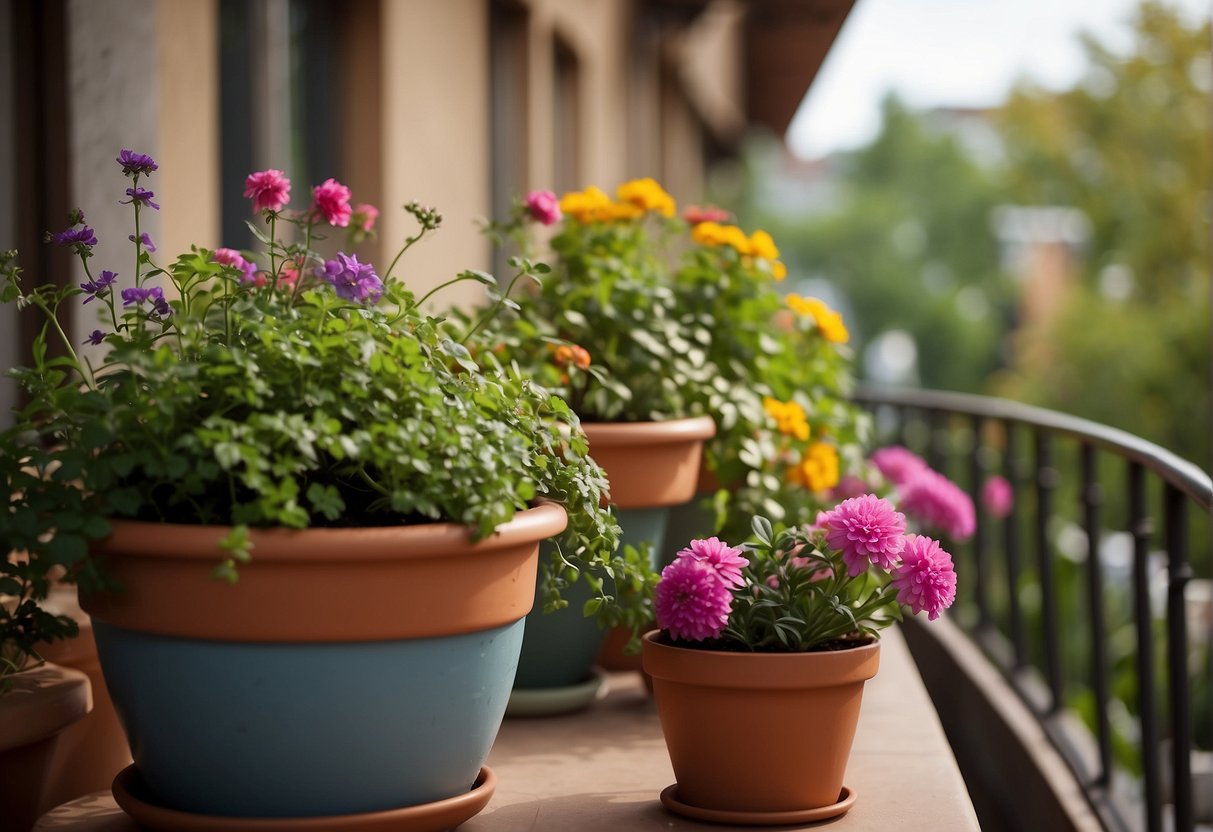
To enhance your balcony garden, consider cultivating a diverse array of plants and employing innovative techniques that maximize your limited space.
Exploring New Plant Varieties
Vegetables and Herbs: Add a dash of practical beauty by incorporating edible plants like tomatoes, peppers, and a variety of herbs that thrive in pots and planters. Not only do these plants provide fresh produce for your kitchen, but they also bring vibrant colors and fragrances to your balcony.
Flowers: Brighten your balcony with a selection of flowers that can create an attractive display. Consider petunias, marigolds, or even a trellis with climbing roses to add height and texture.
Integrating Advanced Gardening Techniques
Container Gardening: Use high-quality soil and ensure proper drainage to keep your balcony plants healthy. Colorful containers not only house your plants but also contribute to the overall aesthetic of your balcony garden.
Vertical Gardening: Utilize vertical space efficiently with hanging planters, wall-mounted shelves, or trellises. This approach is perfect for growing a range of herbs and even some vegetables, optimizing your available space.
Utilizing Every Inch of Space
Strategic Layout: Arrange planters at varying heights to create depth and make your small outdoor area look more abundant. Stackable and tiered planters are practical solutions for growing more in less space.
Dual-Purpose Items: Opt for furniture that doubles as storage or planting space, such as a bench with a planter box at each end. Balcony rail planters are another clever way to add greenery without sacrificing floor space.
Conclusion
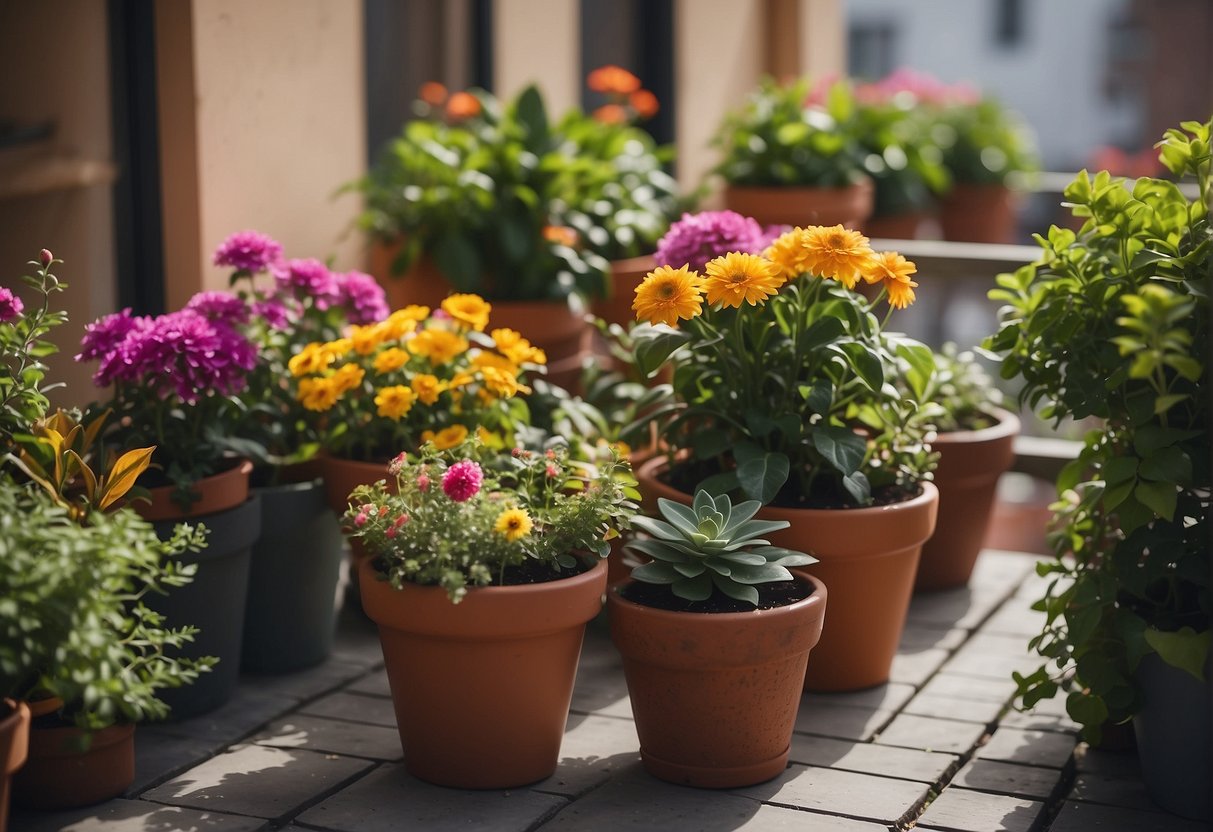
Creating an attractive balcony garden is both an art and a practice of planning and care. Consider how each plant’s color, texture, and size will contribute to your outdoor space, leveraging container gardening to maximize your area. Balcony gardening is versatile; use hanging planters or railing boxes to enhance your decoration efforts and introduce levels to your garden.
- Decor: Intersperse ornamental accessories with practical items for an aesthetically pleasing yet functional balcony. Add decorative stones or fairy lights for ambiance.
- Plants: Choose plants that thrive in your climate for a healthy, blooming balcony. Herbs and small fruit plants combine beauty with utility.
- Furniture: Opt for foldable or stackable furniture to keep your balcony clutter-free.
Keep your balcony’s weight limit in mind as well as its sunlight exposure, and local weather patterns. Regular care is crucial for your balcony garden’s longevity; ensure adequate watering, pruning, and fertilization as needed. The aim is to create a space that resonates with your personal style and serves as a tranquil retreat in the urban jungle.
Recommended Products and Resources
When planning your balcony garden, selecting the right products and resources is crucial. Here’s a curated list to help you get started:
Planters and Containers:
- Fiberglass Planters: Lightweight and durable, ideal for high-rise balconies.
- Terracotta Pots: Classic and porous; excellent for breathability but heavier.
- Self-watering Containers: Minimize maintenance and ensure consistent moisture.
Soil:
- Potting Mix: A well-draining mix suited for container gardening.
- Organic Compost: Enhance soil fertility with natural organic matter.
Watering Solutions:
- Drip Irrigation Kit: An efficient system for delivering water directly to roots.
- Watering Cans: Consider a long-spout can for ease of reaching plants.
Decorative Elements:
- LED Solar Lights: Illuminate your garden while saving energy.
- Hanging Baskets: Utilize vertical space for small plants and herbs.
- Decorative Stones: Add elegance to your container’s top layer of soil.
Attractive Decoration Ideas: Introducing vertical planters can maximize your gardening space while crafting a lush, green ambiance. Consider incorporating fragrant herbs or flowering plants that not only look beautiful but also enhance your balcony’s sensory appeal. Utilize garden furniture judiciously to create a cosy nook that complements your foliage.
Remember to always evaluate the weight capacity of your balcony and ensure proper drainage to prevent waterlogging. Happy gardening!
Check Out Expert Advice
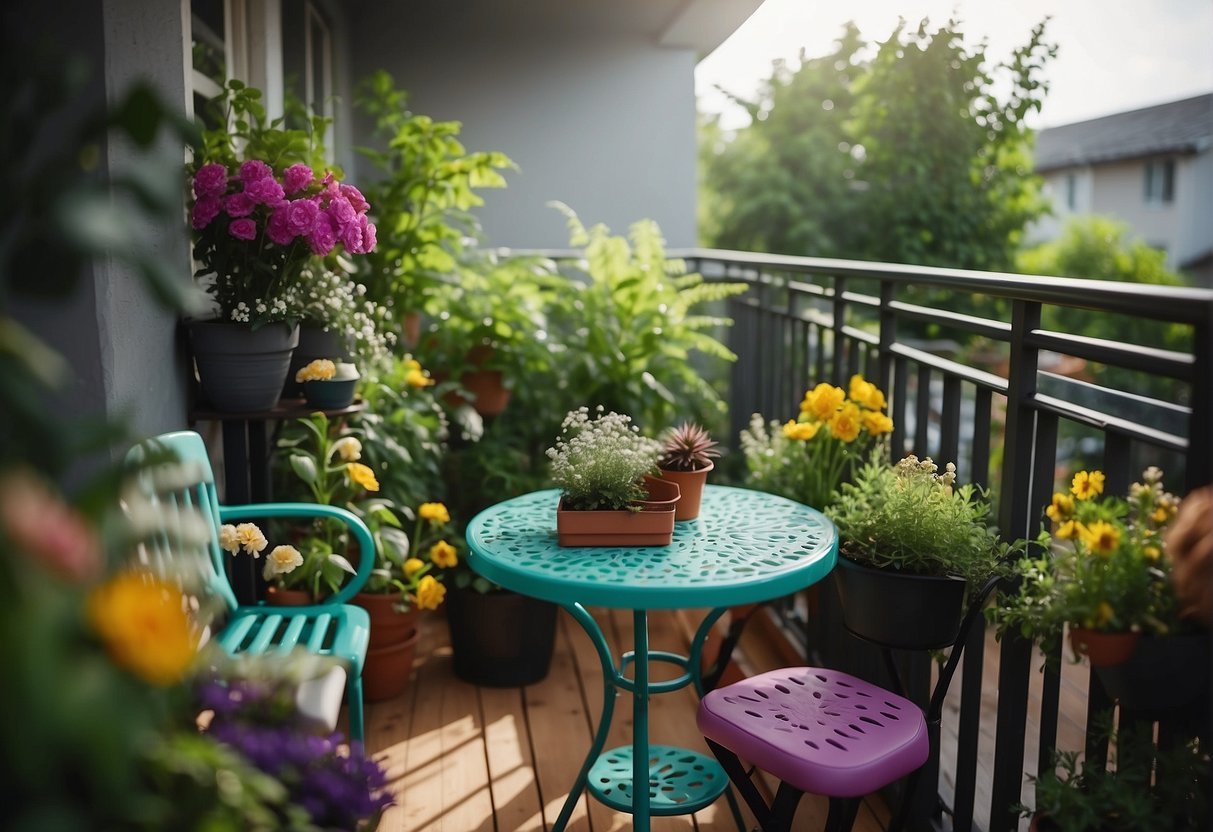
When looking to enhance your balcony space with attractive decoration ideas, it’s advisable to seek guidance from professionals. Here are a few ideas.
Design Workshops: Engage with local garden design workshops. Professionals often address practical aspects of decorating limited spaces like balconies.
Online Forums: Platforms like GardenWeb or Houzz have an assemblage of professional gardeners and enthusiasts who share advice freely.
Local Nurseries: Nurseries often have experienced staff knowledgeable about plant varieties and container gardening, especially beneficial for balcony settings.
Professional Associations: Seek out contacts through organizations such as the American Society of Landscape Architects (ASLA) for a referral to a local professional.
| Resource | Contact Method |
|---|---|
| Local Nurseries | In-person visits or phone inquiries. |
| Design Workshops | Attend local events or online webinars. |
| Online Forums | Join discussions and ask for tips. |
| Professional Bodies | Email or phone for expert referrals. |
Remember to communicate clearly about your balcony’s specific conditions, such as exposure to sunlight and space constraints, so the advice you receive is tailored to your needs.
Frequently Asked Questions
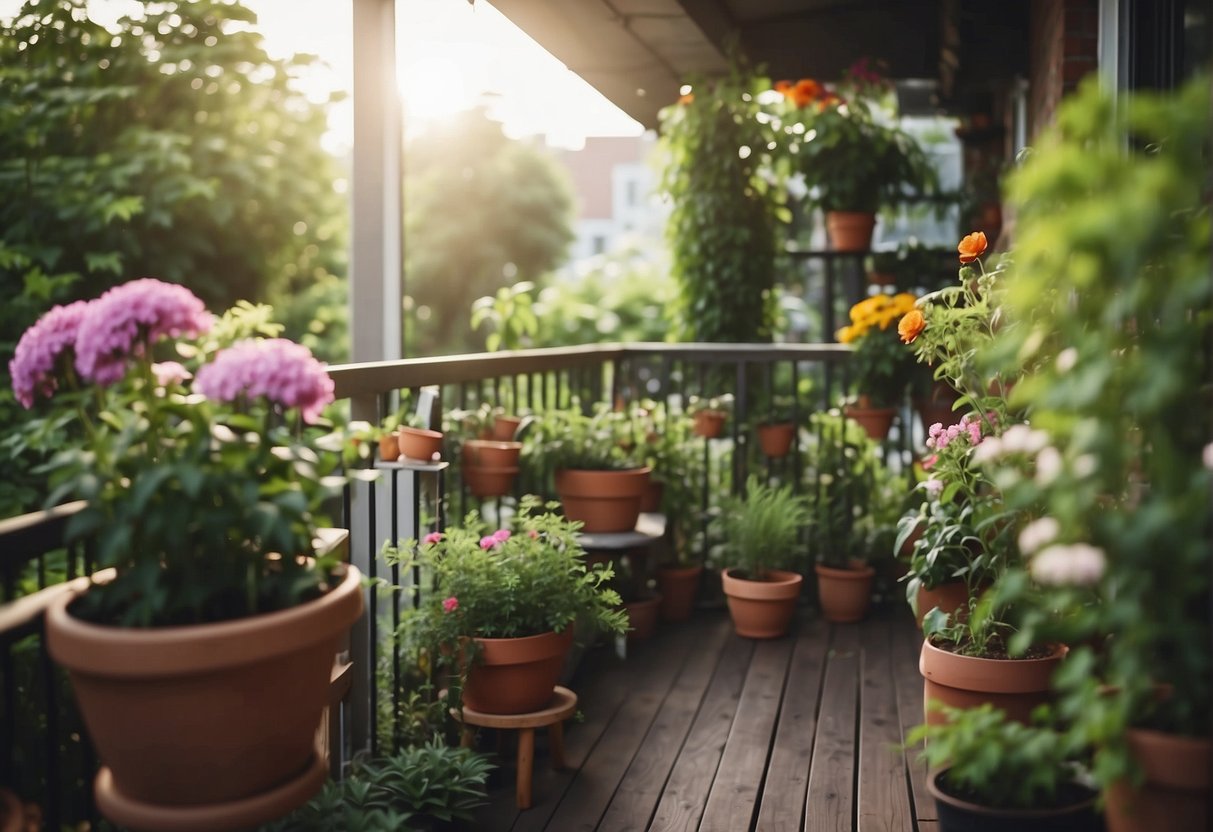
Before you start your balcony garden project, consider these targeted solutions that address common concerns and offer attractive decoration ideas.
What are the best plants to use for creating a lush balcony garden?
For a lush balcony garden, you want to select plants that thrive in your climate and have a full, green appearance. Ferns, begonias, and peace lilies are excellent choices for creating a dense, verdant atmosphere.
How can I maximize space when setting up a vegetable garden on a small balcony?
To make the most of your space, use vertical planters or hanging pots for your vegetable garden. Growing climbing varieties like beans or tomatoes can also help you save space while yielding a bountiful harvest.
Which types of containers and pots yield the most success in balcony gardens?
Choose containers and pots with good drainage and consider the weight they will add to your balcony. Materials like fiberglass, resin, and plastic are lightweight and provide excellent conditions for plant growth.
Can you provide some creative ideas for decorating a small balcony space with plants?
Incorporate multi-level plant stands or shelves to create interest and a tiered garden effect. Use a combination of small trees, shrubs, and flowering plants for color and texture variation.
How can I incorporate artificial plants into my balcony garden design aesthetically?
Artificial plants can enhance your balcony garden when mixed with real plants. Place them in areas that are less favorable for real plants due to light or wind conditions, ensuring a seamless blend.
What are some effective landscaping strategies for transforming a large balcony into a green oasis?
For a large balcony, create different zones using planters as dividers, and mix in both tall and low-growing plants for depth. Incorporate a small water feature or stone path to mimic a traditional garden layout and add a sense of tranquility.