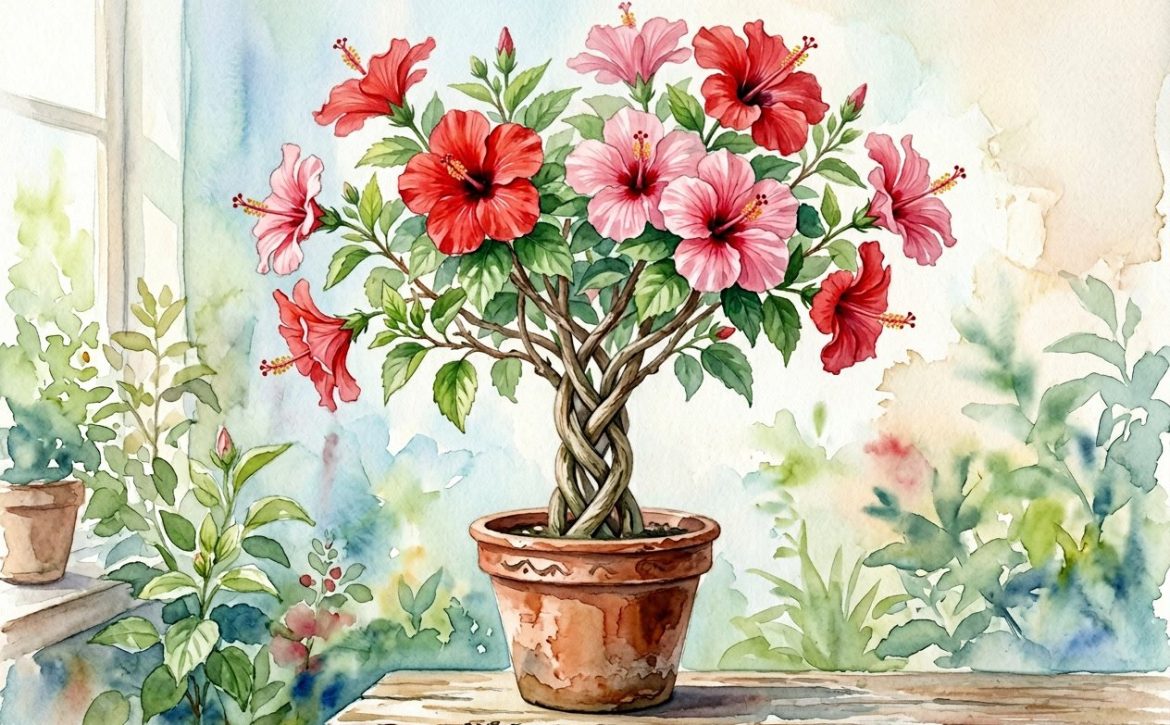
Braided Hibiscus Care: The Complete Growing Guide for All 50 States
If you’ve been searching for that one plant that’s going to completely transform your patio, balcony, or front entryway this season — you just found it.
The braided hibiscus is hands-down one of the most spectacular plants you can grow in a container, and once you see one in person, you’ll totally understand why. We’re talking about a true living sculpture — an elegantly braided trunk topped with a lush, full canopy of glossy green leaves and enormous, vibrant tropical blooms that just keep coming all season long. It has this incredible, almost dramatic presence that instantly elevates any outdoor space from ordinary to wow.
The best part? Despite its showstopper appearance, the braided hibiscus is surprisingly straightforward to care for — and because it thrives in a container, you can grow it anywhere in the United States, no matter what climate zone you’re in.
In this complete care guide, I’m walking you through everything you need to know — from sunlight and watering to pruning, overwintering, and troubleshooting common problems. Whether you’re a first-time hibiscus grower or adding a new statement piece to your collection, I’ve got you covered.
Let’s dive in! 🌺
Braided hibiscus care requires bright light, consistent watering, regular fertilizing during the growing season, and protection from cold temperatures below 50°F. Many people struggle to keep their braided hibiscus thriving because these plants have particular needs that differ from typical houseplants. Getting the basics right makes all the difference between a plant that barely survives and one that produces beautiful blooms.
You’ll learn everything you need to know about caring for your braided hibiscus throughout the year. From choosing the right spot and watering schedule to dealing with common problems, this guide covers all the essential information to help your plant flourish.
Key Takeaways
- Braided hibiscus needs bright light, well-draining soil, and temperatures above 50°F to grow well
- Water when the top inch of soil feels dry and fertilize every two weeks during spring and summer
- Move your plant indoors before frost arrives and reduce watering during the winter months
What Is A Braided Hibiscus?
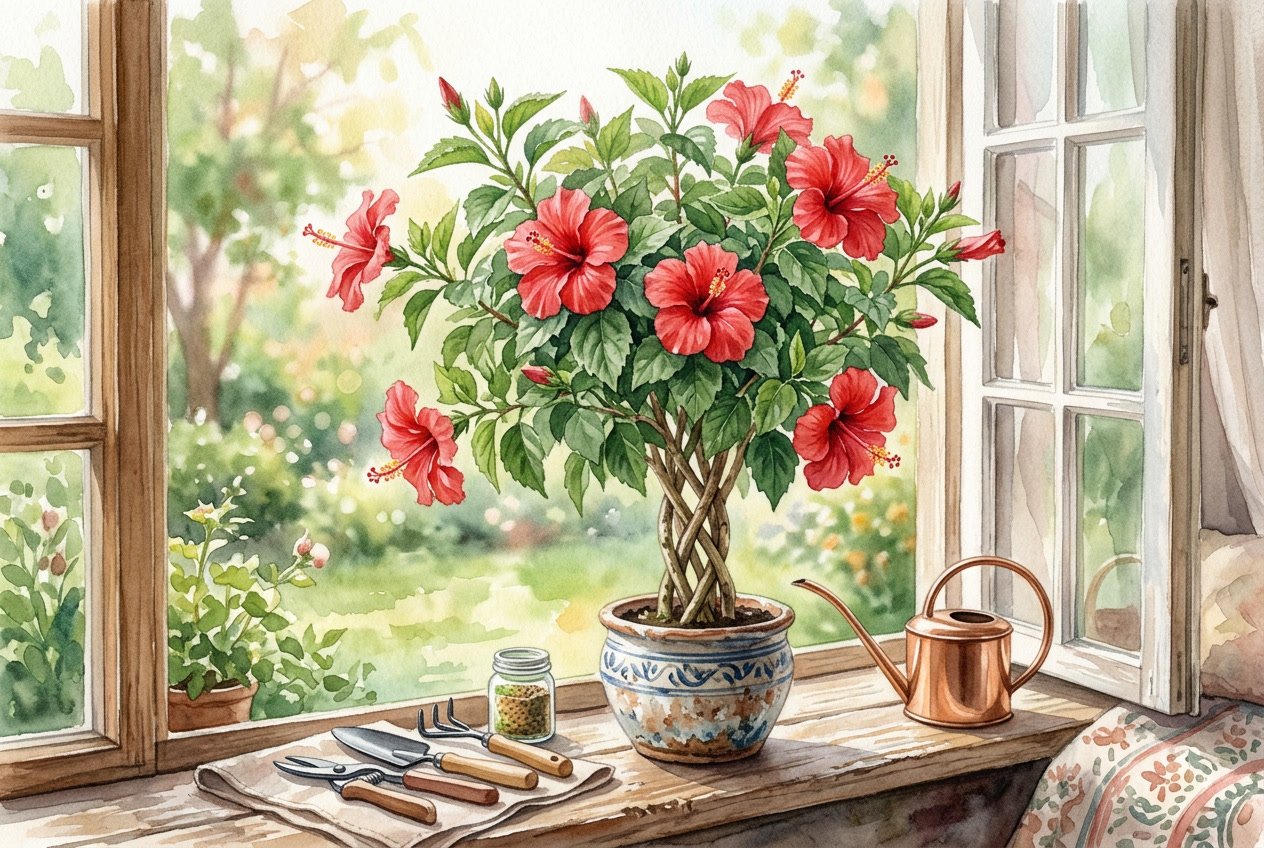
A braided hibiscus plant is a tropical hibiscus with multiple stems twisted together to create a decorative braided trunk. The stems are carefully woven while they’re young and flexible, then they grow together over time to form one solid trunk.
Most braided hibiscus plants feature three or more stems that nurseries braid when the plants are still small. As the plant matures, the braided section becomes woody and permanent.
Common Features:
- Height: Typically grows 4-6 feet tall indoors
- Flowers: Large, colorful blooms in red, pink, orange, yellow, or white
- Trunk: Multiple stems twisted into a braid pattern
- Foliage: Dark green, glossy leaves
The braided trunk gives your plant a unique look that makes it stand out from regular hibiscus trees. You’ll find these plants sold as ornamental houseplants or patio decorations.
The top of the plant grows like a normal hibiscus with branches, leaves, and flowers spreading out above the braided section. Only the lower trunk stays braided.
Important to Know:
- The braid doesn’t affect how the plant grows or blooms
- You can’t unbraid the stems once they’ve grown together
- The plant needs the same care as non-braided hibiscus varieties
Your braided hibiscus plant is essentially a standard tropical hibiscus with a decorative trunk design. It produces the same beautiful flowers and requires similar growing conditions as other hibiscus plants.
Braided Hibiscus Care By USDA Zone (5–11)
Your braided hibiscus care needs vary by where you live. These tropical plants grow best in warm climates but can adapt to different zones with proper care.
Zones 5–7 (Cold Climates)
You’ll need to grow your braided hibiscus in a container in these zones. Bring it indoors before the first frost in fall. Keep it in a bright room with temperatures between 60°F and 70°F during winter.
Water your plant less frequently when it’s indoors. You can move it back outside after the last spring frost when nighttime temperatures stay above 50°F.
Zones 8–9 (Moderate Climates)
Your braided hibiscus can stay outdoors year-round with winter protection. Add a thick layer of mulch around the base before cold weather arrives. Cover the plant with frost cloth when temperatures drop below 40°F.
You might see some leaves drop in winter, but your plant should recover in spring.
Zones 10–11 (Warm Climates)
These zones offer ideal conditions for braided hibiscus care. Your plant can live all year outdoors without protection. Water regularly and provide afternoon shade in the hottest areas.
| Zone | Winter Care | Location |
|---|---|---|
| 5–7 | Move indoors | Container only |
| 8–9 | Mulch and frost protection | Can be planted in the ground |
| 10–11 | No special protection | In-ground or container |
All zones need well-draining soil and regular fertilizing during the growing season. Your braided hibiscus will bloom best with at least six hours of sunlight daily.
Sunlight, Soil & Watering
Your braided hibiscus needs plenty of bright light to grow well. Place it near a window where it gets at least 6 hours of direct sunlight each day. If you don’t have a sunny spot, your plant might not bloom as much.
The right soil makes a big difference for your hibiscus. Use a well-draining potting mix that doesn’t hold too much water. You can add perlite or sand to regular potting soil to improve drainage.
Soil Requirements:
- pH level between 6.0 and 7.0
- Rich in organic matter
- Good drainage to prevent root rot
Watering your braided hibiscus correctly keeps it healthy. Check the soil by sticking your finger about 2 inches down. Water when the top layer feels dry to the touch.
During warm months, you’ll need to water more often. Your plant might need water every 2-3 days in summer. In winter, cut back to once a week or less.
Watering Tips:
- Water until it drains from the bottom holes
- Empty the saucer after 15 minutes
- Never let roots sit in standing water
- Use room temperature water
Yellow leaves often mean you’re watering too much. Brown, crispy edges mean your plant needs more water. Watch your hibiscus closely and adjust your watering schedule based on what you see.
The container you use matters too. Pick a pot with drainage holes at the bottom. This prevents water from pooling around the roots and causing problems.
Fertilizing & Pruning
Your braided hibiscus needs regular feeding during its growing season. Feed it every two weeks from spring through summer with a balanced liquid fertilizer. Use a formula like 10-10-10 or 20-20-20 diluted to half strength.
Stop fertilizing in fall and winter when growth slows down. Too much fertilizer can burn the roots and damage your plant.
Pruning Schedule:
- Early spring: Major shaping
- Throughout growing season: Light trimming
- After flowering: Remove spent blooms
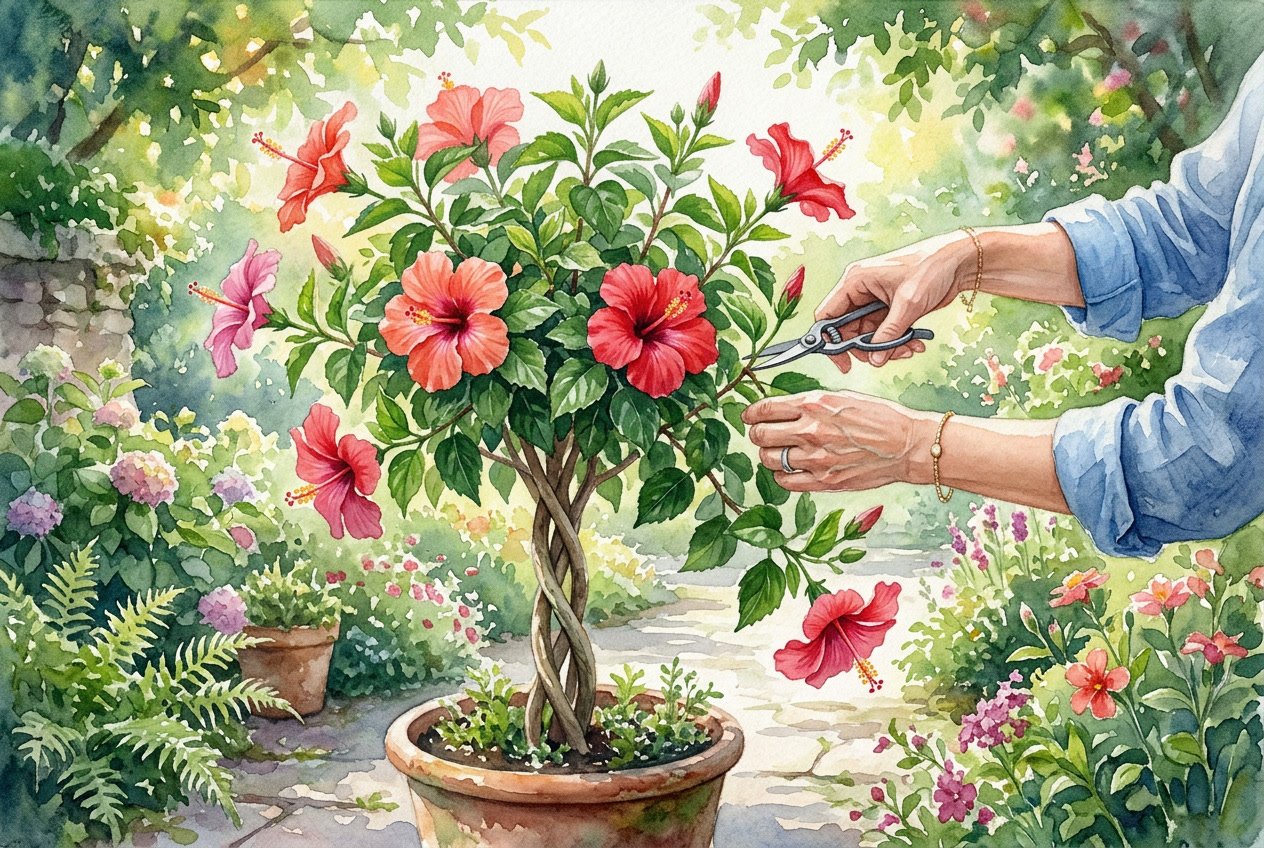
Prune your braided hibiscus in early spring before new growth starts. Cut back leggy branches to maintain the tree shape. Remove any dead, damaged, or crossing branches.
You can trim lightly throughout the year to keep the canopy neat. Cut just above a leaf node at a 45-degree angle. This encourages bushier growth and more flowers.
Always use clean, sharp pruning shears to make smooth cuts. Dirty tools can spread disease to your plant.
Don’t prune too much at once. Remove no more than one-third of the plant at any time. Heavy pruning stresses the plant and reduces flowering.
The braided trunk doesn’t need pruning. Only trim growth that appears below the braid or shoots coming directly from the trunk. These shoots take energy away from the main canopy.
Pinch off faded flowers regularly. This process, called deadheading, encourages your hibiscus to produce more blooms.
Overwintering Guide
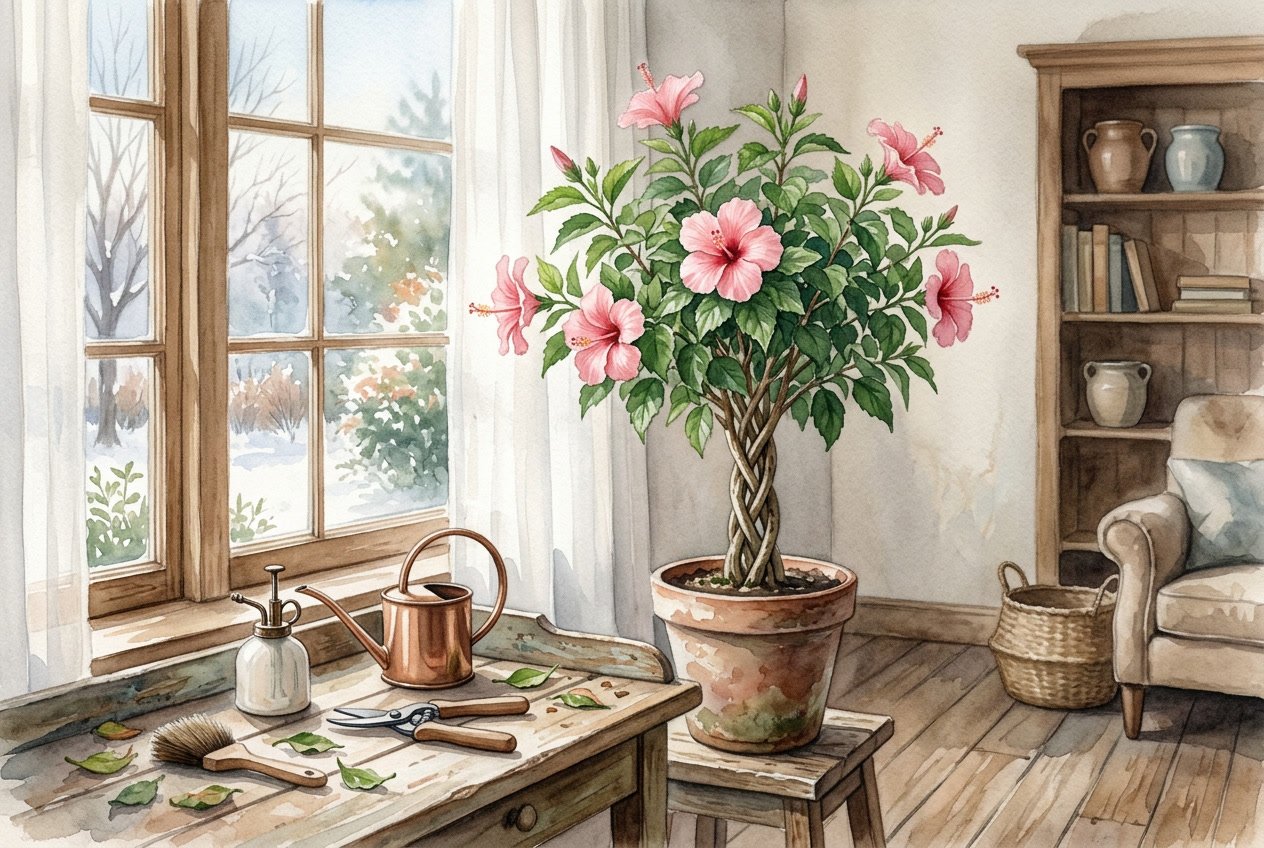
Your braided hibiscus needs special care when temperatures drop below 50°F. These tropical plants can’t survive frost, so you’ll need to bring them indoors before the first cold snap arrives.
Start preparing your plant about a month before your area’s first expected frost date. Check the stems and leaves carefully for pests like aphids or spider mites. Treat any problems before bringing the plant inside to avoid spreading bugs to your other houseplants.
When you overwinter braided hibiscus indoors, choose a spot that gets plenty of bright light. A south-facing window works best. The indoor temperature should stay between 55°F and 70°F throughout winter.
Your plant will likely go through an adjustment period and may drop some leaves. This is normal and nothing to worry about. Cut back on watering during the winter months since the plant grows more slowly in lower light conditions. Let the top inch of soil dry out between waterings.
Winter Care Checklist:
- Water less frequently than in the summer months
- Maintain humidity levels around 40-50%
- Rotate the plant weekly for even light exposure
- Skip fertilizing until spring growth returns
- Watch for dry leaf edges indicating low humidity
You might notice fewer blooms during winter. This happens because hardy and tropical hibiscus varieties respond to shorter daylight hours and reduced light intensity. Once spring arrives and you move your braided hibiscus back outdoors, it will perk up and resume regular blooming.
Keep the plant away from cold drafts, heating vents, and exterior doors during winter months.
Common Problems & Fixes
Your braided hibiscus might face a few common issues, but most are easy to fix.
Yellow leaves usually mean you’re watering too much or too little. Check the soil with your finger. If it’s soggy, cut back on water and make sure your pot drains well. If it’s bone dry, water more often.
Dropping leaves can happen when your plant gets stressed. This might be from moving it to a new spot, cold drafts, or sudden temperature changes. Keep your hibiscus in a stable environment away from heating vents and cold windows.
No flowers often means your plant needs more light. Move it closer to a bright window or add a grow light. Your hibiscus also needs fertilizer during the growing season to produce blooms.
Sticky leaves or small bugs point to pests like aphids or spider mites. Spray your plant with insecticidal soap or neem oil. You might need to repeat this treatment every few days until the bugs are gone.
Brown leaf tips suggest low humidity or salt buildup from tap water. Mist your plant regularly or use a humidifier. Try switching to filtered or distilled water if you have hard water.
Wilting despite wet soil could mean root rot. Take your plant out of its pot and check the roots. Healthy roots are white or tan. If they’re brown and mushy, trim the damaged parts and repot in fresh soil.
Where To Buy a Braided Hibiscus
If you’re ready to get your hands on one of these living sculptures, I can save you some time and point you straight to an option I’ve found.
Costa Farms is one of the most trusted and respected growers in the country, and their braided hibiscus is absolutely the real deal. What I love about this particular listing is that you’re not getting tiny little starter plants — you receive two already-established, healthy 20-inch-tall braided hibiscus trees shipped right to your door via Amazon Prime.
Two plants means you can:
- Create a stunning symmetrical entrance flanking your front door
- Place one on the patio and one by the pool
- Gift one to a fellow plant-loving friend 🌺
I’ve seen these sell out fast once spring hits, so if you’re reading this during the growing season, don’t wait too long!
👉 Grab the Costa Farms Braided Hibiscus 2-Pack on Amazon right here
(Two 20-inch trees, delivered via Amazon Prime — ready to make an immediate statement the moment they arrive.)
A Few Quick Tips When Your Plant Arrives
- Don’t panic if a few leaves drop during shipping — that’s completely normal and temporary
- Water it gently right after unboxing and place it in its sunny spot
- Give it a few days to acclimate before fertilizing
- Follow this care guide, and you’ll be rewarded with blooms all season long 🌸
 Lisa Woods