Balcony Garden Paradise is reader-supported. When you buy through links on our site,
we may earn a small affiliate commission. Happy Gardening from the team! 🌿
Spring is almost here, and it’s time to bring some life to your balcony. Growing plants on your balcony can transform it into a green oasis. You can easily create a beautiful outdoor space with these top 10 plants to grow on your balcony.
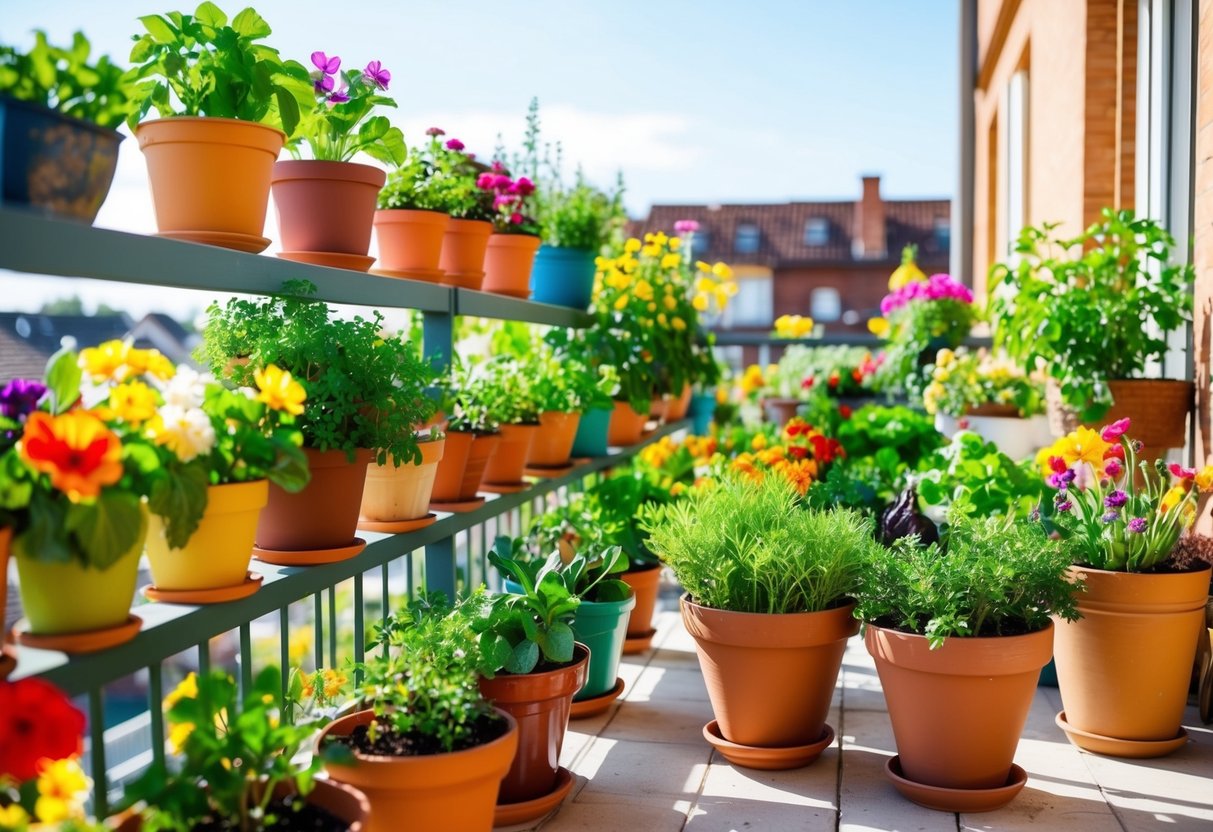
Balcony gardens offer many benefits. They improve air quality, provide a relaxing atmosphere, and can even give you fresh herbs for cooking.
Picking the best plants for your balcony depends on factors like sunlight, space, and your gardening skills.

The 2023 USDA Plant Hardiness Zone Map was created by Oregon State University (PRISM Climate Group) and released by the USDA.
This blog post will guide you through the top 10 plants perfect for balcony gardens. You’ll learn about easy-to-grow options that thrive in different conditions.
Whether you’re a beginner or an experienced gardener, you’ll find plants that suit your needs and style.
Key Takeaways
- Balcony gardens enhance your living space and improve air quality
- Choose plants based on your balcony’s conditions and your gardening experience
- With proper care, you can enjoy a thriving balcony garden throughout the seasons
Benefits of Growing Plants on Your Balcony
Growing plants on your balcony can transform your outdoor space and improve your quality of life. It offers many advantages for both your home and well-being.
Enhanced Aesthetics and Privacy of These Top Plants to Grow on your Balcony
Plants add beauty and color to your balcony. You can create a lush green oasis with flowers, herbs, and small trees.
This natural decor makes your space more inviting and pleasant.
Plants also act as natural screens. They can block unwanted views and give you more privacy.
Tall plants or climbing vines on trellises work well for this purpose.
Your balcony garden can reflect your personal style. Mix different plant types, colors, and textures to make it unique. Use decorative pots and planters to add extra flair.
A green balcony can boost your home’s curb appeal. It looks great from the street and can even increase your property value.
Air Quality and Health Advantages
Plants help clean the air around you. They absorb pollutants and release oxygen. This can improve the air quality in and around your home.
Some plants are especially good at removing toxins from the air. Examples include spider plants, peace lilies, and snake plants.
Growing herbs and vegetables gives you fresh, healthy food. You can enjoy organic produce right from your balcony. This encourages healthier eating habits.
Gardening is also good exercise. It gets you moving and can burn calories. Even light gardening tasks like watering and pruning are beneficial.
Psychological Benefits
Tending to plants can reduce stress and anxiety. It’s a calming activity that helps you relax after a busy day. The act of caring for something can be very rewarding.
Your balcony garden creates a connection with nature. This is especially valuable in urban areas. It can help you feel more grounded and at peace.
Watching plants grow gives a sense of accomplishment. It boosts your mood and self-esteem. You’ll feel proud of the green space you’ve created.
Gardening can also be a fun hobby. It gives you a chance to learn new skills and be creative. You might even meet other plant lovers and share tips.
Choosing the Right Plants for Your Balcony
Picking the best plants for your balcony garden requires careful thought. You’ll need to consider your local climate, available space, and how much care the plants need.
Climate Considerations
Your balcony’s climate plays a big role in plant selection. Think about sunshine, wind, and temperature.
Sunny balconies are great for petunias and other colorful flowers. Shady spots work well for ferns and hostas.
Check how much direct sun your balcony gets each day. Some plants need full sun, while others prefer shade.
Wind can dry out plants quickly, so choose sturdy options if your balcony is breezy.
Your local weather matters too. Pick plants that can handle your area’s typical temperatures. In colder regions, opt for frost-hardy varieties or bring plants inside during winter.
Space Utilization and Layout
Make the most of your balcony’s size. Use vertical space with hanging baskets or wall planters. This works great for trailing plants like ivy or strawberries.
For small balconies, try compact herbs or dwarf vegetable varieties. Larger areas can support bigger pots with small trees or shrubs.
Think about your layout. Put taller plants at the back and shorter ones in front. This creates a nice look and ensures all plants get enough light.
Consider using multi-tiered plant stands or shelves to maximize space. This allows you to grow more plants without cluttering your balcony floor.
Plant Hardiness and Maintenance
Choose plants that match your gardening skills and time. Some need daily care, while others are low-maintenance.
Succulents are great for busy people. They don’t need much water and can handle neglect. Herbs like basil and mint are also easy to grow and useful for cooking.
Think about how often you’ll water your plants. If you travel a lot, pick drought-resistant options. Or set up a self-watering system to keep your plants healthy.
Remember to check each plant’s specific needs. Some might need special soil or fertilizer. Others may require pruning or pest control.
Pick plants that fit your lifestyle and gardening goals.
Top 10 Plants to Grow This Spring
Spring brings new life to your balcony garden. You can choose from herbs, flowers, vegetables, and even small trees to create a lush outdoor space.
Herbs and Aromatic Plants
Basil is a must-have for any spring garden. It grows quickly and adds flavor to many dishes. Plant it in a sunny spot and water often.
Mint is another great choice. It spreads fast, so keep it in its own pot. Use fresh mint leaves in drinks or salads.
Rosemary is a hardy herb that smells amazing. It likes full sun and well-drained soil. Trim it often to keep it bushy.
Thyme is perfect for small spaces. It’s low-maintenance and drought-resistant. Use it fresh or dried in your cooking.
Flowering Perennials and Annuals
Pansies bloom early in spring. They come in many colors and are easy to care for. Plant them in partial shade for best results.
Petunias are colorful and long-lasting. They need full sun and regular watering. Deadhead spent blooms to encourage more flowers.
Marigolds are bright and cheerful. They repel pests and are simple to grow. Plant them in well-drained soil and full sun.
Geraniums add a pop of color to any balcony. They bloom all season and are drought-tolerant. Pinch off dead flowers to keep them blooming.
Vegetable and Fruit Varieties
Cherry tomatoes are perfect for balconies. They need full sun and regular watering. Use a cage or stakes for support.
Lettuce grows quickly and doesn’t need much space. Plant it in partial shade and harvest outer leaves as needed.
Strawberries are fun to grow in hanging baskets. They need full sun and rich soil. Water regularly and remove runners.
Bell peppers thrive in containers. They need full sun and consistent moisture. Fertilize every few weeks for best results.
Climbers and Vines
Morning glories add vertical interest to your balcony. They grow fast and bloom in bright colors. Provide a trellis or string for support.
Clematis is a beautiful flowering vine. It needs full sun but likes cool roots. Mulch the base and provide sturdy support.
Jasmine fills your balcony with sweet scent. It prefers partial shade and moist soil. Prune after flowering to control growth.
Shrubs and Dwarf Trees
Dwarf citrus trees bring a tropical feel to your space. They need full sun and well-draining soil. Move them indoors during cold weather.
Lavender is a fragrant shrub that attracts pollinators. It likes full sun and dry soil. Trim it regularly to keep its shape.
Boxwood is an evergreen that adds structure to your balcony. It’s low-maintenance and can be shaped into various forms. Water deeply but infrequently.
Plant Care Essentials
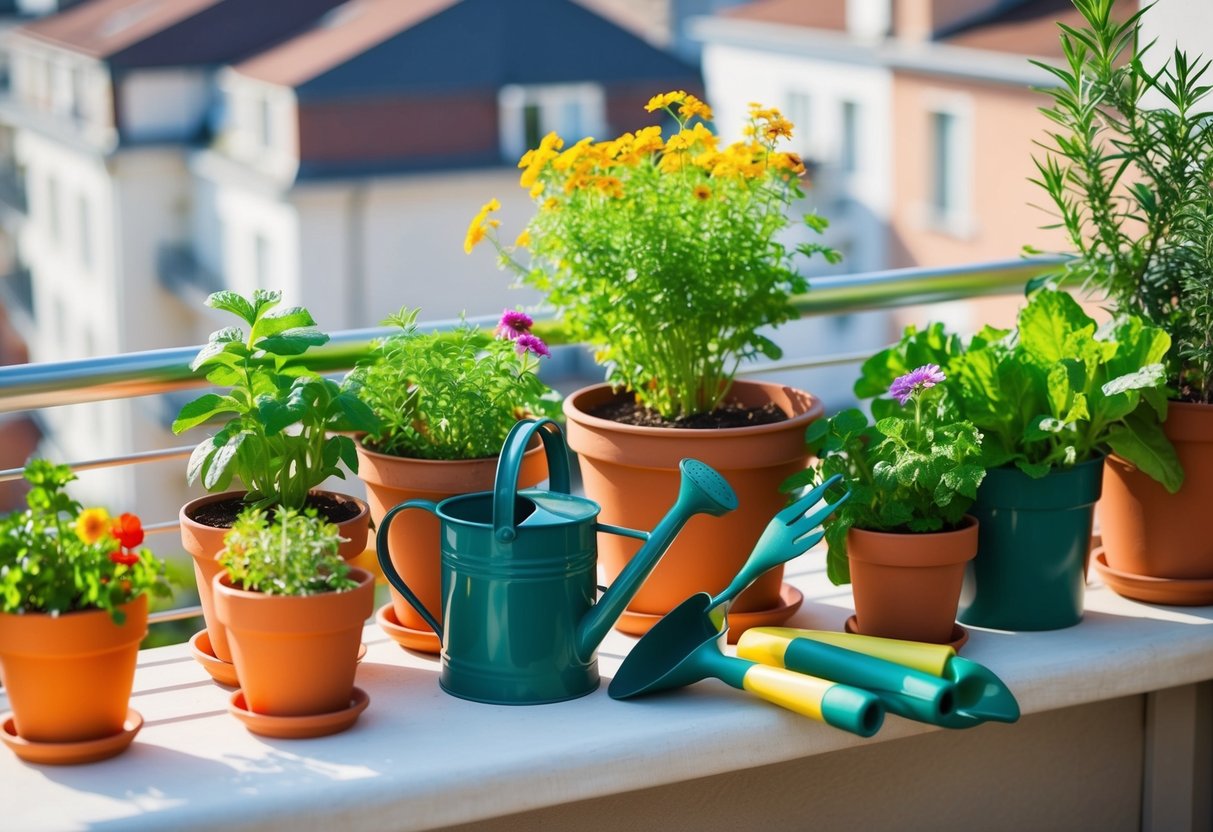
Taking care of balcony plants requires attention to watering, feeding, light, and pest control. These key factors will help your plants thrive in their compact outdoor space.
Watering Practices
You need to water your balcony plants regularly.
Check the soil moisture daily by sticking your finger about an inch deep. If it feels dry, it’s time to water.
Use a watering can with a long spout to reach all your plants easily.
Don’t overwater. This can lead to root rot.
Make sure your pots have drainage holes. Place saucers under the pots to catch excess water.
Water early in the morning or late in the evening. This reduces water loss through evaporation.
During hot summer days, you might need to water twice a day.
For hanging baskets, take them down and soak them in a bucket of water for 30 minutes once a week.
Feeding and Nutrients
Your balcony plants need food to grow strong and healthy.
Use a balanced liquid fertilizer every two weeks during the growing season. Dilute it to half the strength recommended on the label.
Slow-release fertilizers are a good option. They feed your plants gradually over several months. Sprinkle them on the soil surface and water them in.
For flowering plants, use a fertilizer high in phosphorus to encourage blooming.
Tomatoes and other fruiting plants benefit from a potassium-rich feed.
Don’t overfeed. This can burn plant roots and cause more harm than good. Always follow the instructions on the fertilizer package.
Sunlight and Shade Requirements
Different plants have different light needs. Some love full sun, while others prefer shade.
Know what your plants need and place them accordingly on your balcony.
Sun-loving plants like petunias and geraniums need at least 6 hours of direct sunlight daily. Place them on the sunniest part of your balcony.
Shade-loving plants like ferns and impatiens do well in areas that get only 2-4 hours of morning sun. Put these in shadier spots or use shade cloth to protect them.
If your balcony gets too much sun, use umbrellas or awnings to create shaded areas. For low-light balconies, choose plants that thrive in shade or consider grow lights.
Pest Control and Management
Pests can be a problem even on balconies.
Check your plants regularly for signs of infestation. Look under leaves and along stems for tiny bugs or unusual spots.
Use organic pest control methods first.
Spray plants with a mixture of water and mild dish soap to deter soft-bodied insects. For fungal issues, remove affected leaves and improve air circulation.
Neem oil is a natural pesticide that works well on many common pests.
Apply it every 7-14 days as needed.
If you must use chemical pesticides, choose ones safe for edible plants if you’re growing herbs or vegetables.
Always follow the instructions carefully and wear gloves when applying.
Designing Your Balcony Garden
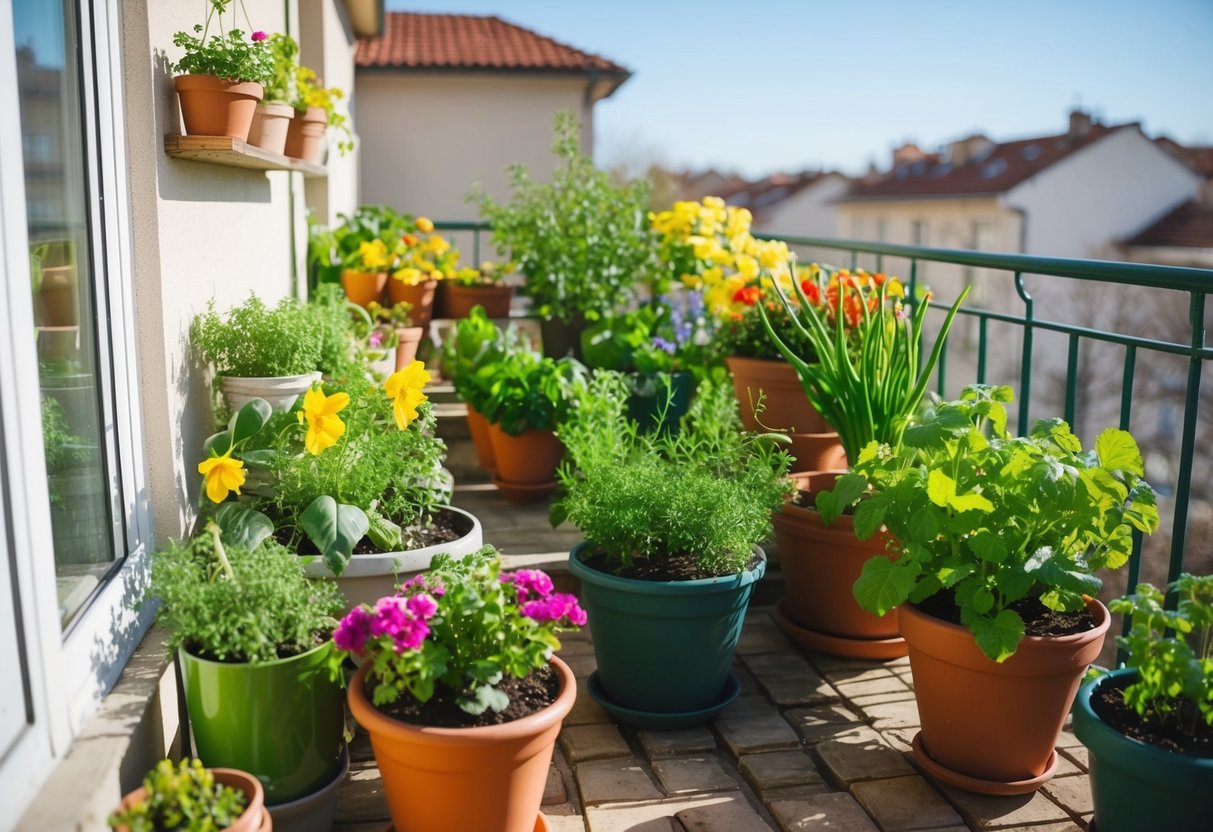
Creating a beautiful balcony garden involves careful planning and smart choices.
You’ll need to pick the right containers, arrange your space wisely, add decorative touches, and make the most of vertical areas.
– Check Out this Fabulous Folding Shelf on Etsy! Pick your size and wood tone to customize your space. Customers Love it. 🌿
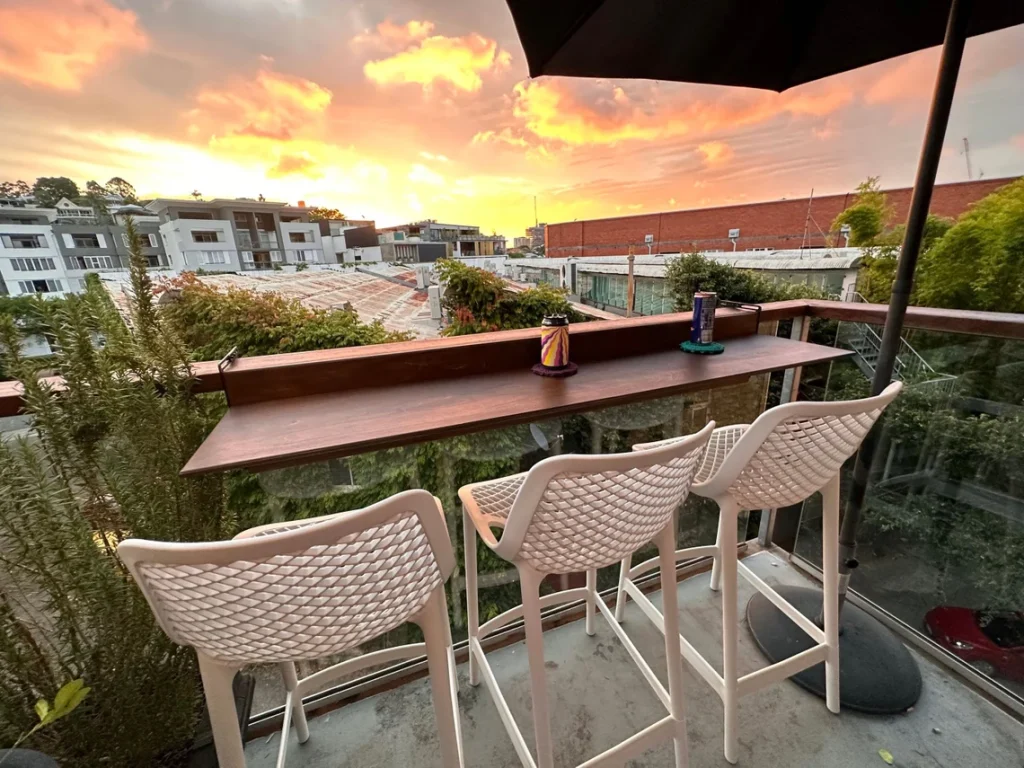

– This beautiful outdoor rug would look amazing on your balcony or patio. Comes in different sizes. ✨
Container and Pot Selection
Choose pots that fit your balcony’s style and your plants’ needs.
Lightweight plastic or fiberglass containers are easy to move and won’t weigh down your balcony. Terracotta pots look great but can be heavy and dry out quickly.
Make sure your containers have drainage holes. This stops water from building up and hurting your plants’ roots. You can add a layer of rocks at the bottom to help with drainage.
Think about size too.
Bigger pots hold more soil and water, which means less watering for you. But they’re also heavier, so keep that in mind.
Layout and Spatial Dynamics
Plan your layout before you start planting.
Put taller plants at the back and shorter ones in front. This creates a nice look and makes sure all plants get enough sun.
Group plants with similar needs together. This makes watering and care easier. Leave enough space between pots for air to flow. Good air flow helps prevent plant diseases.
Consider your balcony’s sun exposure.
Put sun-loving plants where they’ll get the most light. Shade-loving plants can go in darker spots.
Balcony Decor and Accessories
Add some fun extras to make your balcony garden special.
A small table and chairs can turn it into a cozy spot for morning coffee. Hang string lights for a magical evening feel.
Wind chimes can add a nice sound. Just be mindful of your neighbors if you live in a busy area. A small fountain can create a peaceful atmosphere and attract birds. At Balcony Garden Paradise, we’re suckers for beautifully-toned wind chimes.
As with anything you put on your balcony, be mindful of the conditions you encounter and place accordingly. We have a balcony that gets heavy winds during certain times of the year. You can find a place that doesn’t get the full breeze, or remember to take them down when needed.
Use decorative stakes or plant markers to label your plants. This is both pretty and practical. You can make your own with painted rocks or wooden spoons.
Maximizing Vertical Space
Use your balcony’s vertical space to grow more plants.
Hang planters from the railing or ceiling. Wall-mounted planters are great for herbs or small flowers.
Try a trellis for climbing plants like peas or morning glories. You can even grow some veggies vertically. Tomatoes and cucumbers do well in hanging baskets.
Pocket planters or shoe organizers can be hung on walls to grow lots of small plants. This works well for succulents or herbs. A tiered plant stand is another good way to stack plants upwards.
Seasonal Care and Tips
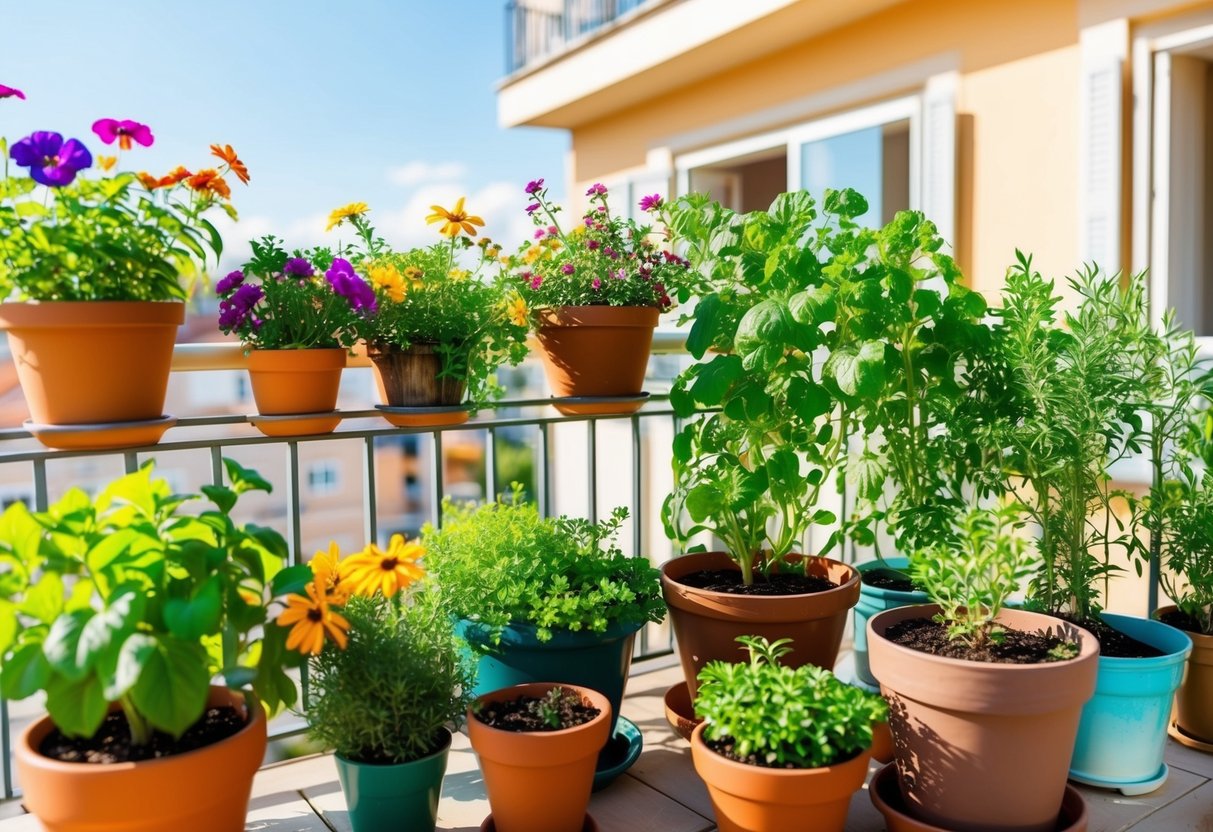
Proper care keeps balcony plants healthy as seasons change.
Timing and techniques matter for thriving plants year-round.
Pre-Spring Preparation for Plants to Grow on Your Balcony
Start prepping your balcony garden in late winter.
Clean pots and tools to prevent disease spread. Check for pest damage on overwintering plants.
Prune dead or damaged branches. Add fresh soil to pots. Start seeds indoors 6-8 weeks before last frost. Choose cold-hardy plants for early planting.
Water sparingly until growth resumes. Use covers to protect tender plants on cold nights. Apply slow-release fertilizer as days warm up.
Transitioning to Summer Care
Gradually increase watering as temperatures rise.
Move heat-sensitive plants to shadier spots. Add mulch to retain moisture and cool roots.
Install drip irrigation or self-watering pots for consistent moisture. Deadhead flowers regularly to encourage blooming. Pinch back leggy growth to keep plants bushy.
Watch for pest issues as insects become active.
Use neem oil or insecticidal soap for control. Feed plants every 2-4 weeks with balanced fertilizer.
Harvest herbs and veggies often to boost production. Provide sturdy supports for climbing plants. Enjoy your thriving balcony oasis all summer long!
Resources and Guides for the Best Plants to Grow on Your Balcony
Growing plants on your balcony can be fun and rewarding.
These resources will help you learn more and connect with other gardeners.
Books and Journals
Balcony gardening books offer in-depth info on plant care and design ideas. Look for titles like “Small-Space Container Gardens” or “The Balcony Gardener”. These books often include tips on soil, light, and watering needs for different plants.
Gardening magazines are great for seasonal advice. “Urban Garden” and “Balcony Garden” focus on small spaces. They share new plant varieties and creative container ideas each month.
Local libraries often have gardening sections. You can borrow books and magazines to test different styles before buying.
Online Communities and Forums
Join online groups to chat with other balcony gardeners.
Facebook has many active gardening groups. Reddit’s r/BalconyGardening is full of tips and photos from real balconies.
Garden forums like GardenWeb have special sections for container growing. You can ask questions and get advice from experienced growers.
Follow balcony gardening accounts on Instagram for daily inspiration. Many share their setups and plant care routines.
Local Gardening Workshops
Check nearby garden centers for classes on container gardening.
These hands-on sessions teach you about soil, fertilizer, and pest control.
Community centers often host gardening talks. Look for events on urban gardening or small-space design.
Botanic gardens sometimes offer tours of their container displays.
You can learn about plant combos that work well together.
Some cities have community garden programs with classes for beginners.
Even if you’re not a member, you might be able to join workshops.