🪴Balcony Garden Paradise is reader-supported. When you buy through links on our site,
we may earn a small affiliate commission at no extra cost to you. As an Amazon Associate,
we earn from qualifying purchases. Happy Gardening from the team! 🌿
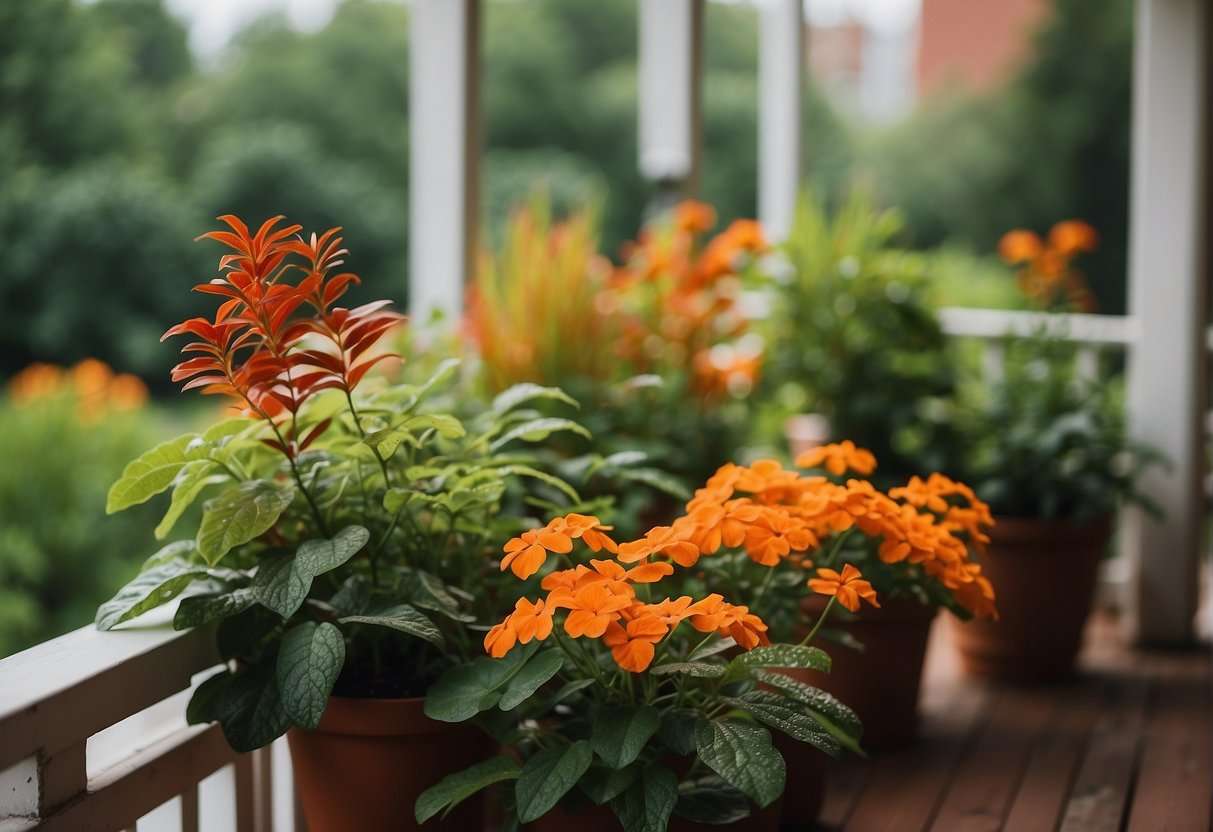
Transform your balcony into a tropical sanctuary with Tropicanna® Cannas on your balcony garden. Their vivid, striped foliage and large, bright flowers provide a glorious touch to any outdoor space. These cannas make a dramatic statement with their robust growth, reaching up to 6 feet in ideal conditions. The stunning Tropicanna® variety flourishes in full sunlight and warmth, thriving best in temperatures over 75°F, perfect for a sun-drenched balcony.
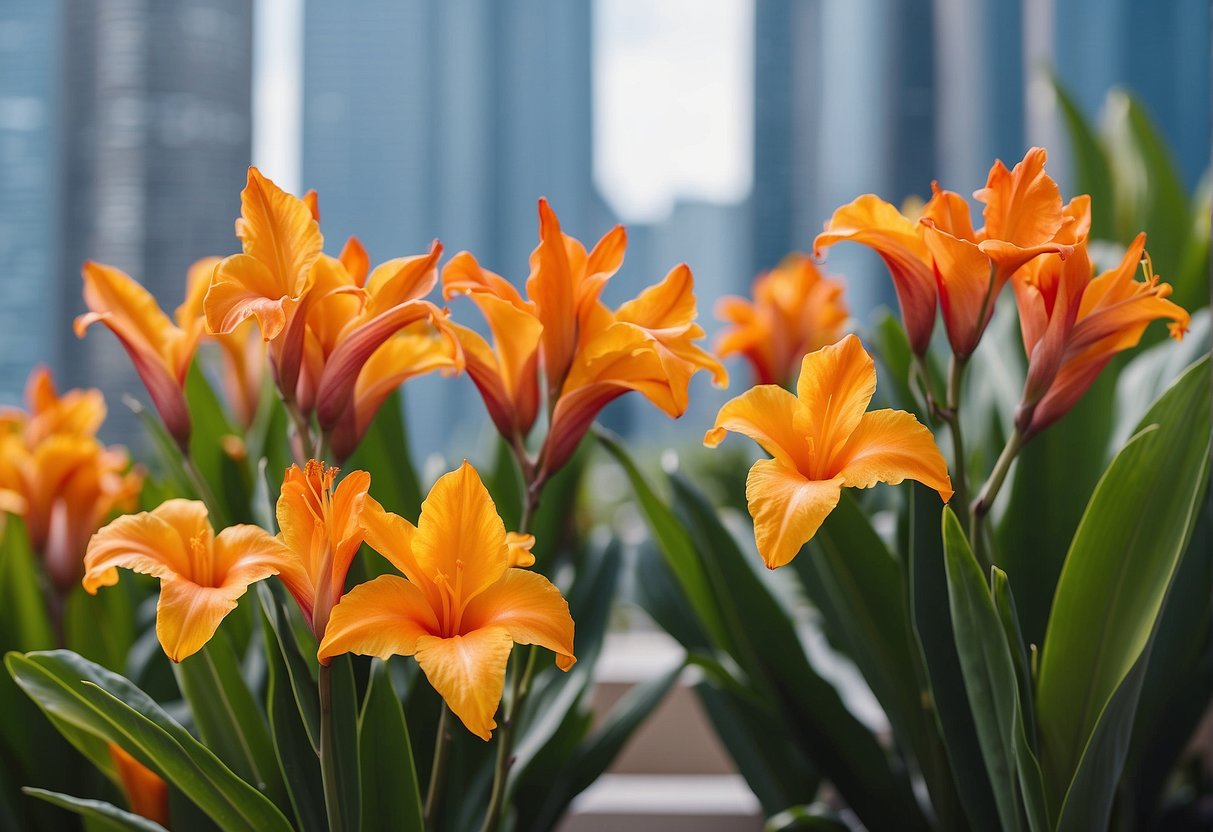
Caring for your Tropicanna® Cannas is straightforward and rewarding. They require regular watering and prefer rich, organic soil. If confined to pots, ensure they have adequate drainage to maintain healthy roots. You’ll be fascinated by how these ornamental plants not only enhance the visual appeal of your balcony garden but also attract hummingbirds and butterflies, adding to the vibrancy of your urban oasis.

Understanding Cannas
Cannas, specifically the Tropicanna® Canna (Canna indica ‘Phasion’), are a stunning addition to your balcony garden. They are herbaceous perennials, meaning they die back in the winter and re-emerge in spring, offering a vigorous display of color year after year.

The 2023 USDA Plant Hardiness Zone Map was created by Oregon State University (PRISM Climate Group) and released by the USDA.
Your Tropicanna® Canna with its variegated foliage presents a tapestry of reds, oranges, and yellows. The leaves alone are a reason to grow this plant, as they create a tropical ambiance right on your balcony.
Key Characteristics:
- Botanical Name: Canna indica ‘Phasion’
- Common Name: Tropicanna® Canna
- Type: Herbaceous perennial
- Foliage: Multi-colored, variegated
- Flowering: Vibrant, often red or orange blooms
Cannas are known for their impressive height, with some varieties reaching up to several feet tall. But don’t worry, the Tropicanna® variety is well-suited for container growth, provided that you offer adequate support as it grows.
This Indian Shot plant, so-called because of its hard, round seeds, requires minimal care. Ensure you plant your Canna Tropicanna in well-draining soil, with plenty of sunlight, and provide regular watering without letting the soil become waterlogged.
Care Instructions:
- Sunlight: Full to partial sun
- Water: Regularly but allow soil to dry between waterings
- Soil: Rich, well-draining
Lastly, be prepared for some maintenance. Although cannas are not demanding, they benefit greatly from deadheading and division every few years to encourage healthier growth and more prolific flowering. Embrace the vibrant and colorful foliage of your Tropicanna® Cannas and watch as they transform your balcony garden into a lush, tropical paradise.
Choosing the Right Location
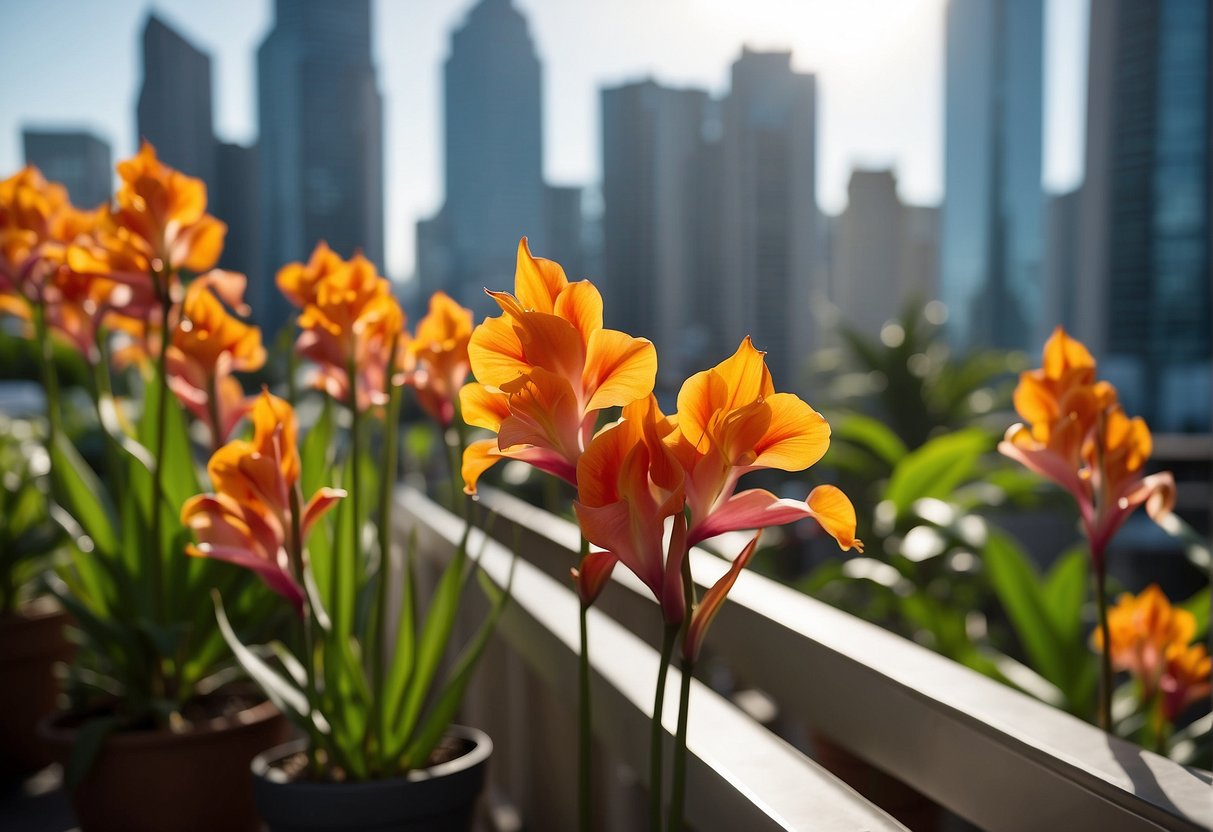
Before adding the vibrant Tropicanna® Cannas to your balcony garden, it’s essential to pinpoint the ideal location. Your choice will directly influence their health and blooming potential.

Sunlight and Exposure
Tropicanna® Cannas thrive in full sun. Ensure your balcony receives at least 6 to 8 hours of direct sunlight daily. Monitor the light patterns and choose a spot where the sun’s rays are strongest. If growing in containers or garden beds, position them to maximize light exposure.
- Morning Sunlight: Ideal for jumpstarting growth
- Afternoon Sunlight: Might be too intense in hotter climates, consider some shading
Remember, insufficient sunlight can lead to weak stems and sparse blooms, while too much can stress the plants.
Temperature and Hardiness Zones
Tropicanna® Cannas best perform in zones 7 to 10. For balconies in these hardiness zones, plant your cannas where they’ll stay warm and protected from cold winds.
- Ideal Temperature Range: Between 70°F and 90°F
- Winter Care: In zones below 7, consider winterizing your cannas. Move containers indoors or provide adequate mulch in garden beds to shield from frost.
Adhering to these temperature guidelines ensures your Tropicanna® Cannas remain robust and display a lavish tropical flair throughout their growing season.
Soil and Planting
When establishing Tropicanna® Cannas on your balcony garden, understanding the soil composition and mastering the planting technique are crucial for thriving plants.
Soil Composition
Your Tropicanna® Cannas require rich, moist soil to flourish. Aim for a soil mixture that retains moisture without becoming waterlogged. A good blend is two parts garden soil to one part compost with a handful of peat moss. This creates a nutrient-dense foundation that promotes healthy root development. The ideal pH level for your cannas should be slightly acidic to neutral, ranging from 6.0 to 6.5.
Planting Technique
When to plant is determined by the temperature of the soil, which should be at least 65°F. In the right conditions, typically late spring to early summer, you can begin the planting process. Choose containers that are large enough to accommodate the cannas’ robust growth and spread. Here’s a simple guide on how to plant your Tropicanna® Cannas:
- Fill your containers with the prepared soil mixture.
- Planting: Place the rhizomes, commonly referred to as ‘eyes’, horizontally with the eyes facing upwards.
- Use a shovel to cover the rhizomes with 3-4 inches of soil, ensuring they are well spaced to allow for ample growth.
- Position the containers in an area where they will receive full to partial sunlight.
By carefully selecting the right soil and following these planting techniques, you’re setting the stage for your Tropicanna® Cannas to create a lush, tropical display on your balcony.
Watering and Moisture Management
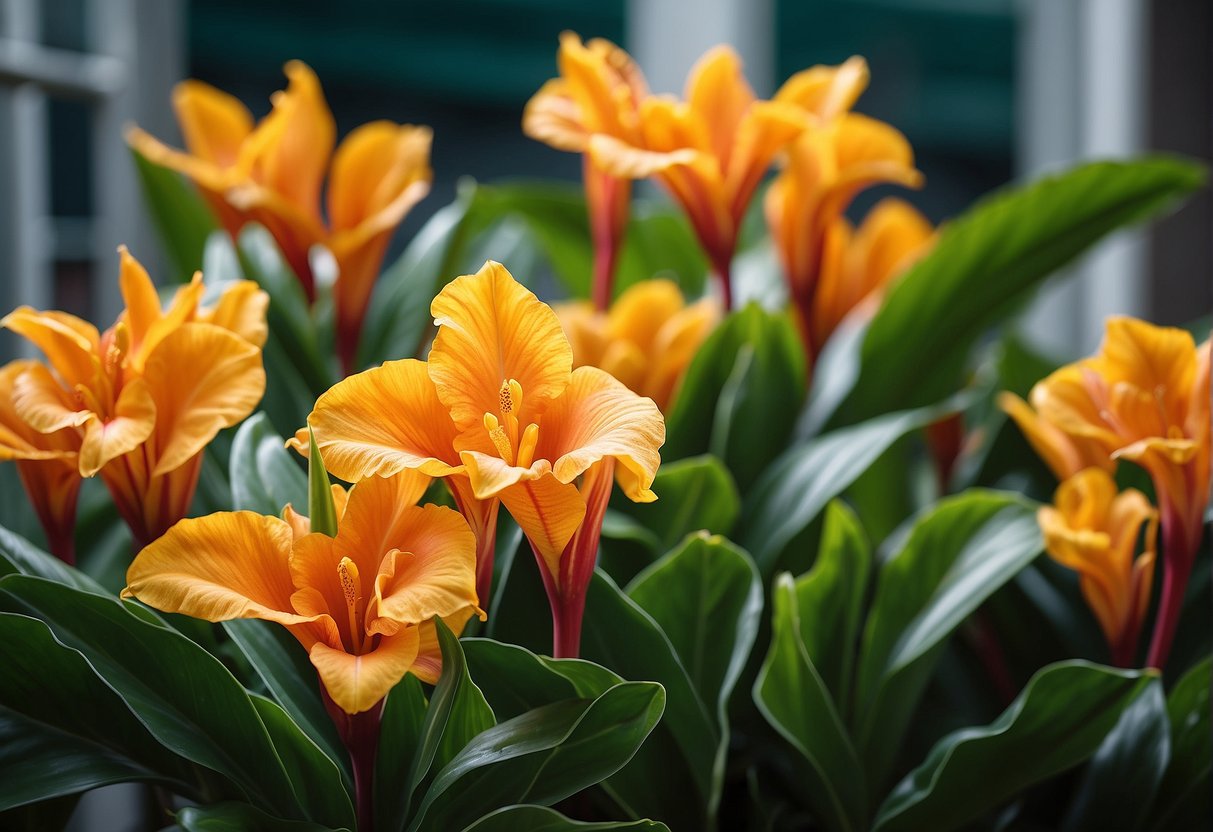
Effective watering and moisture management are crucial for the health of your Tropicanna® Cannas, ensuring they thrive throughout the summer and fall. Adequate water supports robust growth and vibrant leaves, while proper moisture regulation prevents the detrimental effects of overwatering.
Watering Guidelines
Tropicanna® Cannas require consistent moisture during the growing season, especially in the heat of summer. During this time, your canna lilies should be deeply watered at least once per week. If you’re experiencing exceptionally hot or dry weather, you may need to increase this frequency.
Here’s a quick reference guide for watering Tropicanna® Cannas:
- Summer: Deep watering once per week or more if temperatures exceed 75° F
- Fall: Reduce frequency as growth slows and temperatures drop
- Leaves: Keep an eye on leaf health; wilting or browning may indicate water stress
Preventing Waterlogging
While Tropicanna® Cannas love moisture, too much water can lead to waterlogging, which is harmful to the plant. To prevent this:
- Ensure good drainage in your pots or balcony containers.
- Mix compost into the soil to improve moisture retention without becoming waterlogged.
- Use mulch around the base of the plants to maintain moisture levels and reduce the need for frequent watering.
Remember, proper moisture management balances the need for hydration with safeguarding against excessive water that can harm your canna plants.
Fertilization and Nutrients
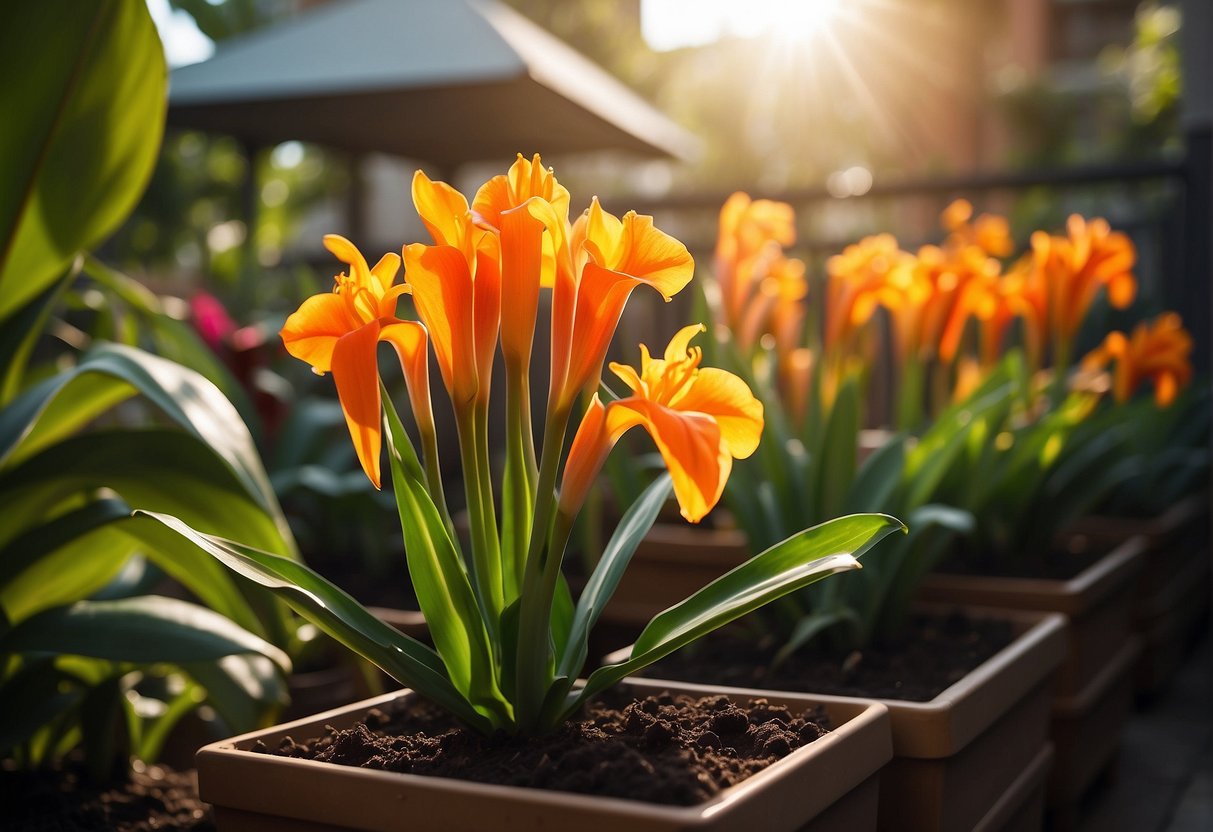
To ensure your Tropicanna® Cannas thrive on your balcony, providing them with the right fertilization and nutrients is crucial. These will support vibrant blooms and robust growth throughout the season.
Choosing Fertilizers
For optimal Tropicanna® Canna growth, select a balanced fertilizer such as a 5-10-5 or 10-10-10 blend. The numbers represent the proportions of nitrogen, phosphorous, and potassium, essential nutrients for plant growth and flowering. Fish emulsion fertilizer is another option, which releases nitrogen slowly and is less likely to burn the plants if over-applied. This organic choice not only provides nitrogen needed for leaf growth but also benefits the overall health of your Cannas.
Feeding Schedule
Feeding your Tropicanna® Cannas should align with their growth and blooming cycles. During the growing season, fertilize once a month with the recommended rate of either 2 pounds per 100 square feet for the 5-10-5 fertilizer or 1 pound per 100 square feet for the 10-10-10 fertilizer. Ensure even distribution to avoid over-concentrating around a single flower spike. Start fertilizing when you see active growth, usually in early spring, and continue until late summer to sustain bloom production. Regular feeding ensures continuous lush foliage and vibrant blooms throughout the season.
Maintenance and Care
Tropicanna® Cannas are a vibrant accent to your balcony garden with their brilliant foliage and flowers. Understanding proper maintenance techniques is crucial to nurturing their impressive height and vivid buds into lush, eye-catching clumps.
Deadheading and Pruning
Deadheading is essential to encourage the growth of Tropicanna® Cannas. By removing spent flowers before they form seed pods, you direct energy back into the plant, promoting new buds. Begin by cutting back the flower stalks to the next side shoot with buds. If there are no more side shoots, cut the stalk back to the base.
Pruning isn’t typically required until the end of the growing season. When the first frost hits, prune your cannas down to 2-3 inches above the soil to prepare them for winter. This will prevent decay and promote healthier growth when spring arrives.
Controlling Pests and Diseases
Pests like slugs, spider mites, and Japanese beetles can be a nuisance. Regularly inspect your cannas for these pests and manage them promptly. A strong water spray can dislodge mites and beetles from the foliage, while slug bait or shallow pans of beer can help control slug populations.
When it comes to diseases, check for signs of bacterial blight or leaf spot – these can lead to serious infection if left unattended. These diseases often present as discolored spots or streaks on leaves and can spread quickly. Remove any infected foliage and avoid water splashing on the leaves when watering. Ensure good air circulation to deter these diseases. If a severe outbreak occurs, you may need to apply an appropriate fungicide or bactericide according to the product’s instructions.
Propagation Techniques
Introducing Tropicanna® Cannas to your balcony garden via propagation allows you to expand your collection or share with fellow gardeners. Here’s how you can propagate these vibrant plants using division and seeds.
Dividing Canna Clumps
To propagate Tropicanna® Cannas by division, you will tackle the rhizomes—these are the horizontal stems running underground from which the plants grow. You should divide clumps in the spring, just before the growing season starts, or in the fall after foliage dies back.
- Timing: Divide in early spring or fall.
- Steps:
- Gently dig up the clump, being careful not to damage the rhizomes.
- Wash off the soil to see the rhizomes clearly.
- Look for natural divisions in the clump, where segments of rhizome have at least two to three eyes (growth points).
- Cut through the rhizomes with a sharp, clean knife to separate segments.
- Replant the divisions promptly to ensure quick recovery.
Regular division helps to maintain the health and spread of your Tropicanna® Cannas, preventing overcrowding and promoting vigorous growth.
Seed Propagation
Tropicanna® Cannas can also be grown from seeds, which form in seed pods following flower formation.
- Harvesting Seeds:
- Wait for seed pods to dry on the plant.
- Collect the pods, carefully open them and extract the seeds.
- Preparation:
- Using a file, nick the hard seed coat or soak the seeds in water for 24-48 hours to soften it.
- Sowing:
- Plant the seeds in a well-draining seed starting mix.
- Place the pot in a warm area and keep the soil moderately moist.
- Germination can take several weeks, so be patient.
Seed propagation may result in variations from the parent plant due to genetic diversity. It’s an exciting way to potentially grow new, unique varieties of Tropicanna® Cannas.
Overwintering Cannas
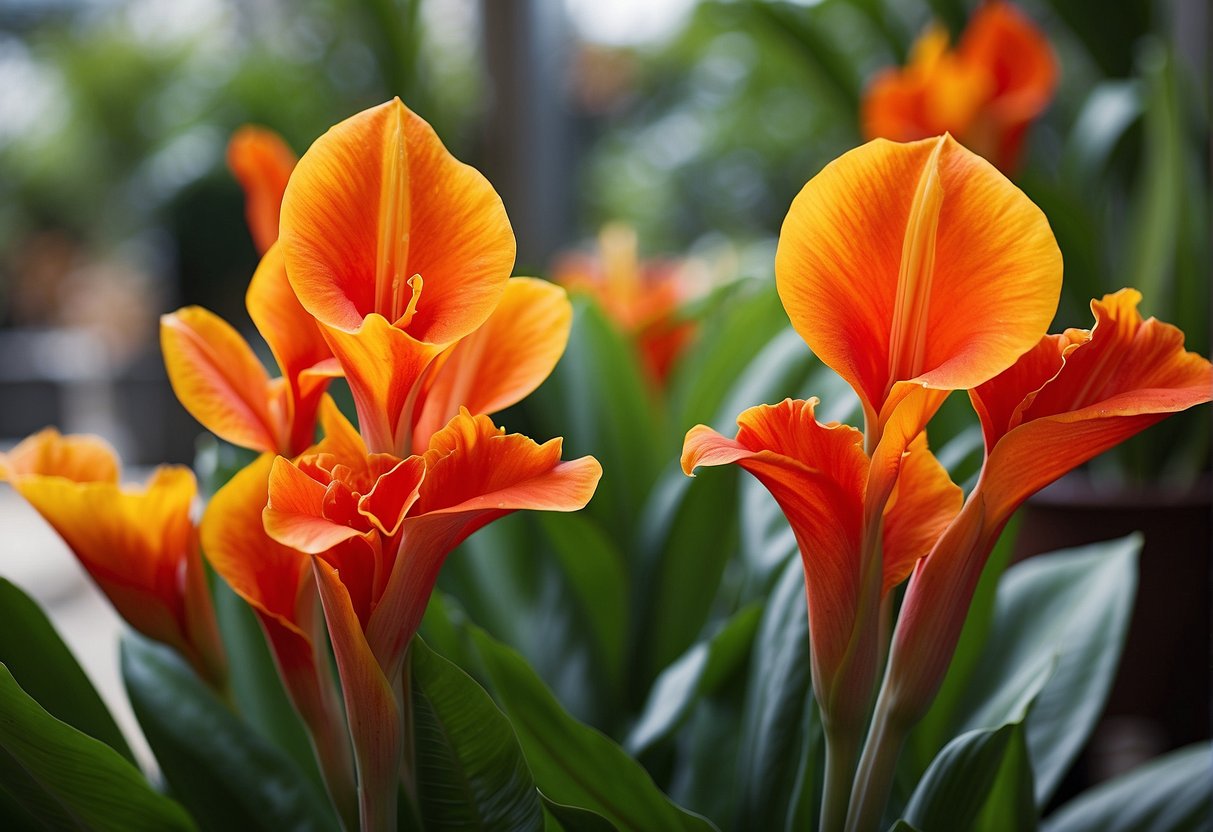
When winter beckons, protecting your Tropicanna® Cannas from frost and freezing temperatures is crucial. Overwintering your cannas ensures they survive to brighten your balcony garden for another season.
Steps to Overwinter Cannas:
- Wait for the first frost to blacken the foliage. This signals that your cannas are entering dormancy.
- Cut back the stems to about 2-3 inches above the soil.
- Carefully dig up the rhizomes, avoiding damage.
- Rinse the rhizomes clean of soil and let them dry for a day or two in a moist-free, well-ventilated space.
- Store the rhizomes in a cool, dry place. Ideal storage temperatures range from 45 to 50 degrees Fahrenheit.
- Use peat, sawdust, or a similar material to pack the rhizomes. This helps maintain a moist environment without becoming waterlogged.
Storage Location:
- A basement
- A garage that doesn’t drop below freezing
- An insulated but unheated room
- A frost-free shed
Important Tips:
- Inspect the rhizomes periodically for rot or desiccation.
- Dust with fungicide if you’re concerned about mold.
- If needed, lightly moisten the packing material to maintain adequate humidity.
By following these guidelines, your Cannas will emerge healthy and ready to plant after the winter months, ensuring a vibrant display on your balcony once again.
Design and Aesthetic Appeal
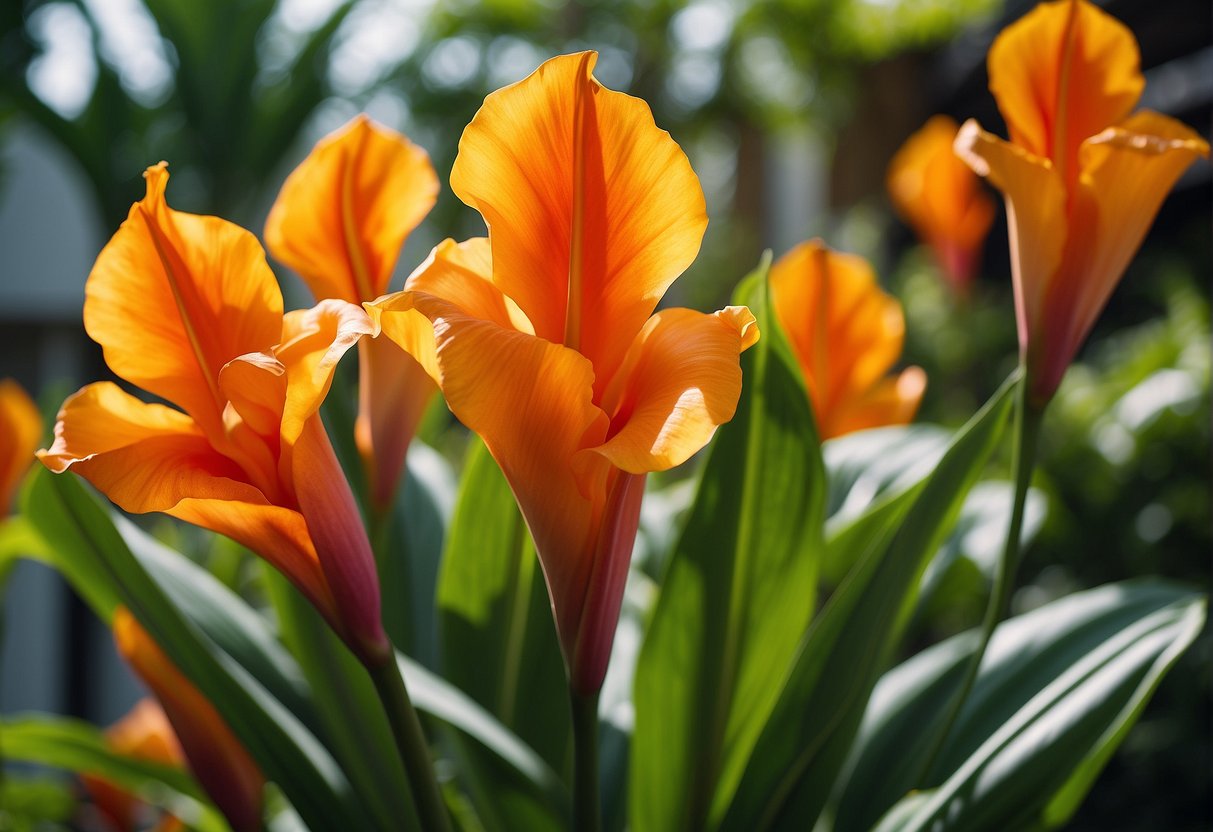
When enhancing your balcony garden, Tropicanna® Cannas offer both stunning visuals and a striking profile.
Landscape Design Ideas
Foliage: Tropicanna® Cannas are renowned for their brilliant foliage, with leaves that capture the imagination. The broad, striped leaves of various hues create a tapestry that is both bold and sophisticated.
Blooms: From mid-summer to the first frost, your garden will be punctuated with vibrant flowers. These large blooms range in color, adding a dynamic layer to your garden’s palette.
Height and Structure: With tall stems capable of reaching substantial heights, these plants add a vertical dimension to your balcony. You can use them as focal points or to provide a backdrop for shorter plants.
Attracting Wildlife: The bright and inviting flowers not only beautify your space but also attract hummingbirds, creating a lively and interactive environment.
By incorporating Tropicanna® Cannas, you achieve a garden that is both a visual feast and a haven for wildlife, imbued with an irresistible tropical flair.
Troubleshooting Common Issues
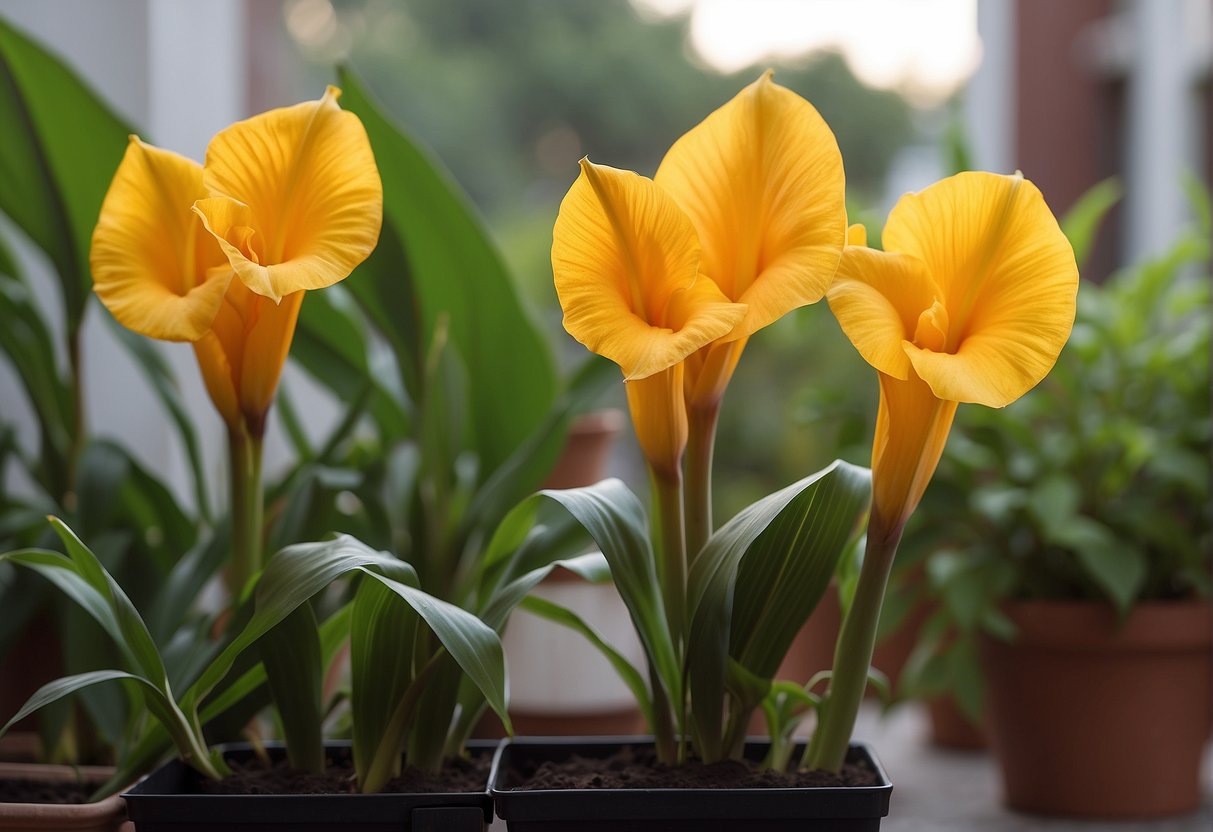
When cultivating Tropicanna® Cannas on your balcony garden, you may encounter a few challenges. Addressing these issues promptly can ensure your plants remain healthy and vibrant.
Overwatering and Rot
Excessive moisture can lead to root rot, a serious condition impeding plant growth. To prevent this, ensure your cannas are planted in well-draining soil and that you’re allowing the soil to dry slightly between waterings. If you suspect rot, reduce your watering frequency immediately.
Pest Infestations
Spider mites are tiny pests that can cause significant damage to Tropicanna® Cannas. To mitigate this, inspect your plants regularly for fine webs and tiny mites. If detected, rinse leaves with water or apply a suitable miticide as directed.
Leaf Spot
This fungal issue presents as discolored spots on leaves. Improve air circulation and reduce leaf wetness to combat leaf spot. Remove affected foliage to keep the problem from spreading.
Wind Damage
Balcony gardens are often more exposed to wind, which can stress plants. To shield your Tropicanna® Cannas, consider installing a windbreak or repositioning them to a less exposed location.
Remember, troubleshooting these common issues promptly can help you maintain a thriving balcony garden with resplendent Tropicanna® Cannas.
Final Thoughts
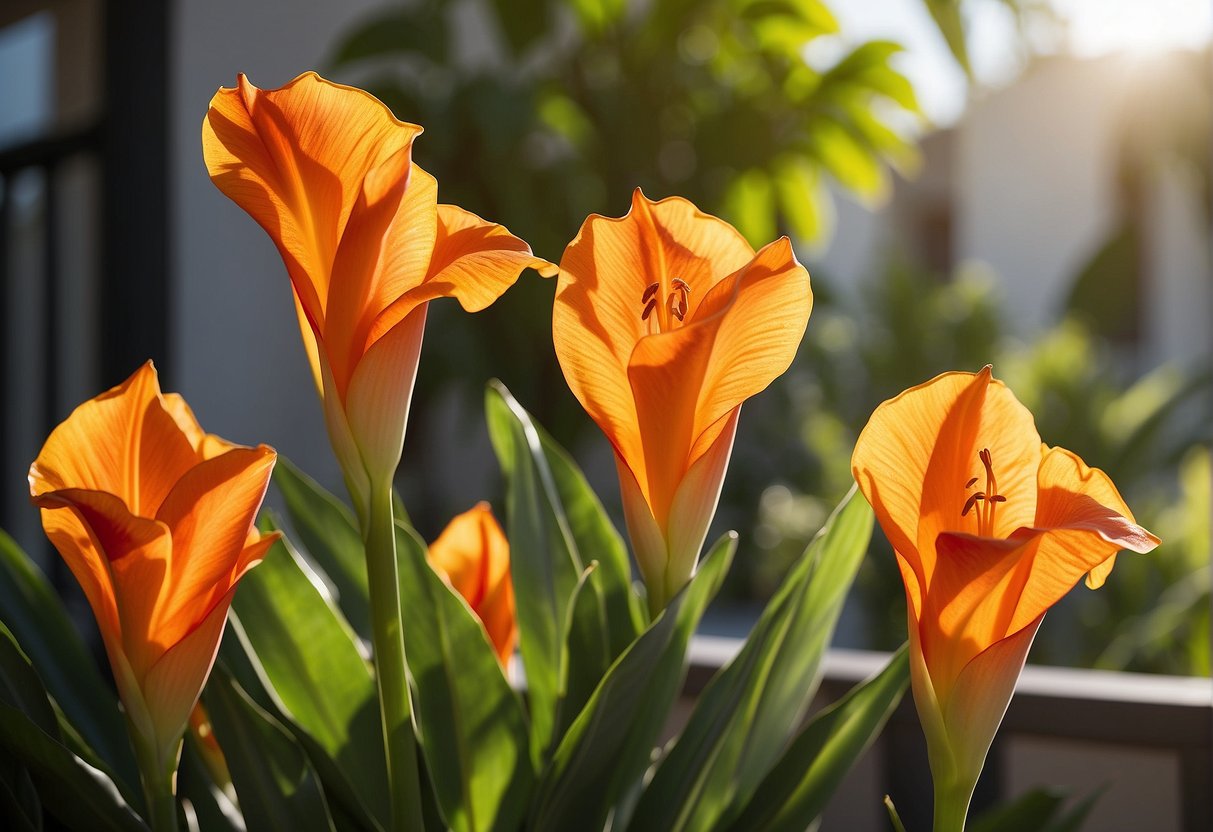
As you tend to your balcony garden, the Tropicanna® Cannas stand tall and vibrant, offering a tropical flair that is unmatched by more common selections like roses or tomatoes. These perennials are not only showstoppers with their kaleidoscope of colors but also reliable bloomers from early summer well into the late summer months.
The key to Tropicanna® Cannas’ success is ensuring they receive full sun — a critical factor in promoting the lush growth and bold blooms that characterize these plants. Don’t be hesitant to place them in the sunniest part of your balcony; they thrive when bathed in warmth and light throughout the summer season.
Remember these care tips for optimal growth:
- Sun Exposure: Full sun (6+ hours per day)
- Watering: Keep consistently moist
- Companion Planting: Consider pairings with other summer perennials for a layered look
In their second season, you’ll be delighted to see your Tropicanna® Cannas returning with even more vigor, embodying the essence of a perennial plant and reinforcing your balcony garden as a personal oasis. Enjoy the lush beauty these cannas bring to your urban retreat, an inspiring testament to your gardening prowess.