Balcony Garden Paradise is reader-supported. When you buy through links on our site,
we may earn a small affiliate commission. Happy Gardening from the team! 🌿
Balcony Garden Paradise is reader-supported. When you buy through
links on our site, we may earn an affiliate commission.
Happy Gardening from the team! 🌿
Balcony gardening with kids offers a unique opportunity to blend elements of nature into your urban home. When you include children in the process, you not only instill a sense of responsibility and creativity in them, but you also make the experience of gardening a shared family adventure. As you embark on this journey, your balcony can transform into a lush, green space teeming with life, where every plant tells a story of collaboration and care.
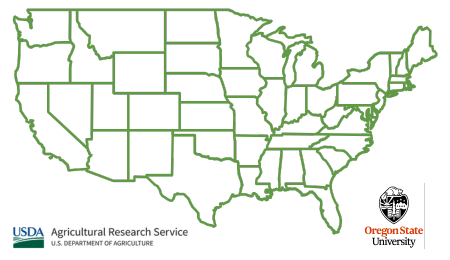
The 2023 USDA Plant Hardiness Zone Map was created by Oregon State University (PRISM Climate Group) and released by the USDA.
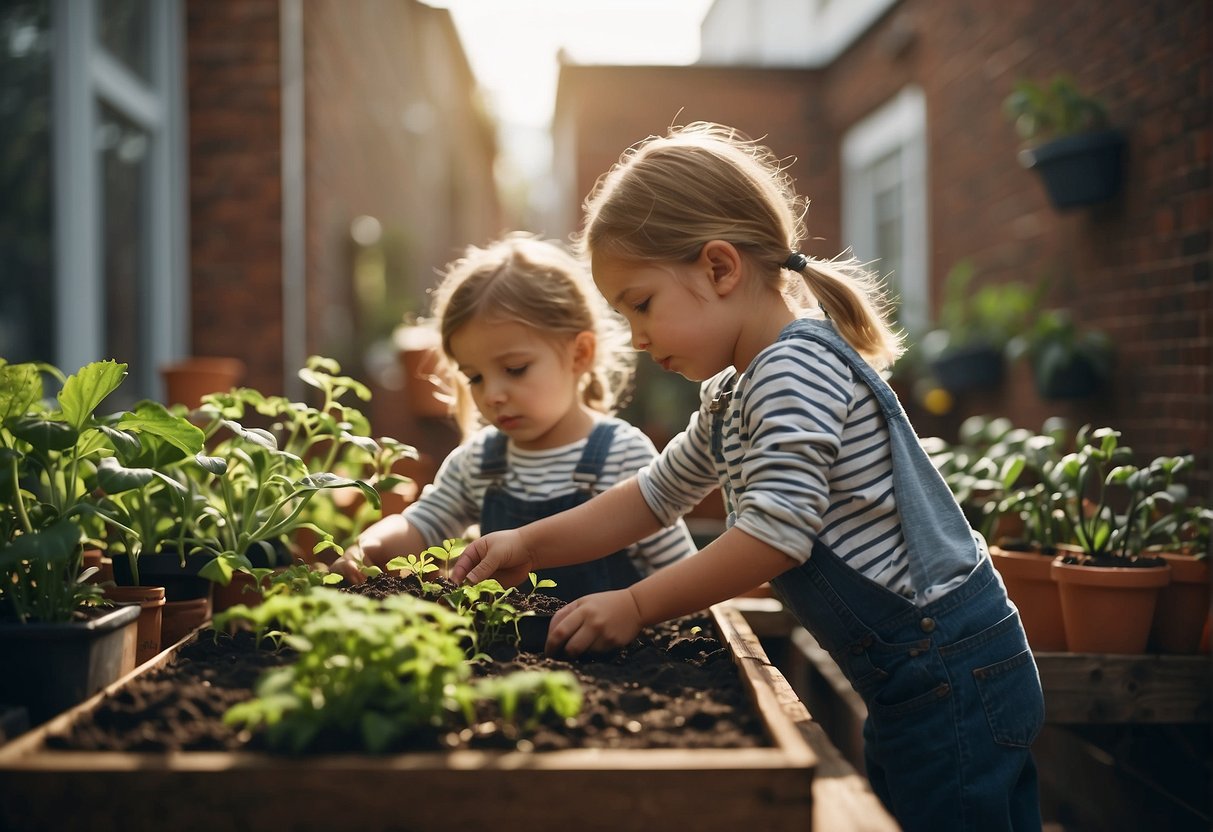
Involving kids in balcony gardening cultivates their connection with nature while teaching valuable life lessons. It’s a practical way to introduce concepts of ecology and sustainability right outside your door. By assigning age-appropriate tasks, children can learn about the cycles of growth and the importance of nurturing living things. Your balcony becomes a classroom where lessons in patience, science, and the joy of seeing the fruits of your collective labor come to life.
Tailoring the gardening experience to be kid-friendly is key to their engagement. Selecting the right plants, tools, and garden designs ensures safety and fosters an inclusive environment. Your balcony garden is an extension of your living space and a canvas for imagination. You’ll witness the transformation of a simple balcony into a thriving patch of nature, where every seed planted is a joint effort towards creating beauty in your home.
Benefits of Including Kids in Balcony Gardening
Inviting your children to join you in the balcony gardening journey offers numerous advantages that extend beyond cultivating plants. It encompasses educational enrichment, stronger family ties, and invaluable life lessons.
Educational Value of Gardening
Understanding Through Practice:
Your balcony garden becomes a living classroom for your kids. They learn about nature and life cycles firsthand by planting seeds, observing growth, and identifying various plants. This hands-on experience imparts knowledge about botany, biology, ecology, and nutrition.
Application of Concepts:
Gardening reinforces scientific concepts, such as photosynthesis, in a tangible way. Watching a seed sprout and grow can be a captivating introduction to the wonders of plants and the environment.
Enhancing Family Bonding
Cultivate Togetherness:
Working side by side in your balcony garden, you bond with your kids through shared tasks like watering or harvesting. It’s productive and enjoyable, strengthening your family connection.
Creating Memories:
The shared achievements, such as the first sprout or bloom, become cherished memories that bring joy to your family life.
Fostering Responsibility and Patience
Learning to Take Care:
Gardening teaches children about responsibility as they take ownership of caring for their plants. Regular watering, weeding, and monitoring for pests instill a sense of duty.
Value of Patience:
Plants grow on their own schedule. Kids learn that some things in life cannot be hurried and the importance of patience as they watch and wait for their garden to flourish.
Designing a Kid-Friendly Balcony Garden
Creating a balcony garden that is safe and enjoyable for children involves choosing the right containers, plants, and playful elements. Your choices should enhance both the beauty and functionality of the space.
Choosing Safe and Appropriate Containers
- Safety first: Opt for containers with smooth edges and sturdy materials to prevent accidents.
- Accessibility: Ensure that containers are at a reachable height for your child so they can easily participate in gardening activities.
Selecting Plants for the Child’s Balcony Garden
- Variety: Incorporate a mix of colors, flowers, vegetables, and herbs to stimulate your child’s senses and curiosity.
- Teaching moments: Choose plants that offer learning experiences about nature, such as how vegetables grow or the role of flowers in pollination.
Incorporating Playful Elements and Colors
- Colorful pots: Use bright colors for pots and planters to make the space more engaging.
- Interactive features: Add elements like wind chimes or small figurines that can teach your child about the environment through play.
Regularly check your balcony for any safety hazards and ensure it remains a secure place for your child to explore their green thumb.
Practical Gardening Activities for Children
Balcony gardens offer a unique opportunity for children to learn about planting and nature. Engaging kids in gardening educates them about plant life cycles and provides exercise and the joy of spending time outdoors.
Planting Seeds and Seedlings Together
Planting is the first step to creating any garden, and engaging children in this process can be incredibly rewarding. Start with easy-to-grow seeds that can thrive in pots, like basil or cherry tomatoes. Show your child how to fill pots with soil, create a small hole for the seed or seedling, and carefully place it in. Teaching the correct depth for planting different seeds is crucial, so they grasp the importance of providing the right conditions for growth.
Simple Garden Maintenance Tasks
Kids can help with routine gardening tasks, which reinforces responsibility and ownership. Provide them with small, child-friendly tools to make tasks like watering and weeding appealing. Assign them simple but important jobs like checking the soil moisture and adding fertilizer when necessary. This hands-on involvement makes them a part of the garden’s success and care.
Harvesting and Using the Garden’s Bounty
Harvest time is when children see the results of their efforts. Teach them how to recognize ripe fruits and vegetables, and let them pick what they’ve grown. Encourage them to bring their harvest to the kitchen where you can cook a meal together. Herbs can be picked as needed, giving them an ongoing activity to look forward to. Demonstrating the connection between the garden and what they eat strengthens their understanding of nature’s cycles.
Safety Measures and Ergonomics
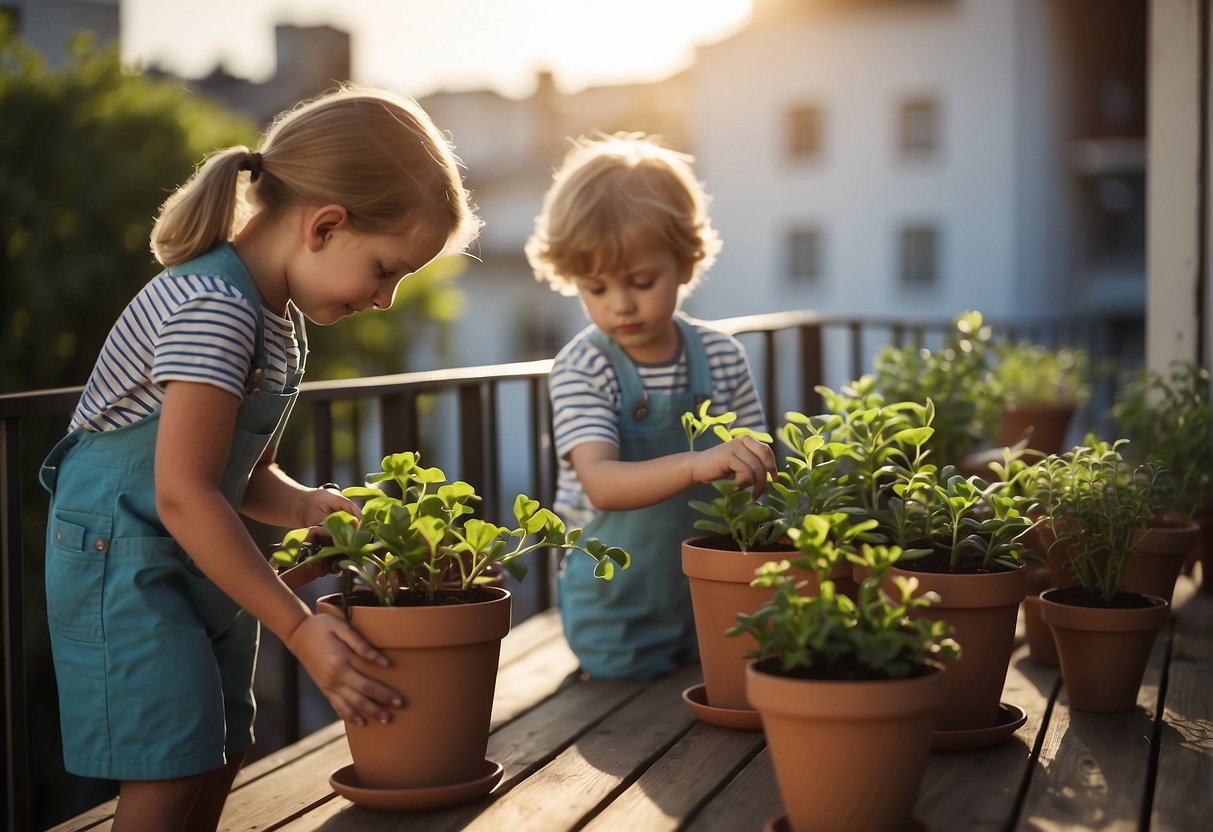
Ensuring the safety and comfort of your children is paramount when involving them in creating a small balcony garden. Incorporate ergonomic tools designed for children’s use and establish a safe environment to learn and have fun.
Creating a Safe Gardening Space on the Balcony
To prevent accidents on the balcony, safety measures are a must. Firstly, inspect all railing gaps; any space wider than 4 inches poses a risk of your child squeezing through. Address this by securing railings with materials like plastic garden fencing or clear Plexiglas. This safe balcony modification ensures peace of mind while your children are outdoors.
Secondly, remove any sharp or breakable objects from the area. Replace with durable, child-friendly decor to create a safe space for gardening activities. Maintaining a clean environment, keeping gardening tools and supplies stored when not used.
Child-Friendly Gardening Tools and Equipment
To foster a love for gardening while prioritizing ergonomics, equip your children with the right tools. Look for gardening tools that feature:
- Lightweight materials: Reduces strain on young muscles and joints.
- Ergonomic handles: Ensures a good grip and comfort while working.
In addition, consider the size of the tool. Child-sized shovels, rakes, and watering cans allow for easier handling, making the experience enjoyable and manageable on a small balcony garden. This encourages independence and instills a sense of responsibility as they care for their own section of the garden.
Comfort and ease of use are vital, so opting for ergonomic gardening equipment can significantly enhance your child’s gardening experience. Safety and ergonomic practices on the balcony will secure your child’s well-being and enrich their gardening experience.
Maximizing Limited Balcony Space
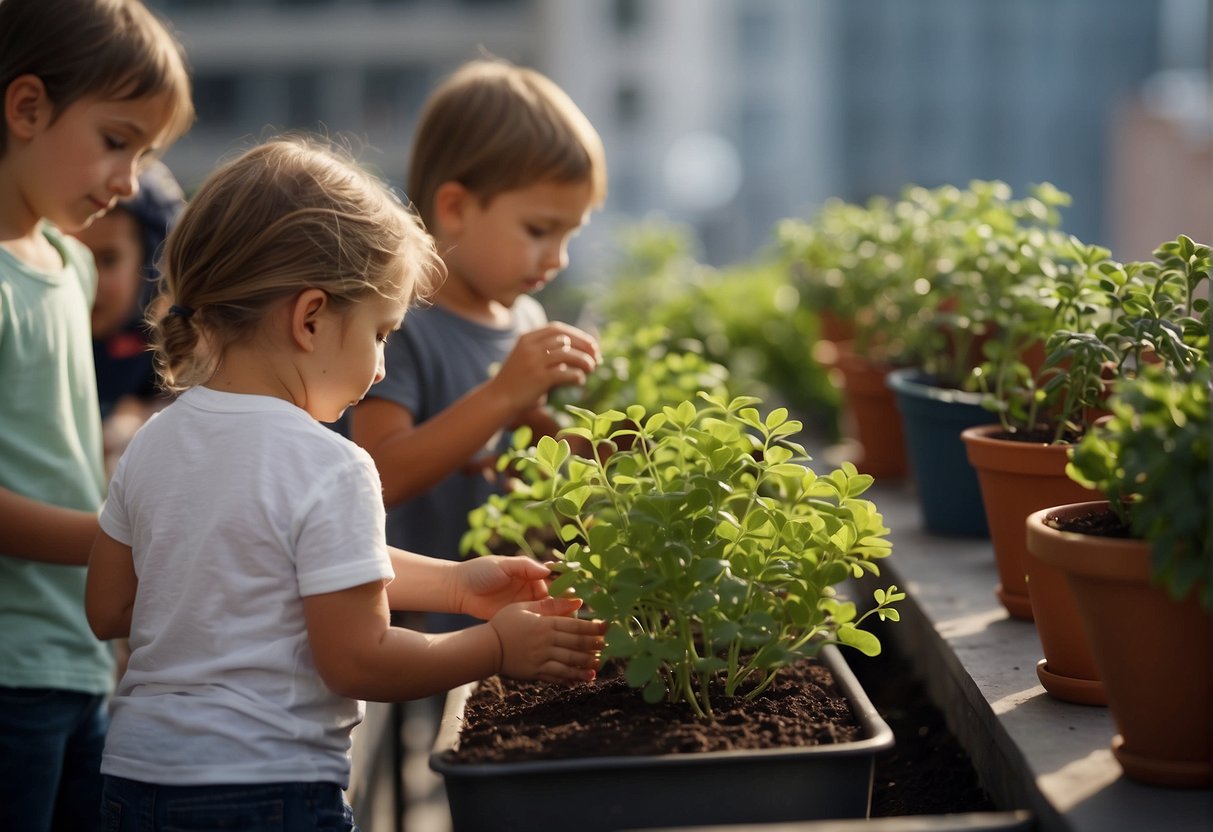
To create a flourishing balcony garden in a compact area, it’s essential to utilize every inch wisely. Innovative approaches to plant arrangement and container selection can substantially enhance your limited space.
Vertical Gardening and Use of Wall Space
Turning your attention upwards opens a wealth of possibilities for a small balcony garden. Vertical gardening leverages the height of your space, allowing for more greenery without compromising your floor area. Consider installing trellises against walls to support climbing plants or vining vegetables, which not only draw the eye upward but also add a layer of lushness to your balcony. Incorporating wall-mounted pots or hanging baskets can transform a bare wall into a living tapestry, offering a space-saving way to display a variety of plants.
- Trellises: for climbing plants or vines
- Wall-mounted pots: to make walls bloom
- Hanging baskets: for decorative and edible plants
Containers and Planters that Maximize Area
When floor space is at a premium, selecting the right containers and planters becomes crucial. Choose multi-tiered plant stands or stackable pots that allow you to grow multiple plants in a single footprint. Opt for rail-mounted planters to make use of the often-overlooked balcony railings and rectangular planters that fit snugly against walls or railings, optimizing your horizontal dimension.
- Multi-tiered plant stands: for layers of plants
- Stackable pots: to make use of vertical height
- Rail-mounted planters: to free up floor space
With these strategies, you can maximize the potential of your balcony and enjoy a thriving garden that doesn’t feel crowded.
Engaging Children with Nature and Wildlife
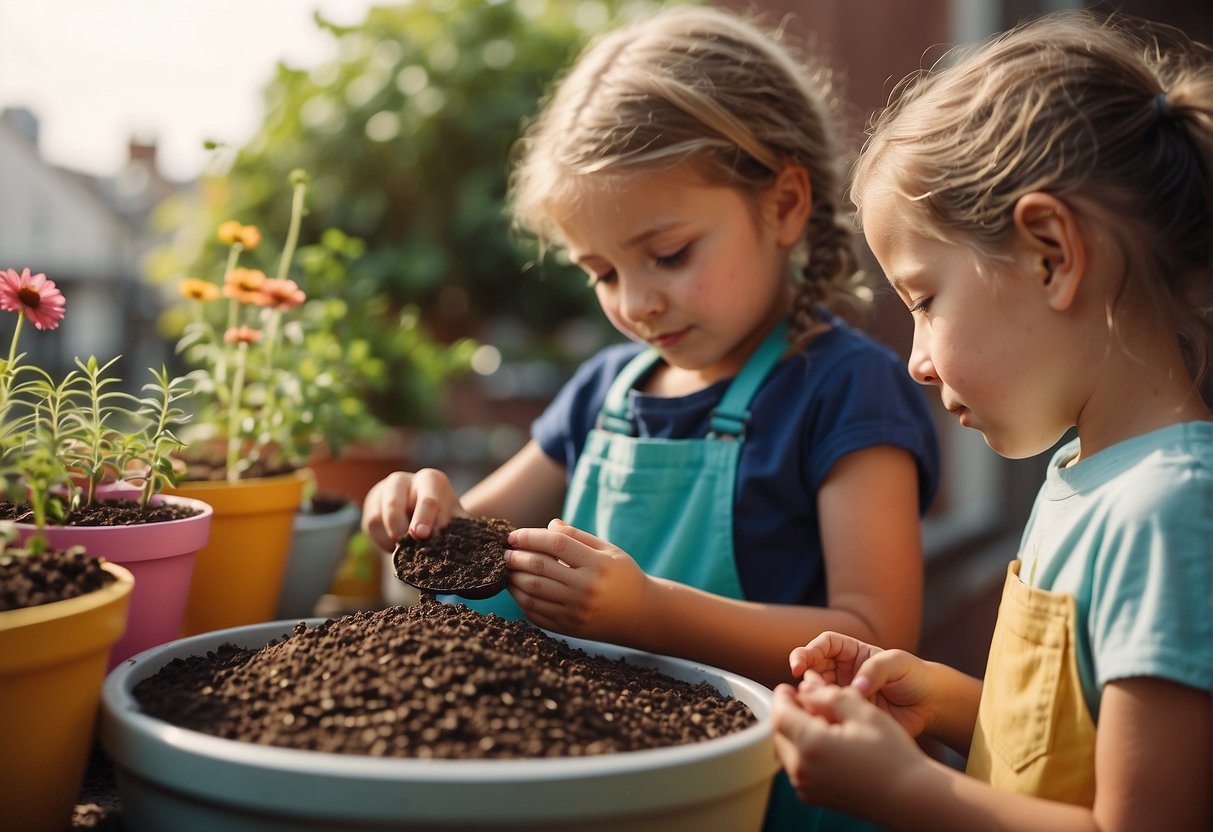
Bringing children closer to nature and wildlife starts right on your balcony. By choosing the right plants and observing natural processes, your little ones can discover the vibrant world of greenery and the creatures that thrive in it.
Attracting Butterflies and Bees with Specific Plants
Butterflies and bees play an essential role in pollination and maintaining healthy ecosystems. To attract these beneficial insects, incorporate native flowering plants, like lavender and marigolds, in your balcony garden. These species produce nectar and pollen that are attractive to pollinators. When choosing flowers, consider a variety of plants that bloom at different times to provide a long-lasting food source.
- Plants to Attract Butterflies:
- Milkweed
- Butterfly bush
- Coneflowers
- Plants to Attract Bees:
- Sunflowers
- Poppies
- Cosmos
Observing Plant Growth and Natural Cycles
Encountering the natural cycles of plant life offers a rich educational experience for children. It starts with sowing seeds and extends to tending young plants and eventually observing blossoming flowers. Creating a growth chart can help children visualize the plant’s life stages from seedling to full growth. This ongoing observation engages them and instills a sense of responsibility and the importance of caring for other living things.
- Key Steps in Observing Plant Growth:
- Record planting dates
- Note germination times
- Track flowering phases
By nurturing these relationships with nature and greenery on your balcony, children will cultivate a deeper appreciation and understanding of the environment and the significant roles played by both plants and pollinators.
Involving Kids in Balcony Garden Decor
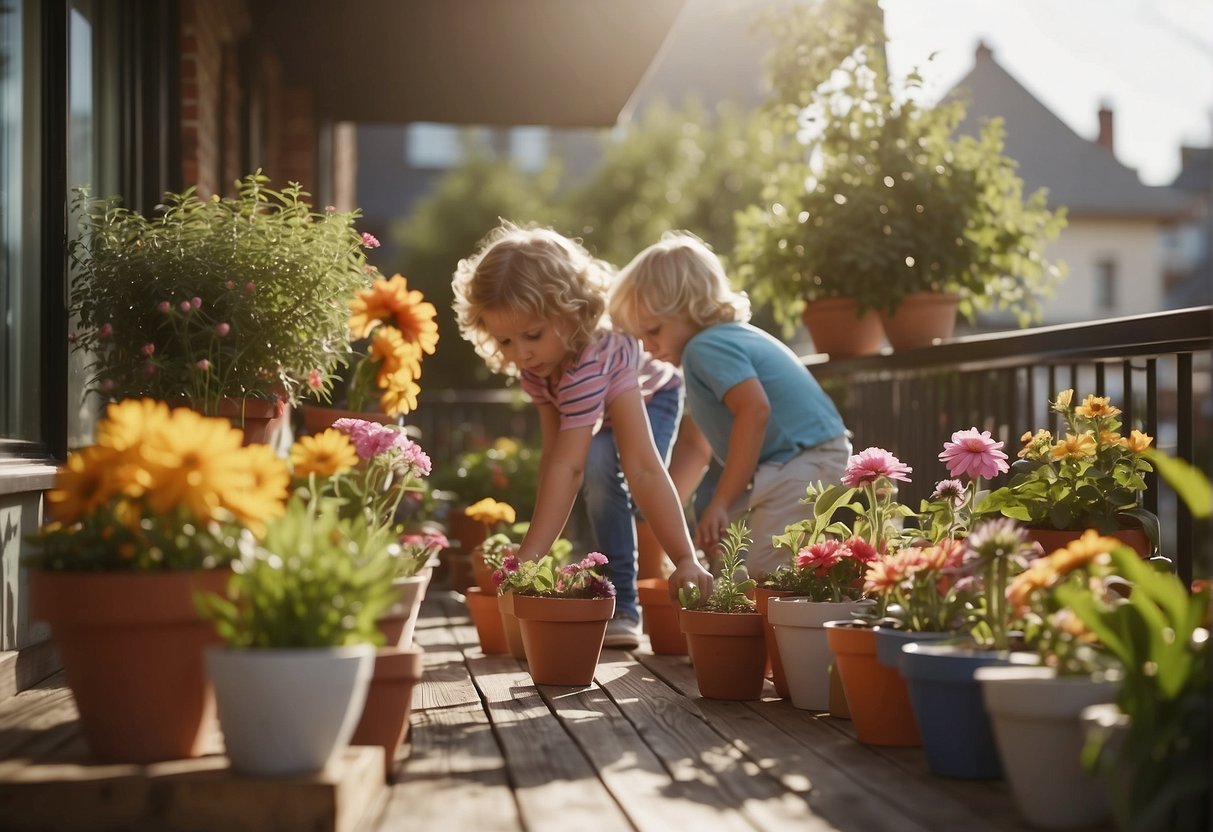
Engaging children in balcony garden decorating not only sparks their creativity but also gives them a sense of ownership over the space. Through DIY projects and selecting themes, your kids can take pride in contributing to the green oasis right outside your door.
DIY Projects and Crafts for Personalizing Space
Materials You’ll Need:
- Paints and brushes
- Pot decorating kits
- Recycled containers
- Non-toxic glues and tapes
Encourage your children to paint pots and create colorful garden stakes. They can transform simple clay pots into vibrant homes for plants and herbs. Allow the use of recycled materials like tin cans and yogurt containers as potting options, promoting both creativity and environmental awareness.
- Plant Markers: Use popsicle sticks or stones and have the kids paint the name of the plant on each. This helps them learn about the plants they’re growing.
- Decorative Containers: Decorate recycled containers to create unique planters.
Choosing Themes and Letting Kids Decide
Offer Theme Options:
- Wildlife garden
- Fairy tale fantasy
- Kitchen herbs and spices
Hand over the reins and let your kids choose a theme for your balcony garden decor. Whether they’re drawn to a jungle safari with animal figurines or a fairy-tale paradise with miniature houses and figurines, deciding on a theme together can make the process enjoyable for everyone involved.
- Wildlife Theme: Incorporate figurines of birds, bees, and butterflies.
- Fairy Tale Theme: Set up tiny castles or magical creatures among the plants.
- Kitchen Garden: Label each herb and spice with handmade signs, turning the balcony into an educational space for culinary plants.
Selecting the Right Plants and Equipment
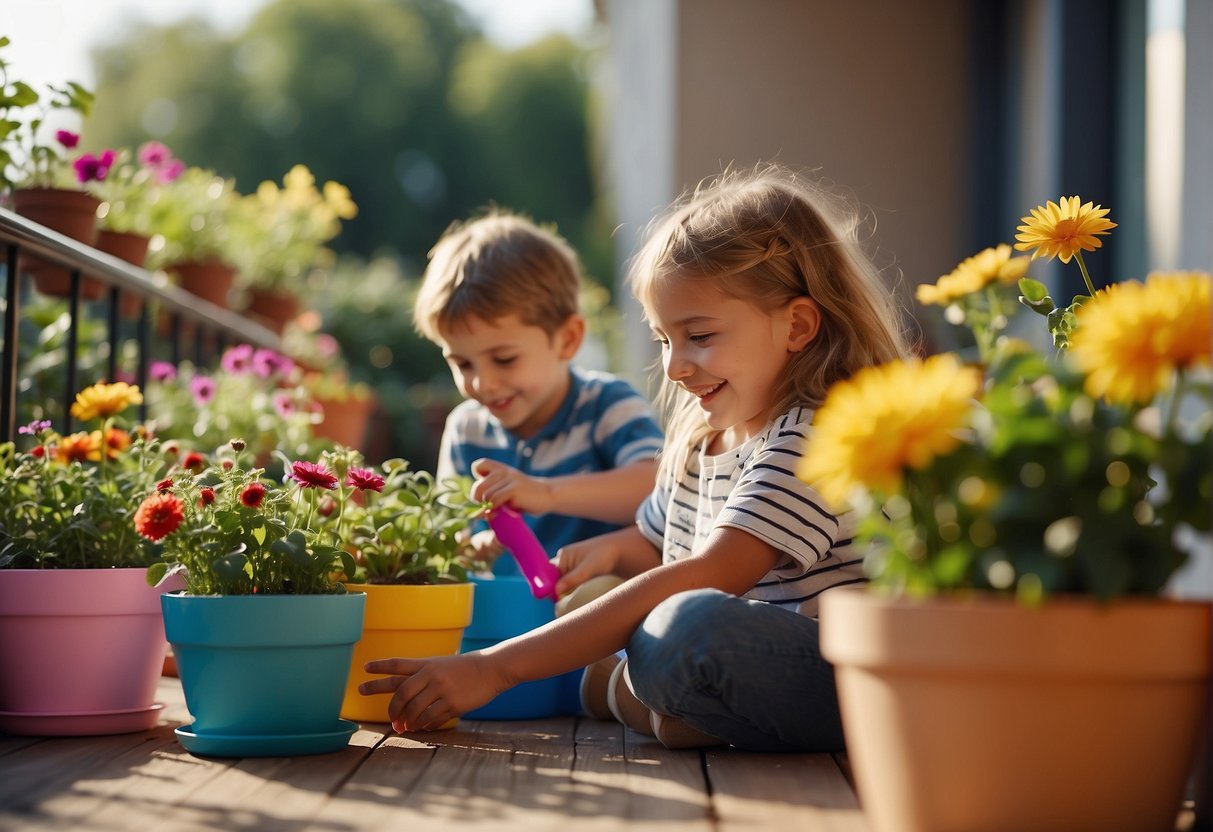
When designing a balcony garden with kids, selecting the right plants and equipment ensures both safety and success. Consider the microclimate and sunlight conditions of your balcony, choose appropriate soil and nutrients, and always be mindful of weight restrictions and drainage needs.
Understanding Sunlight and Microclimate Conditions
Assessing your balcony’s exposure to sunlight is crucial. Does it receive full sun, partial shade, or is it mostly shaded? Herbs like basil and rosemary thrive in full sun, while lettuce can prosper in partial shade. Each plant’s sunlight requirement will guide you and your kids in creating a harmonious space conducive to plant growth.
Choosing the Right Soil and Nutrients
Select quality potting soil, rich in nutrients, to fill your containers, ensuring the best start for your flowers, herbs, and vegetables like tomatoes. Enhance growth and health by incorporating fertilizer. Teach your children the importance of nutrients by letting them help mix in fertilizers with the soil.
Considering Weight Restrictions and Drainage Needs
Weight restrictions are an often overlooked aspect of balcony gardening. Opt for lightweight containers and consider the cumulative weight of soil and plants, such as marigolds and tomatoes. Ensure proper drainage by choosing pots with holes and discuss with your kids why overwatering can harm the plants.
Maintaining a Healthy Balcony Ecology
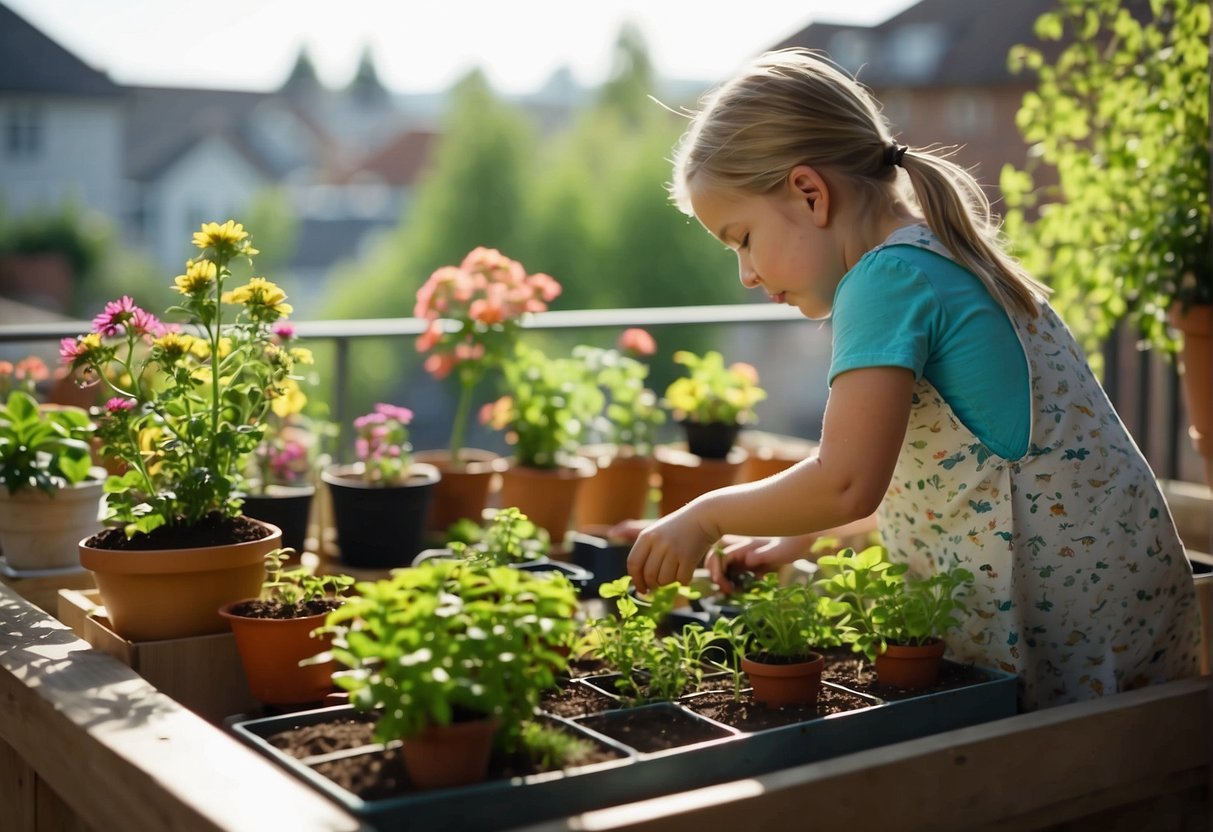
Creating a balanced ecology on your balcony not only supports the health of your plants but also contributes to a green space that you and your children can enjoy. By understanding and implementing effective pest management and establishing a consistent watering routine, you can maintain a flourishing and sustainable environment.
Pest Management and Natural Predators
To sustain a healthy balcony ecosystem, start by choosing plants that are native to your area; these plants are more likely to attract beneficial insects that serve as natural predators to common pests. Introducing certain companion plants can deter harmful insects. For example, marigolds can repel nematodes and aphids. Regularly inspect plants for signs of pests and intervene early using non-toxic methods. Encouraging your kids to spot beneficial insects like ladybugs or lacewings can be both educational and effective in managing pests.
- Common balcony pests: aphids, spider mites, whiteflies
- Beneficial predators: ladybugs, praying mantises, lacewings
- Non-toxic interventions:
- Hand-picking larger pests
- Spraying a mixture of water and mild soap
- Installing insect-repelling plants
Watering Routines and Conservation Tips
Consistent watering is key to sustaining your garden’s ecology, but conservation is equally important. Teach your children the value of water by implementing a routine that avoids waste. Use a watering can to target the base of the plants, reducing evaporation and leaf diseases. Collecting rainwater can be an efficient way to conserve and is a task that young gardeners can help with. Remember to water during the cooler parts of the day, typically morning or evening, to minimize water loss and provide a stable environment for your plants.
- Water-saving strategies:
- Collect rainwater: Use rain barrels or containers.
- Mulch plants: Decreases evaporation and retains soil moisture.
- Check soil moisture: Only water when necessary.
By focusing on pest management with natural predators and efficient watering routines, you’re not just taking care of your plants; you’re fostering an ecology that supports the local environment on your balcony.
Educational Resources and Expert Advice
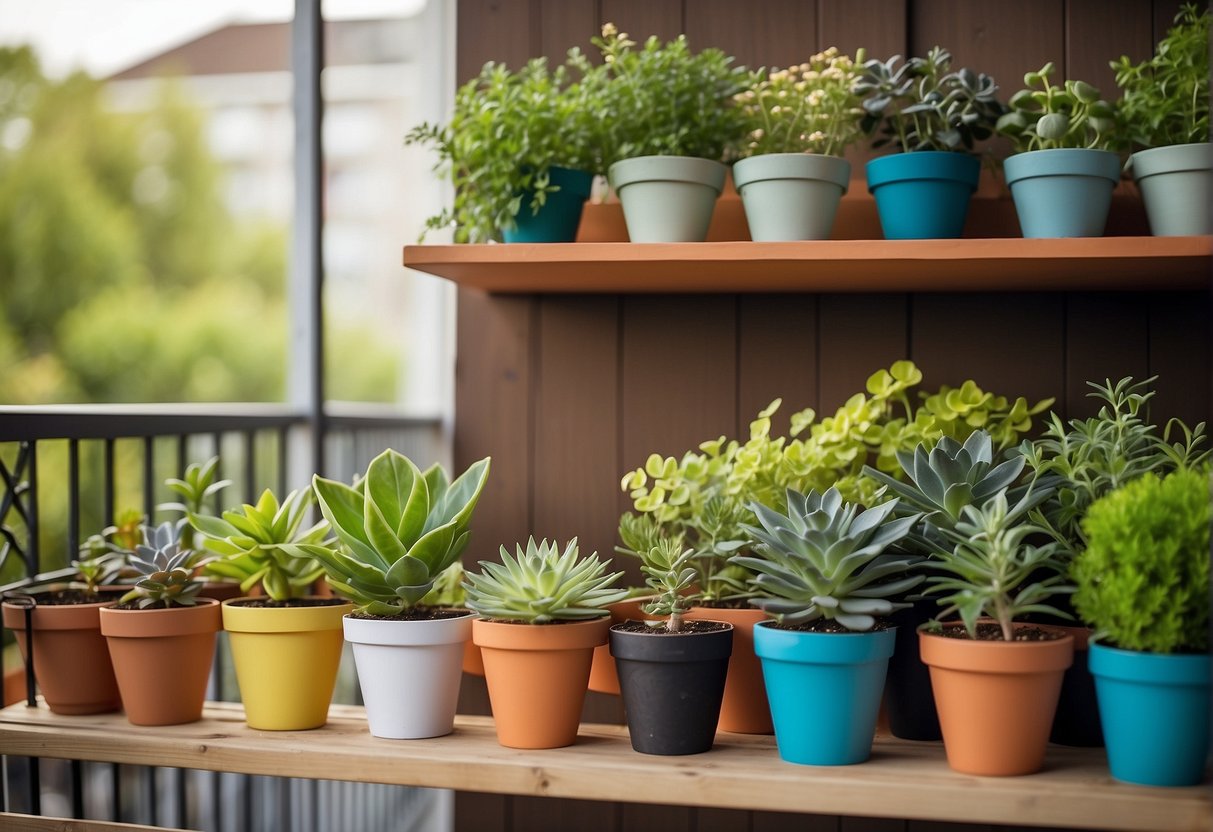
Involving kids in balcony gardening enriches their education and piques their curiosity about nature. Thankfully, many books and online resources are available, and consulting experts at local garden centers can provide tailored advice for your specific needs.
Books and Online Resources for Kid-friendly Gardening
When searching for kid-friendly gardening books, look for publications that offer activities and projects suitable for your balcony space. For instance, books with instructions on planting container gardens can be particularly helpful. Moreover, engaging online resources such as Nature Lab’s garden resources provide valuable tips on creating a productive garden that you can adapt to your balcony.
- Recommended Reads:
- “The Balcony Gardener for Kids”
- “Container Gardening for Young Sprouts”
- “Gardening with Children”
Consulting with Experts at Local Garden Centers
Local garden centers often have seasoned experts who can guide you on what plants thrive in a balcony setting and how to care for them. These professionals can offer advice on kid-friendly tools and safe gardening practices. Don’t hesitate to ask about workshops or other educational resources they might provide. For example, the UGA Cooperative Extension provides steps and considerations when starting a garden that can be extremely beneficial for your planning process.
- Action Steps:
- Visit your local garden center and speak with an expert.
- Inquire about educational workshops or resources for children.